

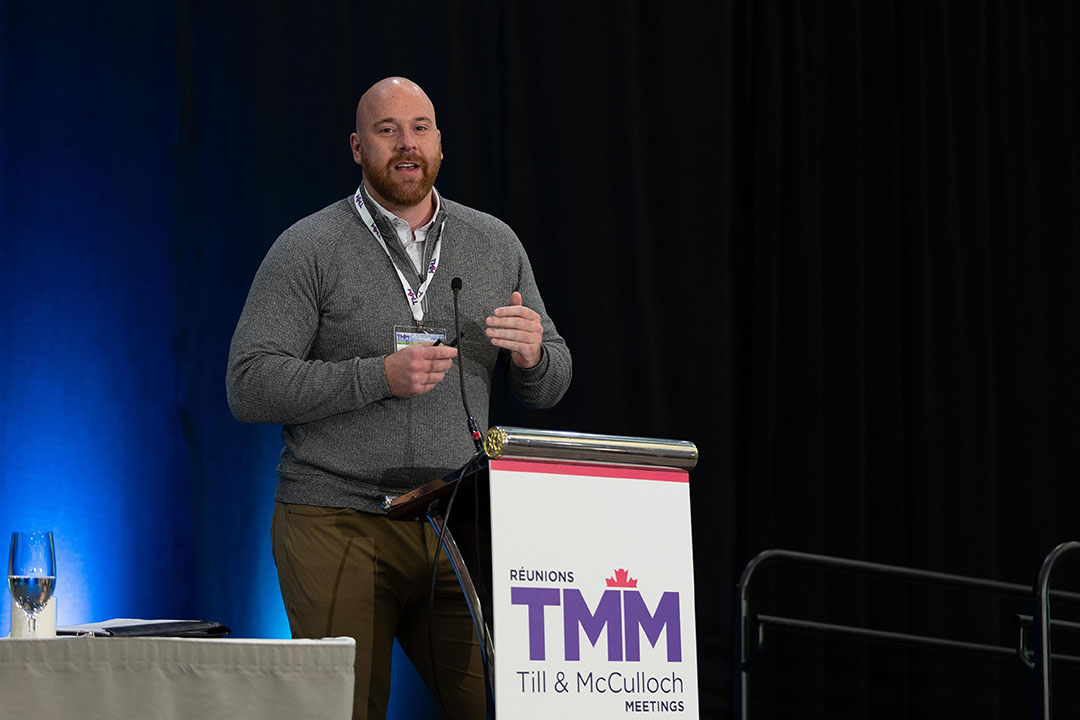
JSGS doctoral student: Understanding conflicts in public funding of science
Policy research becomes transformative when students step beyond the classroom to present their work and engage in national conversations that connect their work to academics, policy practitioners, and the broader scientific community.
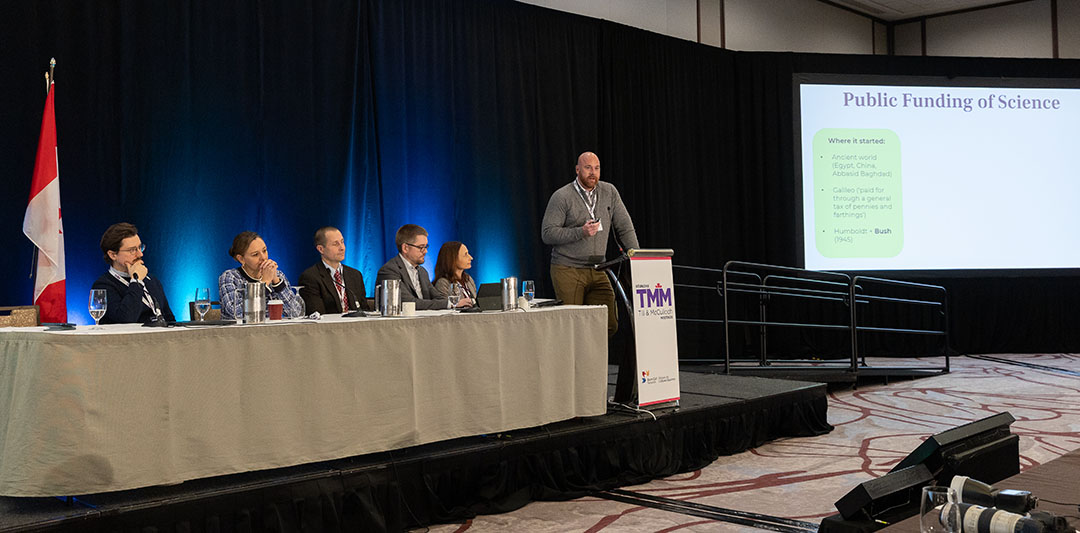
By Charvee SharmaRecently, Dean Shamess, a PhD student at the Johnson Shoyama Graduate School of Public Policy, University of Saskatchewan (USask) campus, presented his dissertation at the Stem Cell Network’s Annual Till & McCulloch Meetings in Ottawa, as part of a collaboration with JSGS faculty members Dr. Amy Zarzecny (PhD) and Dr. Louis-Robert Beaulieu-Guay (PhD).
Shamess’ research focuses on science policy: examining how scientists and the public connect, interact, and influence the funding of science. We spoke with him about what he learned from sharing his work on a national stage.
1. What inspires your research?
For the most part of the 20th and 21st century, the public has broadly supported public funding for scientific research, especially the work being done in universities and hospitals. This model, supported by government funding agencies, relies on the idea that society will eventually benefit from the discoveries scientists pursue.
But, as science policy has matured, the relationship between science and society has shifted – revealing conflicts over public funding. Until now, there’s been little empirical evidence to answer these questions. My dissertation titled “Conflict! Public vs. scientist preferences for the funding of science,” aims to address these gaps.
2. Tell us a bit about your current research.
We surveyed 1,500 Canadians and 1,500 Americans about their preferences and priorities for the public funding of science. In another round, we then told them that a group of either elite scientists or people like them had a very different set of priorities instead.
We gave the respondents a chance to change their initial preferences, based on this new information, if they wanted to.
The results are still very preliminary, but what we can say is that how people respond to this conflict is very different from what we might expect or predict!
3. What interested you to attend the Till & McCulloch meetings and present your work?
Stem cell research is one of the few areas where significant conflict around science has had real and meaningful consequences for researchers.
As a researcher in science policy, it’s essential to present my work to not only academics, policymakers, and the public – but also to lab scientists who are facing intense pressures and navigating these issues firsthand.
4. Did you learn anything new or surprising that you would integrate into your coursework?
I learned what a stem cell is! My background in the natural sciences is limited, so it was great to interact with scientists from other fields about their work, the challenges they’re facing, and what excites them.
Just as we need social scientists to bridge the gap with natural scientists, we also need to listen to natural scientists to make sure our research is compatible and aligns with what they’re experiencing.
5. What was the highlight of your experience at the conference?
I grew up in Ontario so it’s always great to experience some of the fall weather, and being in Ottawa gives many opportunities to interact with public policy professionals from within and outside of government who are deeply engaged with the topics I work on.
6. How has this experience impacted your research and professional goals?
The experience of presenting at a plenary session, and having the confidence and support to do so, was invaluable. It’s another step up along the ladder and I really appreciated the opportunity! Such events have so much value for yourself and your career, and others.