

Looking Back: Honouring USask service and sacrifice at Vimy Ridge
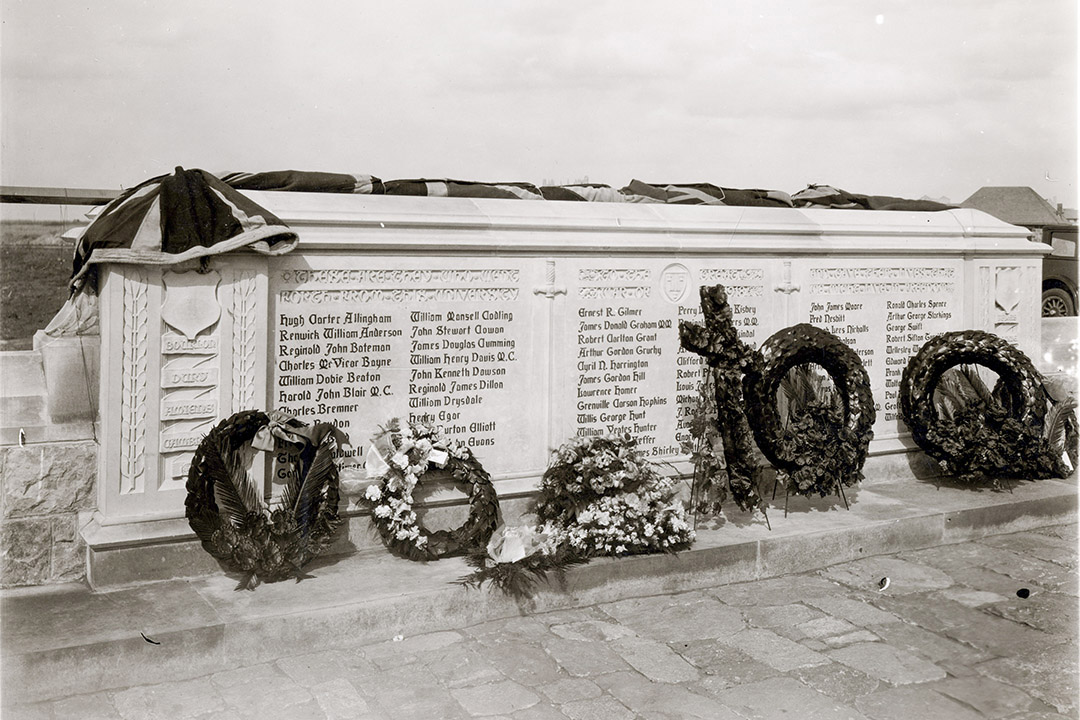
Many of the University of Saskatchewan’s (USask) best and brightest headed overseas to fight in the First World War, with 69 never returning home. As Canada recognizes Vimy Ridge Day on April 9, On Campus News takes a look at the USask students and staff who made the ultimate sacrifice in the epic battle more than a century ago.
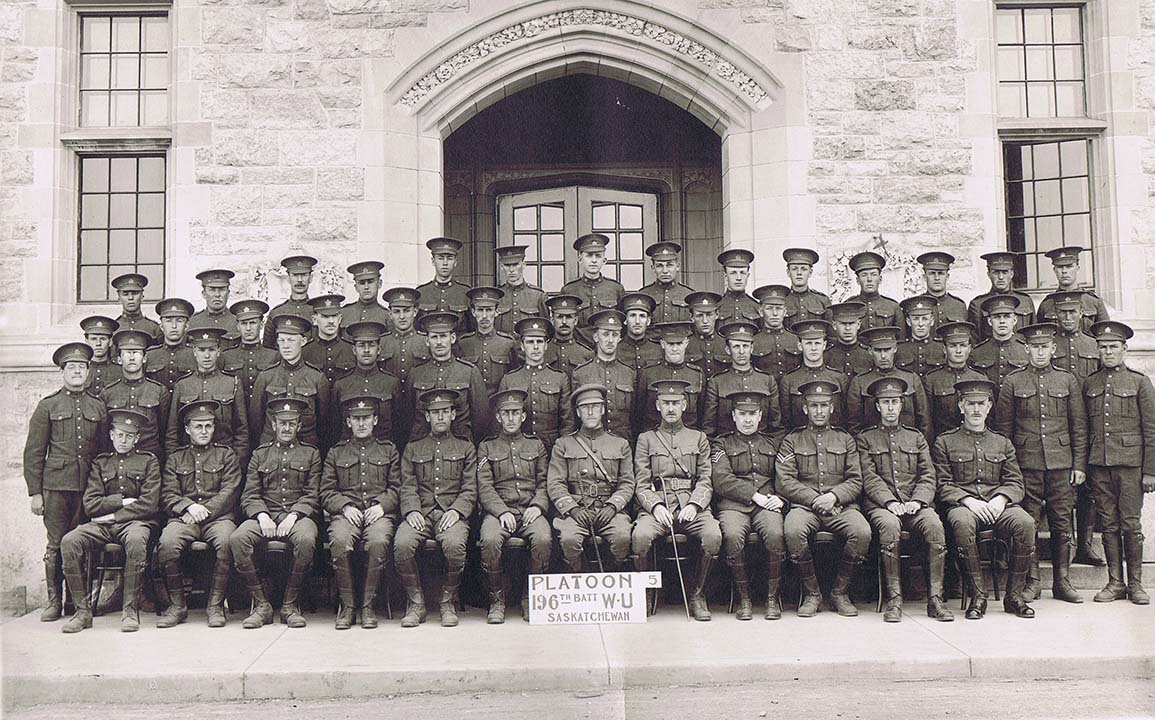
By James ShewagaA total of 345 students, staff and faculty from USask enlisted to serve in the First World War, with many joining the first Western University Battalion (the 196th) established 110 years ago in 1916. Nine of those soldiers from USask were killed in the historic Battle of Vimy Ridge in 1917, an assault that is considered one of the defining moments in Canadian military history.
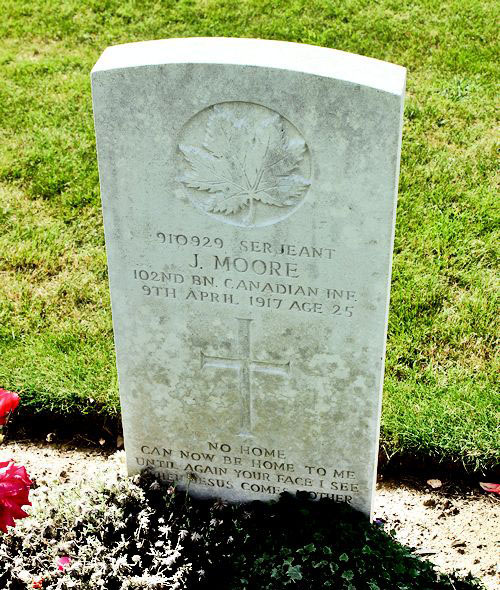
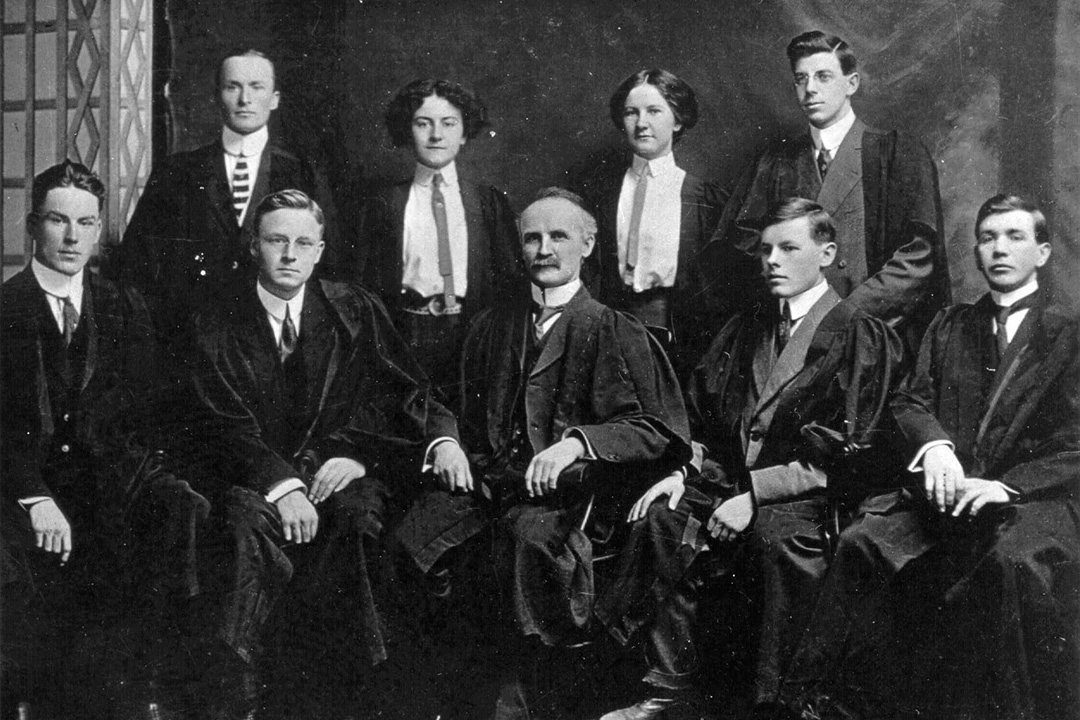
Among the brave volunteers was Sergeant John James Moore, one of seven students from the university’s very first graduating class of 1912. The former law student from Prince Albert fell on the first day of the battle on April 9, 1917, killed instantly when he was hit in the chest with shrapnel from an exploding shell. Moore had helped his unit take its objective of Hill 145 – the highest point on Vimy Ridge, where the iconic Vimy Memorial now stands. Moore lies forever at rest nearby, buried in the Canadian No.2 Cemetery in Pas-de-Calais, France.
A superb student-athlete who excelled in soccer and also served as president of the university’s Literary Society, Moore was the first of six soldiers from USask who fell in the four-day battle. The son of Reverend W. S. Moore and Jeanie W. Moore of Prince Albert, Moore was remembered in a tribute published in The Sheaf in 1917: “To his relatives in their loss goes our sincerest sympathy. To lose a loved one in such a cause brings out feelings that words are inadequate to convey.”
Moore was one of 3,598 Canadian soldiers who gave their lives at Vimy Ridge, along with 7,004 who were wounded. In addition to Moore, the university’s fallen alumni on Day 1 of the battle included Lieutenant Michael Allan MacMillan, who had enlisted with his friends and fellow USask law students Hugh Aird (wounded at Vimy Ridge) and former Canadian Prime Minister John Diefenbaker. Meanwhile, Corporal Thomas Caldwell, who grew up in Yorkton and became a member of the Agro hockey team and part of USask’s first graduating class in agriculture in 1915, was killed by a sniper while serving outpost duty at night and is listed as killed in action on April 9/10.
Day 2 of the Battle of Vimy Ridge claimed the lives of three more members of the university community. Private Hugh Alfred Silcox, who studied engineering at USask, was hit by shelling on the first day of the battle and succumbed to his wounds in a field hospital the next day. Corporal Enoch Aldred Mitchell, who was born in Grenfell and studied agriculture at USask, was also mortally wounded in battle and taken to a field hospital where he perished. Meanwhile, Private James Brydon, who served as a herdsman at the university before enlisting, was killed April 10 and is one of the 11,000 Canadian soldiers commemorated on the Vimy Memorial with no known graves and listed as “Missing, presumed dead.”
Three more volunteers from USask were killed in the trenches at Vimy Ridge in the days following the battle. Sergeant Reginald Adolphus Frederick Lavers, a divinity student at Emmanuel College affiliated with the university, was hit by shelling on April 29, while agriculture student Private Robert Rousay Jr. of Yorkton was killed in action along the ridge on May 6. One day later, Lieutenant Arthur Stephen Kenyon Lloyd, another former divinity student, also perished in the trenches. Rousay, who was only 20, and Lloyd, who was 21, have their names enshrined on the Vimy Memorial.
While the Battle of Vimy Ridge is considered one of the Canadian military’s greatest victories, it came at an awful cost, including the lives of nine members of the university community who made the ultimate sacrifice.
Canadian Brigadier-General Alexander Ross, who was raised in Regina and commanded the 28th Battalion at Vimy Ridge, later described the assault on the German lines at Vimy Ridge as a watershed moment in Canadian history.
“It was Canada from the Atlantic to the Pacific on parade,” said Ross, who was later awarded an honorary degree at USask in 1955. “I thought then that in those few minutes, I witnessed the birth of a nation.”