

Opening Up Education: A Conversation for Open Education Week
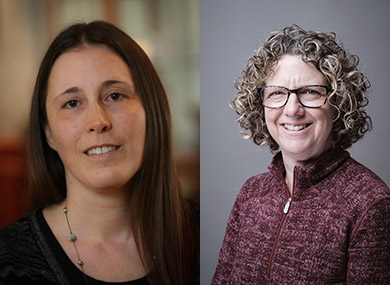
As Open Education Week begins (March 2–6, 2026), Heather M. Ross from the Gwenna Moss Centre for Teaching and Learning (GMCTL) and DeDe Dawson from the University (USask) Library discuss what Open Education is, why it matters, and how USask is supporting instructors and students through open educational practices.
By Nikki Desjardins, University LibraryWhat Is Open Education and why does it continue to gain momentum?
Dawson: “I like the SPARC definition of Open Education because it really emphasizes removing barriers. This definition brings together resources, tools, and teaching practices that anyone can access and use without running into legal, financial, or technical hurdles. The idea is that these materials can be fully used, shared with others, and even adapted to fit different teaching and learning needs.”
“In practice, SPARC uses the ‘5Rs’ which mean that users can Retain, Reuse, Revise, Remix and Redistribute educational materials. In other words, they’re not just free to look at, but they are free to fully utilize. That flexibility helps make education more accessible and equitable for students as well as instructors who want materials tailored to their courses.”
Ross emphasizes the broader impact:
Ross: “Yes, Open Education creates enormous opportunities to improve access to educational materials, as well as to customize such materials to meet the needs of local learners. These practices provide chances to include voices historically left out of learning materials. They can also provide students with the ability to move from purely consumers of information to creators and collaborators.”
How do Open Education Resources (OER) influence teaching and learning at USask and what are the benefits for students and instructors?
Dawson: “Instructors can adapt or create materials to suit their own specific course needs. This may take some time and work, but that investment is worthwhile in the long run. And students will appreciate the effort and the instructor’s concern for keeping costs low. It is also possible to get really creative about this and involve the students in developing course materials, which is called open pedagogy.”
Ross: “Textbook costs continue to rise and are often only available to learners for a limited period of time. OER lets learners access the materials they need for free or at a very low price on an ongoing basis. The materials can also be adapted by instructors to better meet the needs of the learners … Feedback about OER from students at USask, as well as widespread research done throughout Canada and the U.S., is overwhelmingly positive.”
How does USask support Open Education?
Ross: “The Gwenna Moss Centre offers a variety of supports for instructors and learners. We can help find existing OER, provide instructional design support for the creation or major adaptation of OER, and offer support with how to use platforms such as Pressbooks for OER projects. In addition, we will work with instructors or units to obtain funding to support open projects. We can even come to a meeting, tailored session, or class to discuss open with instructors, leaders, and students.”
“The GMCTL facilitates funding provided by the provincial government for OER projects. This funding, plus workshops, consultations, and instructional design support, have helped USask increase the use of open educational practices at USask for the past 11 years, saving students more than $11 million.”
Dawson: “The USask Library has liaison librarians who are assigned to support various disciplines. They can assist instructors in locating materials for courses – including OER. The library is also working on developing a more formal OER Discovery Service, where instructors will be able to request assistance to locate OER aligned with their course goals, learning outcomes, and instructional context.”
“Library employees also have expertise in copyright and Creative Commons licenses … More complex questions can be directed to the library’s copyright co-ordinator.”
Growing Open Education at USask
Dawson: “A key element of the University Library’s current Strategic Framework is our Champion Open Scholarship goal. Beyond support for open education and OER, this includes initiatives in open infrastructure, open access publishing supports, open collections investments, and advocacy.”
Ross: “Some of our most recent OER milestones include the launch of the SaskOER Network in 2025 and the publication of our latest open book, Introduction to Open Educational Practices: Breaking Down Barriers to Knowledge This book includes contributions from experts from the Gwenna Moss Centre as well as from the USask Library.”
What’s happening during Open Education Week
What can instructors, staff, and students look forward to this year?
Dawson: “The Gwenna Moss Centre for Teaching and Learning and the University Library are once again collaborating on a full week of sessions to celebrate Open Education Week from March 2–6.
Register for one of seven online sessions to learn more about how to find open resources, get started with open textbook/resource creation, understand Creative Commons licences, incorporate open pedagogy, engage students as creators, and navigate the HARVEST repository.
In-person events on March 2:
• A kickoff come and go event on the ground floor of the Murray Library.
• A Lunch and Learn panel featuring USask instructors discussing their experiences and motivations in using or creating OER.