

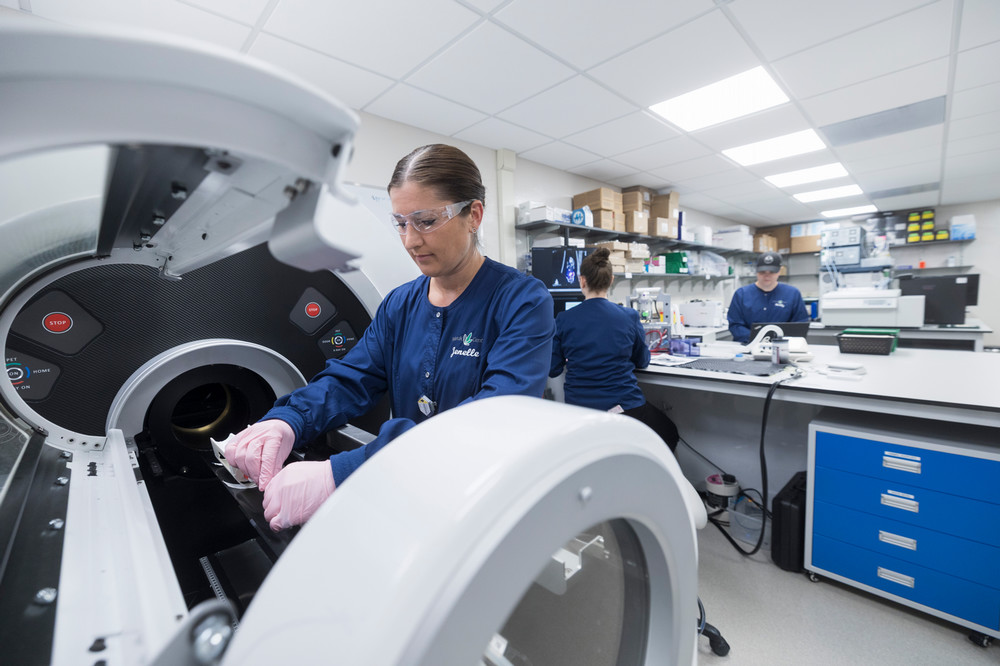
Powering discovery. The Fedoruk Centre’s impact on health research
At the University of Saskatchewan (USask), the Sylvia Fedoruk Canadian Centre for Nuclear Innovation Inc. (Fedoruk Centre) is advancing diagnostics, therapies, and research capacity through its cyclotron facility and strategic investments.
By Amy Janzen, Fedoruk Centre CommunicationsEstablished in 2011 at USask, the Fedoruk Centre has invested more than $8 million in people and projects and is driving innovation through its support of advancements in diagnostics and therapies, including the establishment of three Fedoruk Chairs in Medical Imaging.
For Dr. Jeter Hall (PhD), who entered the role of executive director of the Fedoruk Centre in July 2025, that investment represents both people and possibility.
The Class II nuclear facility houses a 24 MeV cyclotron and adjacent workstations. The cyclotron is a particle accelerator that produces radioisotopes that are essential for medical imaging and therapy. Each day, the cyclotron supplies a radiopharmaceutical known as FDGs for PET-CT scans at regional hospitals, helping patients get faster, more reliable access to care.
“What we do here is about enabling discovery and supporting healthier outcomes for the province and beyond,” said Hall. “Every dose we produce, every isotope we supply, contributes to earlier diagnoses, more effective treatments and stronger research capacity in Saskatchewan.”
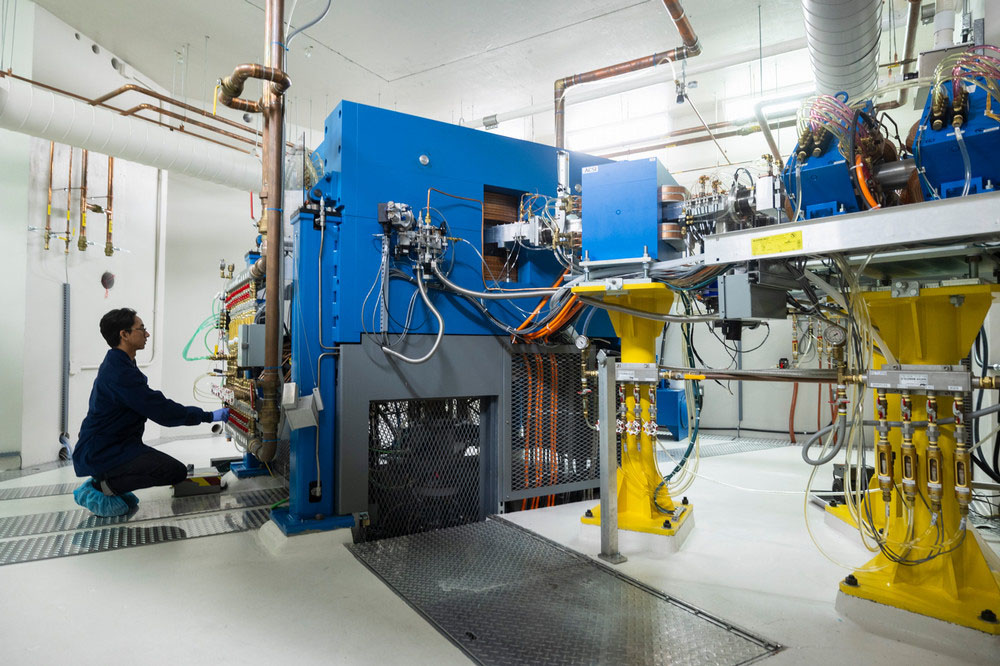
“Working with the Fedoruk Centre strengthens our ability to provide advanced imaging, close to home,” said Scott Mildenberger, manager of Medical Imaging RUH MRI, PET/CT and Nuclear Medicine with the Saskatchewan Health Authority. “This partnership is vital for improving access to diagnostic resources and supporting locally sourced innovations that enhance patient care across Saskatchewan.”
While the daily supply of FDG for medical imaging is a central part of the Fedoruk Centre’s activities, a 2019 expansion to the facility added the Innovation Wing and multiple workstations, enabling clients from academia and industry to conduct unique research.
“Annually we see about a dozen researchers and their teams come through the facility to work on various projects in support of life sciences,” said Hall. “From developing new cancer therapies to creating better imaging tools, the work done at the facility continues to strengthen Saskatchewan’s reputation for excellence in nuclear research.”
In the College of Pharmacy and Nutrition at USask, former Fedoruk Chair in Nuclear Imaging Dr. Ekaterina Dadachova (PhD), is developing radioimmunotherapies—treatments that use antibodies to deliver radiation to cancer or infectious diseases while sparing healthy tissue. The research in Dadachova’s lab is helping to unlock treatment options for drug-resistant infections and hard-to-treat cancers. In May of 2025, one of the antibodies developed in her lab for radioimmunotherapy of osteosarcoma, was licensed by USask to a biotech company in New York to take it into the clinical trials in pediatric patients with osteosarcoma.
In the College of Medicine at USask, Dr. Ron Geyer (PhD) regularly collaborates with Dr. Eric Price (PhD), a Tier 2 Canada Research Chair in Radiochemistry in the College of Arts and Science’s Department of Chemistry, to develop next-generation radiopharmaceuticals—radioactive compounds designed for more accurate diagnostics and targeted cancer therapies.
Beyond cancer, Geyer is also leading research to develop on-site PET probes that can detect the brain plaques associated with Alzheimer’s disease earlier while helping to evaluate potential treatment options. This work is expected to enter clinical trials within the next year, marking an exciting step forward in early diagnosis and treatment of neurological disorders.
Meanwhile, Dr. Chris Phenix (PhD) of the Department of Chemistry uses nuclear imaging to study neurological disorders like Parkinson’s disease. Phenix’s lab is also exploring connections between plant and human health, using imaging to trace how molecular changes in one system can inform breakthroughs in another.
At the Western College of Veterinary Medicine at USask, Dr. Behzad Toosi (PhD) is investigating how naturally occurring cancers in dogs and cats can inform human cancer research. By comparing diseases across species, Toosi’s team is helping identify promising treatment targets that could benefit both animals and people.
Together, these scientists, supported by the Fedoruk Centre, are collaborating to advance diagnostics, improve therapies, and demonstrate how nuclear science can transform health and innovation in everyday life.
“Our team is focused on providing urgently needed, hard-to-source isotopes for clinical and research use,” said Hall. “Researchers and clinicians look to us for access to reliable, cutting-edge materials, and we are proud to be that organization.”