

USask-led project unlocks DNA blueprint that can support future bison restoration
Collaboration across North America reveals gold standard of bison genetics
By Erin Matthews, Research Profile and ImpactA recent paper published in Science from the Bison Integrated Genomics (BIG) project at the University of Saskatchewan (USask) has found that many North American bison herds lack cattle ancestry in their DNA, challenging previously held beliefs in the scientific community that there were no longer any true bison populations remaining in the wild.
The landmark paper explains how, for the first time, researchers used genetic data from ancient bison to provide insight into modern bison genomes. The ancient bison samples range from 200 years old to 20,000 years old and give researchers a never-before-seen look at bison genetics.
“This paper is valuable because it has given us what I consider a gold standard of bison genetics before human interference took the species to the brink of extinction. We now have the historical record of what their genome looked like before interbreeding and the introduction of cattle diseases,” said Dr. Gregg Adams (DVM, PhD), a USask professor emeritus at the Western College of Veterinary Medicine (WCVM). He and Dr. Todd Shury (DVM), Parks Canada veterinarian and an adjunct faculty member at the WCVM, are principal investigators and founders of the BIG project.
The brink of extinction
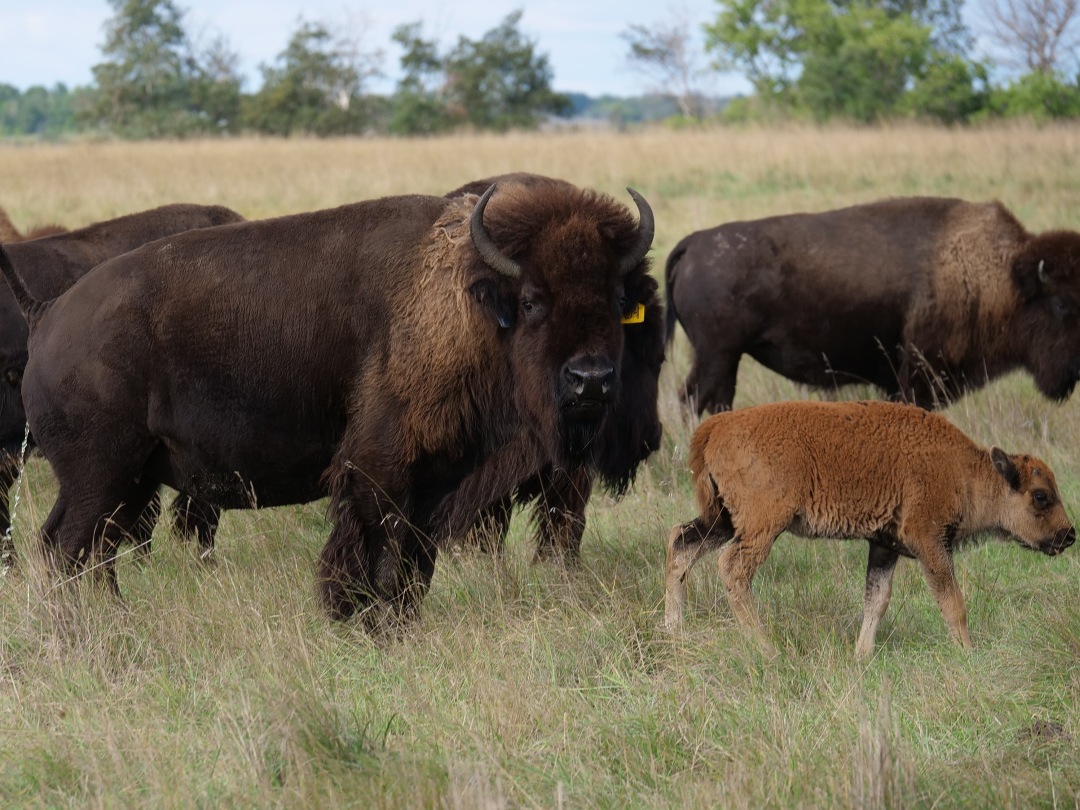
American bison are categorized into two distinct subspecies: plains bison and wood bison. The subspecies have different territories and physical features. Evolved to thrive in the wilderness of North America, the once-plentiful plains bison, with their shaggy brown cape, could be found in the millions across the great plains of Canada, the United States, and Mexico, while the wood bison, the largest land mammal in North America, thrived in the northwest boreal regions of the Canadian provinces and territories.
A progressive escalation of systemic over-hunting by settlers during the 1800s devastated the populations of both plains and wood bison, reducing them to a tiny fraction of their former numbers in small, geographically fragmented herds at risk of extinction. Researchers such as USask's Adams and his collaborators on the BIG project are working to increase healthy and genetically true bison populations across Canada, restoring these animals to their plentiful herds.
“At the turn of the 20th century, 99.9 per cent of the bison were gone, and to be responsible for the near loss of a keystone species that has been evolving here for hundreds of thousands of years is unfathomable. Conservation efforts for bison are important, and we now have the tools to really restore healthy bison populations. I think it’s important to help these animals thrive again,” said Adams.
By the 1890s, only 500 wild bison remained in North America, creating what Adams refers to as a genetic “bottleneck.” Researchers fear this bottleneck impacted the bison gene pool and its ability to rebound. While early conservation efforts by Canada brought bison back from the brink, human intervention in this effort also brought about other issues, including new diseases, herd disconnection, and interbreeding between the two sub-species. There has also been the introduction of cattle genes into bison populations.
Renewed efforts for bison conservation
The BIG project is a Genome Canada-funded initiative aimed at sustainable and long-term bison conservation. The project has close collaboration with Indigenous and Métis communities, building meaningful relationships with nations connected to specific herds across Canada. This year the team met with Fort Smith Métis Nation, Salt River Nation and Tthebatthie Denesųłiné Nation, Deh Gah Got'ie First Nation, Fort Providence Métis Nation, Tłı̨chǫ Government, Northwest Territory Métis Nation, Athabasca Chipewyan First Nation, Mikisew Cree First Nation, Fort Chipewyan Métis Nation, Little Red River Cree First Nation, K'atl'Odeeche First Nation, Hay River Métis Council, Deninu Kųę́ First Nation, Fort McKay First Nation, Fort McKay Métis Nation, Fort McMurray #468 First Nation, Métis Nation of Alberta Association Fort McMurray Local Council 1935, Little Red River Cree First Nation, Fort Resolution Métis Government, Mikisew Cree First Nation, North Slave Métis Alliance, and Yellowknives Dene First Nation.
Project partners, such as the Toronto Zoo and Parks Canada researchers at USask, the University of Alberta and the University of California, have been working to reconnect isolated herds to ensure authentic genetic richness among bison in Canada for ongoing survival. The BIG team is hoping to better understand the genetic composition of bison herds and mitigate some of the challenges that stem from population bottlenecks.
The project is addressing better disease testing for wild herds, vaccine development, stronger genetic mapping for more bison diversity, and the creation of the Bison Genome Biobank, which will introduce more genetic diversity and decrease the risk of disease transmission among herds.
According to Adams, the team’s recent findings unlocked new insights into the diversity among the two bison sub-species, including how much their genetics have diverged over the last hundred years, and the amount of cattle lineage found in modern bison populations.
“Previous research in the area suggested that there were no true bison left in North America, meaning no bison were free from cattle genetics. This was a great concern to us because it would be very difficult to restore the species back to what they would have been a century ago,” said Adams. “Through new methods in genomics and improved technology, our team was able to find out that this estimation was overstated and there are several conservation herds with no evidence of cattle ancestry and others with very low levels of hybridization.”
The BIG team did, however, find that all modern wood bison herds have been hybridized with plains bison, a byproduct of conservation efforts beginning in the 1920s. Despite this hybridization, the team found that several modern wood bison conservation herds remain highly distinct, with low levels of hybridization. Adams says that these herds possess a sufficient level of genetic diversity to support restoration efforts.
This discovery provides researchers with a better blueprint for genetic restoration. The BIG team is continuing their work on disease management strategies and the development of the Bison Genome Biobank.
“This is good news because the genomic tools and techniques that we are developing through the BIG project will allow us to slowly and strategically restore a population bison that is more genetically true to their ancestors and capable to evolve for generations to come,” said Adams.