

VIDO: Advancing tuberculosis research for a healthier world
From developing new vaccines to uncovering drug targets, researchers at VIDO are working to combat tuberculosis, a persistent global health threat that remains one of the leading infectious killers worldwide.
By Caitlin GillScientists at the Vaccine and Infectious Disease Organization (VIDO) based at the University of Saskatchewan (USask) are tackling one of humanity’s oldest and most persistent infectious diseases: tuberculosis (TB).
Tuberculosis is a contagious airborne disease caused by the bacterium Mycobacterium. It is the deadliest infectious disease in history, with an estimated 1 billion lives lost. According to the World Health Organization (WHO), an estimated 1.3 million people die each year from TB globally and more than 10 million people develop active TB annually, placing enormous strain on families, health systems, and economies. Recently, it has surpassed COVID-19 as the leading infectious disease killer.
Globally, nearly half of people treated for TB face elevated costs related to care. According to the WHO, the financial burden exceeds 20 per cent of their household income. This underscores that TB is not only a global health crisis, but an economic one.
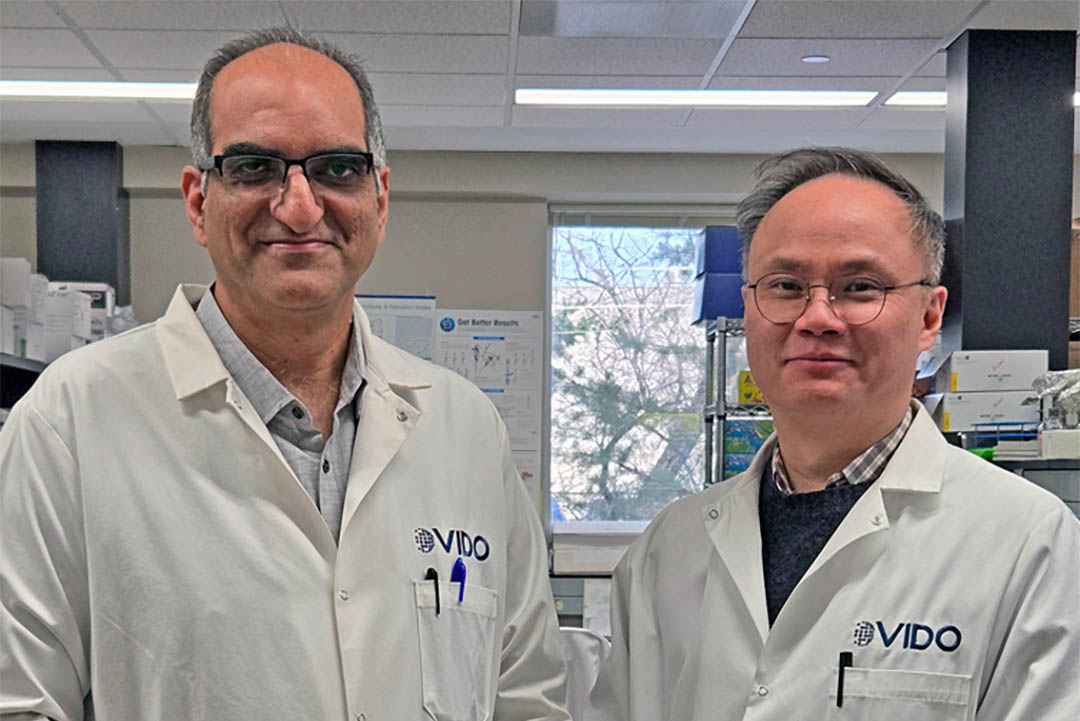
“Our ultimate goal is to develop vaccines as well as anti-TB drugs that are both more effective and compatible with existing treatments and diagnostic systems,” said VIDO scientist Dr. Jeffrey Chen (PhD). “By identifying new targets in the TB bacterium, we are creating opportunities to design novel vaccines and drugs that can strengthen global TB control efforts.”
In humans, the disease is primarily caused by Mycobacterium tuberculosis, while bovine TB is often caused by the closely related Mycobacterium bovis. These bacteria can spread between animals and people, a concept referred to as zoonoses and requires co-ordinated approaches to control.
While human TB is relatively rare in Canada, it still affects many communities. In 2024, the Public Health Agency of Canada reported 2,508 active TB cases, corresponding to an incidence rate of 6.1 cases per 100,000 population. However, Saskatchewan’s incidence rate was almost two times the national rate and among the highest in the country. These numbers reflect a disproportionate burden in the province and highlight that TB remains a pressing issue close to home.
Treating TB is far more complex than many other bacterial infections. Standard therapy requires multiple antibiotics taken for at least six months, and sometimes much longer. The length of treatment, combined with cost and challenges accessing health care, particularly in remote regions, can make it difficult for patients to complete the full course.
When treatment is interrupted or not completed, the bacteria can survive and continue to spread, increasing the risk of reinfection and contributing to the emergence of drug-resistant TB, which is significantly harder and more expensive to treat.
Ending TB will demand innovation across disciplines and geographies, and requires a comprehensive One Health approach because TB does not only infect people.
Bovine TB affects cattle herds worldwide, jeopardizing animal health, global food security, and international trade. In many countries, including Canada, bovine TB is a reportable disease, and herds are routinely tested to ensure animals are not infected. This helps maintain the country’s TB-free status. Losing this status would cause significant trade issues through non-tariff trade barriers.
A key challenge in controlling bovine TB is the lack of a practical vaccine. Although the Bacille Calmette Guérin (BCG) vaccine used in people can protect cattle, it interferes with standard diagnostic tests, making it difficult to distinguish between vaccinated and infected animals.
VIDO researchers are advancing a novel vaccine candidate known as MSX-1. Early studies have shown that the vaccine protects against bovine TB without compromising diagnostic testing. This could enable vaccination while maintaining effective disease surveillance in livestock. Insights gained through the development of the MSX-1 vaccine candidate are also expected to strengthen our understanding of how to design and evaluate more effective human TB vaccines.
VIDO scientists are making important discoveries regarding the biology of the TB bacteria. In 2025, researchers identified a previously unknown gene that plays a key role in controlling how the TB bacterium survives and spreads in infected people and animals. Together, these advances are informing next-generation anti-TB drugs that will target the pathogen more precisely and help lay the groundwork for improved human TB vaccines.
Understanding how TB behaves inside the human lung is also crucial. To better study the disease, VIDO researchers have developed sophisticated lung organoids, tiny lab grown three-dimensional structures that mimic key features of human lung tissue. These ‘mini lungs’ allow scientists to observe how TB bacteria infect and persist in realistic human tissue models and to evaluate vaccine or treatment candidates more effectively before advancing to further studies.
“Tuberculosis is fundamentally a lung disease, so having a model that closely reflects the human lung transforms how we study infection,” said VIDO scientist Dr. Neeraj Dhar (PhD). “Organoid systems allow us to better understand how TB bacteria interact with human tissue and to test potential interventions in a more representative environment in a more rapid manner.”
Dhar’s group is also working towards discovering novel anti-TB compounds that could potentially shorten the treatment duration for TB.
On World TB Day, VIDO’s focus is not only on the scale of the challenge, but on the science required to solve it. Addressing TB requires sustained innovation across the research continuum, from gene discovery and vaccine design to advanced laboratory models and animal health solutions. Through this integrated approach, VIDO scientists are advancing One Health solutions that protect people, animals, and global systems while accelerating progress toward eliminating TB as a leading infectious disease.