

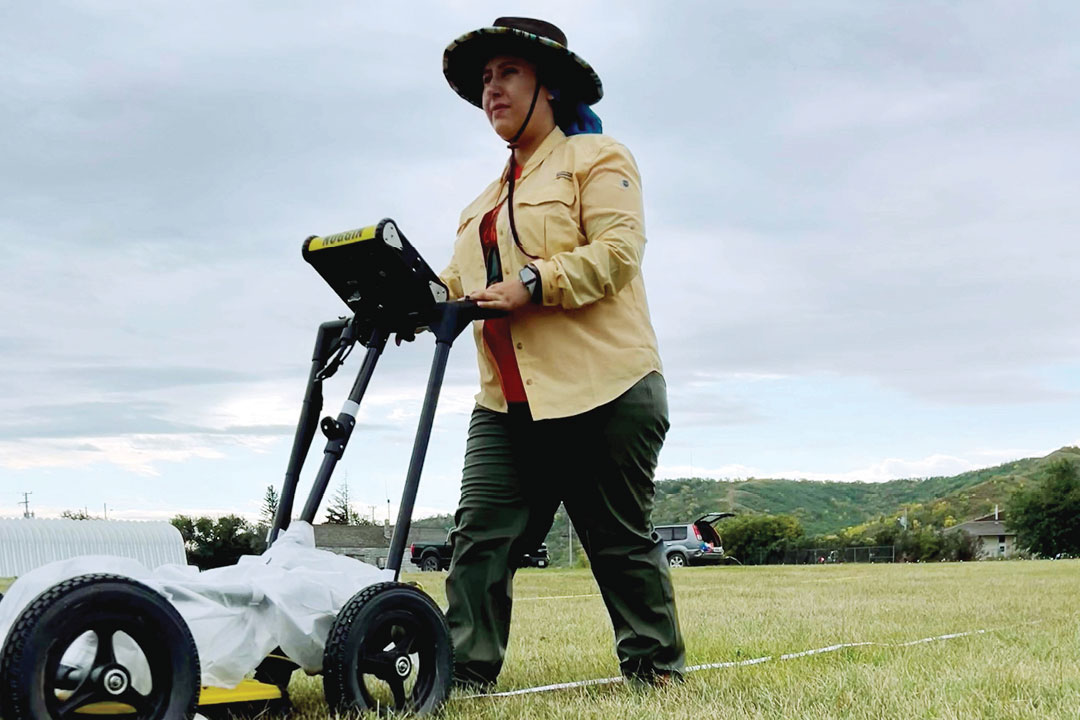
USask archaeology graduate honours relatives through research at residential school sites
Micaela Champagne (BSc’22), a Cree/Métis woman who earned a Bachelor of Science degree in 2022, is CEO and co-founder of askîhk Research Services
By SHANNON BOKLASCHUKA University of Saskatchewan (USask) graduate is utilizing her education in archaeology to help support Indigenous communities as the search continues for missing children at residential school sites across the country.
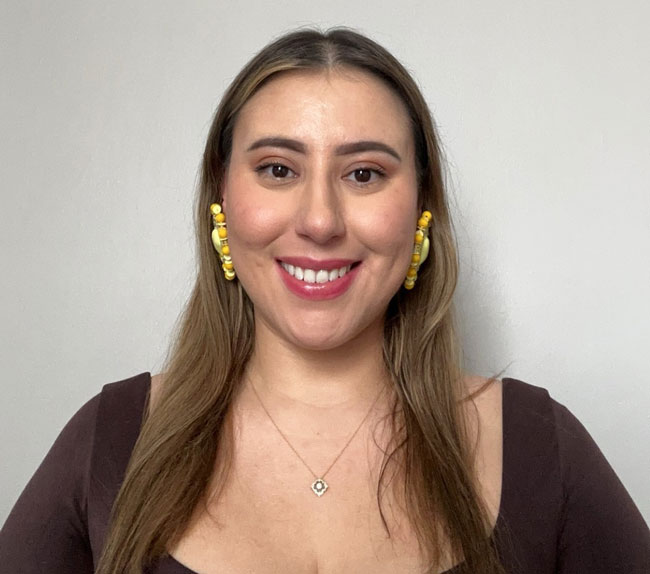
Micaela Champagne (BSc’22) is a Cree/Métis woman who earned a Bachelor of Science degree in archaeology at USask’s College of Arts and Science in 2022 and is currently pursuing a master’s degree in archaeology at USask. She is also the CEO and co-founder of askîhk Research Services, which was launched in 2024 as a full-service provider into investigations for missing children at residential schools and associated sites across Turtle Island.
The archaeological consulting company was created due to the urgent need to conduct culturally safe and accurate investigations that support Indigenous communities in maintaining full control over how the investigations unfold as well as the data that emerges.
“Every outcome is decided and led by communities,” said Champagne in a recent interview with the Green&White.
As an undergraduate student at USask, Champagne studied with Dr. Terence Clark (PhD), a faculty member in the Department of Anthropology in the College of Arts and Science. Champagne and other archaeology students received hands-on training with Clark, who for years has collaborated with students and scholars to locate unmarked burial locations at residential school sites in Canada. An example of this hands-on learning occurred in 2021, when Champagne was part of a group of students from Clark’s ARCH 385 class who went to the Nutana Pioneer Cemetery in Saskatoon, where they used various methods and technologies, such as ground-penetrating radar (GPR), to search for lost graves.
The GPR survey that Clark and his students conducted at the Saskatoon cemetery involved pulling a radar unit along the ground surface in a grid pattern. The GPR machine transmitted radar waves into the soil and then measured the time it took for the waves to return, in nanoseconds, since differences in time can be caused by factors such as buried rocks, changes in stratigraphy, and grave shafts. GPR is the standard tool for finding graves in forensics, and the training the students received at the Nutana Pioneer Cemetery can now be applied in support of the Calls to Action outlined by the Truth and Reconciliation Commission of Canada (TRC).
Clark has worked with the National Centre for Truth and Reconciliation (NCTR), which was created as part of the mandate of the TRC, to develop a plan for locating the remains of missing children at residential school sites across the country. In 2021, Clark helped found the Canadian Archaeological Association Working Group on Unmarked Graves (CAAWGUG), which has members across Canada, including Champagne and USask archaeology graduate Joshua Murphy (MA’22). In 2024, CAAWGUG was one of six recipients of the Governor General’s Innovation Award, which honours innovators who positively impact the lives of Canadians.
“Indigenous people have always known the existence of these missing children, but this organization and these practices are a tangible way for non-Indigenous Canadians to see the impact of residential schools,” Champagne said in a 2024 College of Arts and Science interview. “I wanted to make sure that these stories that our truth-tellers and our survivors have been telling us for years were really going to be heard by the wider public.”
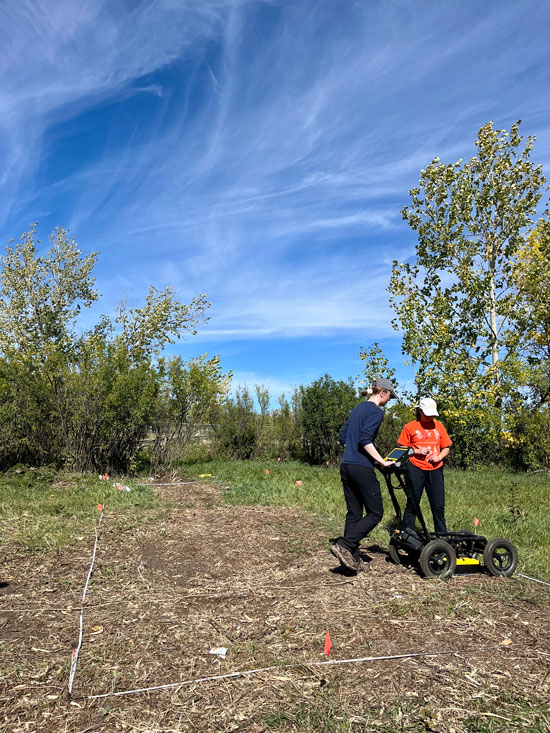
In 2024, Champagne, Clark, and USask archaeology alumni Kathleen Willie (BSc’18, MA’23, GTPC’23) and Angela Burant (BA’19, MA’25) came together to create askîhk Research Services, an Indigenous and woman-led archaeological consulting company based in Saskatoon, on Treaty Six Territory and the Homeland of the Métis. In the Green&White interview, Champagne said the focus of askîhk Research Services is to support Indigenous communities and ensure that the work at residential school sites is conducted with Indigenous ways of knowing as a priority.
“The name askîhk was actually gifted to us by my kukom (grandmother), who is a survivor of the Île-à-la-Crosse Residential School. She speaks multiple languages and dialects; fortunately, that wasn’t lost in residential school,” Champagne said. “She decided to choose ‘askîhk’ because essentially, in Cree, the translation is ‘to be held within the Earth, to come from the Earth.’ So, the idea was that these children are being held in the Earth until they’re able to found with the processes that we do with our company.
“And also, if you speak other dialects in Cree, it also just translates to a bucket,” Champagne added. “She’s cheeky, but bucket, of course, is a really good tool in archaeology that we use.”
While the people behind askîhk Research Services have the academic background to conduct this work, they also have cultural knowledge and awareness training and experience. As archaeologists, they view it as their duty to help with the residential school searches. Champagne said it’s important to acknowledge the non-ethical treatment of Indigenous people in archaeology in the past, and to move forward to a future that is based on mutual respect and understanding.
For Champagne, it’s deeply personal work. She said the most important motivation for her company is to honour her kukom and the relatives who didn’t get the opportunity to grow up. Through askîhk Research Services, Champagne is committed to safeguarding the future for her descendants and her family’s descendants by bringing difficult truths to light.
“Everything that I do is motivated by ensuring that the next generation is going to be set up for greater healing and greater success,” she said.
The USask campus community can access support via the Student Wellness Centre and Student Affairs and Outreach. Staff and faculty can access confidential counselling through the Employee and Family Assistance Program. The following community-based supports are also available:
- The Indian Residential School Survivors Society at 1-800-721-0066 along with a 24-hour crisis line at 1-866-925-4419 for those who need immediate support.
- The KUU-US Crisis Line Society provides an Indigenous-specific crisis line available 24 hours a day, seven days a week. It's toll-free and can be reached at 1-800-588-8717.
- The First Nations Health Authority offers support specifically for survivors and families who have been directly impacted by the Indian Residential School system.
Article re-posted on .
View original article.