

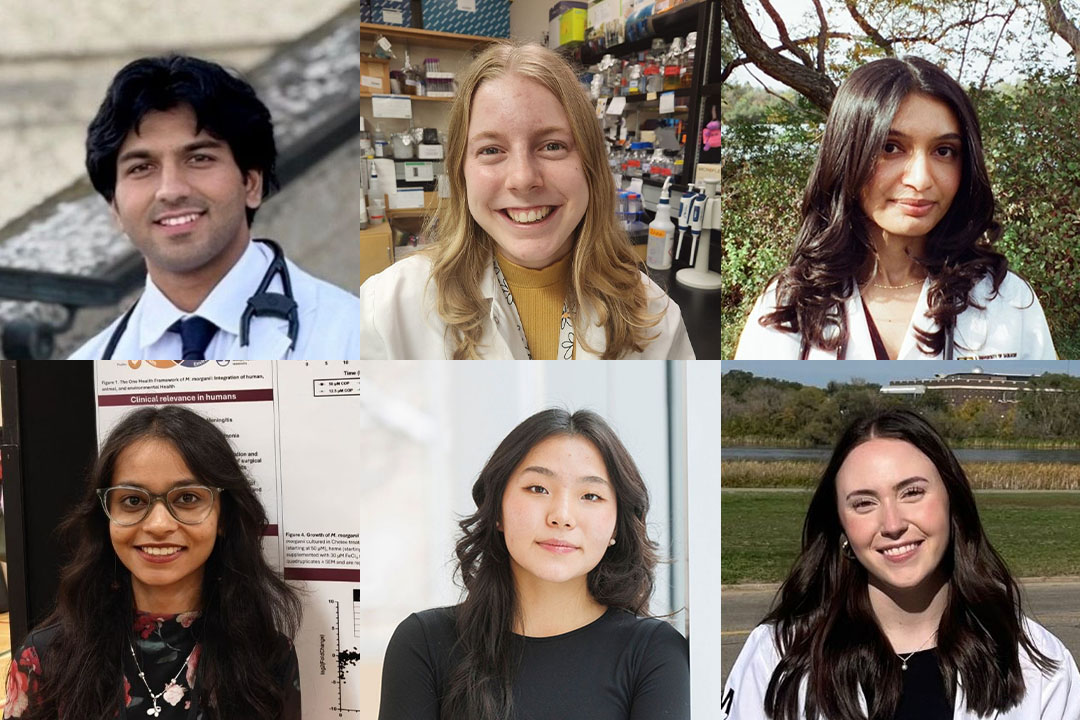
College of Medicine students explore research through summer projects
Summer research opportunities give students in the University of Saskatchewan’s College of Medicine valuable hands-on experience and exposure to interdisciplinary health research.
By College of Medicine CommunicationsStudents from our undergraduate biomedical sciences and Doctor of Medicine (MD) programs participate in summer research opportunities across a wide range of disciplines. Working under the supervision of faculty, students contribute to projects that advance knowledge and improve health outcomes while learning more about the research process.
These experiences help students develop research skills and deepen their understanding of the role of research in health care. For participants in the interdisciplinary program, the experience can encourage further study at the graduate level.
Students can participate in one of three programs: Biomedical Summer Research Projects, Dean's Summer Research Projects or Interdisciplinary Summer Research Projects.
This year, more than 90 students engaged in summer research projects within the College of Medicine. In addition to completing their projects, students will present their work at a virtual Undergraduate Student Showcase on October 14. View their project posters and abstracts online until October 31.
We're proud to showcase several of our student researchers and the projects they explored this summer. Read on to learn more about their research experiences.
Kathan Choksi
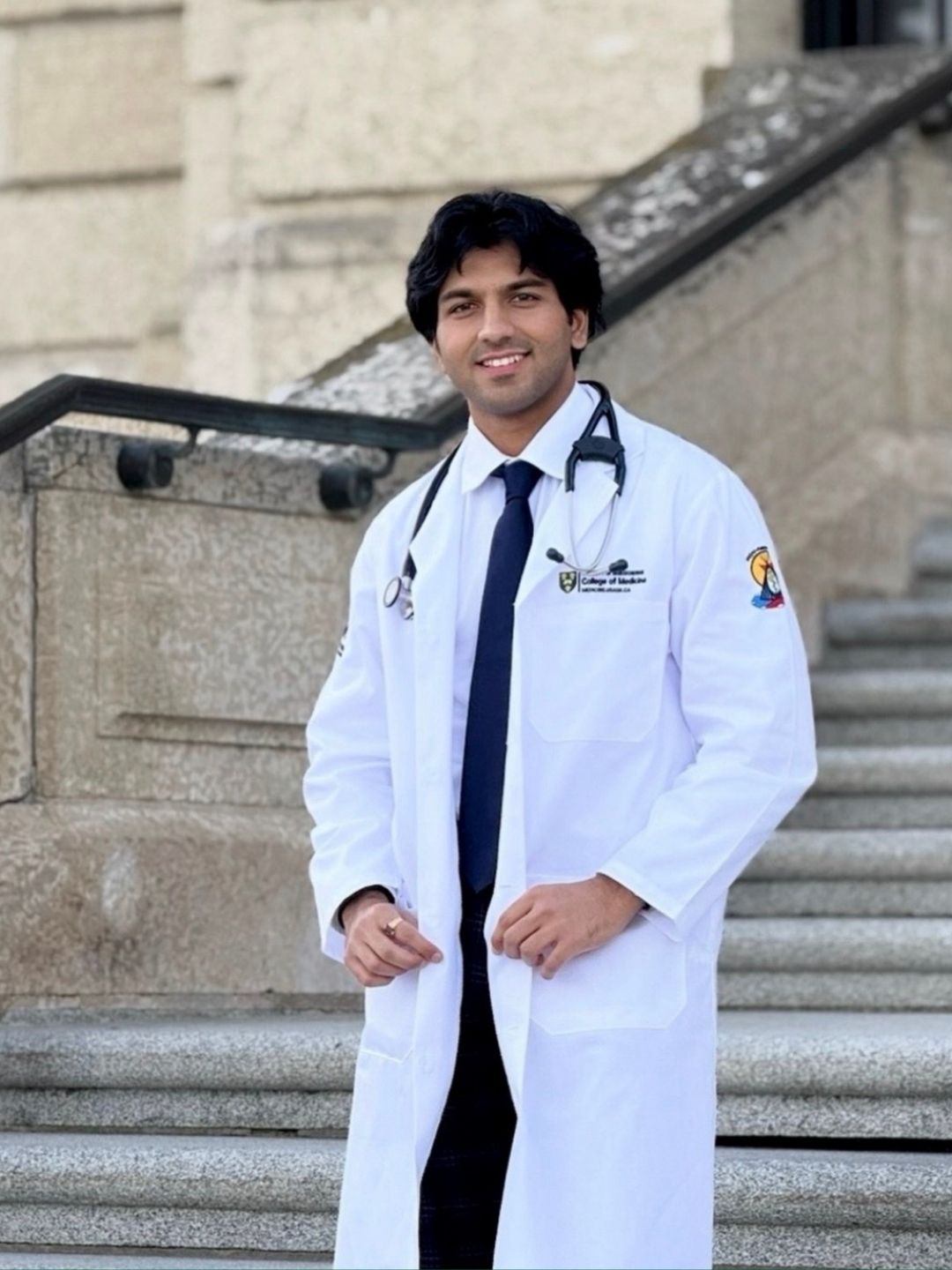
For second-year Regina Campus medical student Kathan Choksi, medicine is about ‘bigger picture’ ways to help the health care system work better.
This summer, Kathan teamed up with supervisor Dr. Jordan Buchko (MD) for a Dean’s Summer Research Project to tackle a major challenge: the efficiency of medical imaging.
Kathan has a rich research background, having studied kinesiology, led a neuroscience project, and earned a Master of Public Health degree, which taught him advanced research methods. He also worked with the Saskatchewan Cancer Agency sharing health facts. He also brings a unique perspective from serving as a Medical Assistant in the Canadian Armed Forces.
“Serving helped shape my interests in leadership, teamwork, and service,” he says. “These experiences motivate me to combine clinical medicine, research, and service to improve patient care.”
Titled ‘Appropriateness of Hip and Knee MRI in Regina: A Retrospective Observational Study’, the project involved reviewing over 3,000 MRI cases from southern Saskatchewan. They analyzed patient age, referring specialists, prior X-rays, arthritis severity, and final findings to see if these advanced scans were always necessary.
“We want to identify when an MRI provides meaningful additional value,” Kathan explains. “Our findings can guide better education for doctors, reducing unnecessary imaging, lowering costs, and cutting down wait times.”
Kathan is also interested in how tools like AI could improve clinical decision-making, aligning with his goal to pursue surgery in trauma, orthopedics, and acute care, while keeping research a permanent part of his work.
For students thinking about summer research, Kathan says choose a project that genuinely interests you and contact supervisors early. He emphasizes staying organized, asking questions, remaining patient with large datasets, and don’t worry too much about prior research experience.
While his research project kept him busy, Kathan did find the time to enjoy traveling to new places and experiencing new cultures.
When he is not studying or volunteering in student leadership, he stays active and loves spending quality time with his friends and family.
Rhea Martin
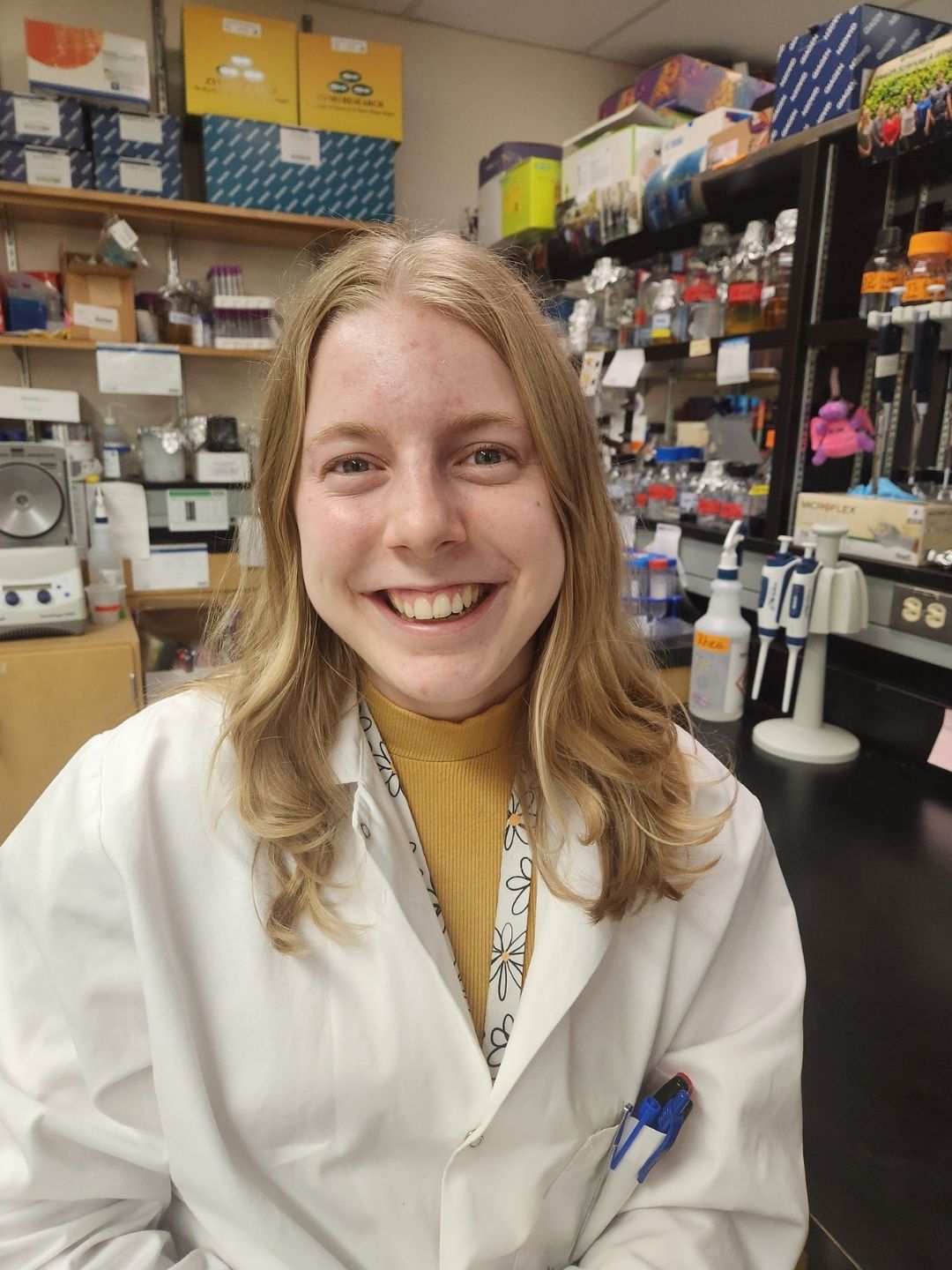
For recent USask graduate Rhea Martin, research is about connecting the pieces.
Rhea returned to Dr. Linda Chelico's (PhD) lab for a second consecutive summer, building on work she began as an undergraduate student.
After graduating this spring with a Bachelor of Science (Honours) degree in Biochemistry, Microbiology and Immunology, Rhea is continuing her research as a PhD student at USask this fall.
Her work initially focused on proteins that help the body defend itself against HIV-1. During the school year, Rhea became interested in how a related group of proteins may play a role in cancer and shifted her research focus.
Supported by the Diefenbaker Memorial Scholarship, Rhea’s summer project explored whether APOBEC3B may also promote cancer by affecting genes that control cell growth in estrogen receptor-positive breast cancer. The findings could reveal a new way that APOBEC3B contributes to cancer beyond its role in causing changes to DNA.
"I love watching the story come together. It isn't just doing the experiments, reading papers, analyzing data or communicating the findings. All of these components are needed for the scientific story to come together. Watching this happen in real time is what I find most exciting,” she said.
Hani Rukh-E-Qamar
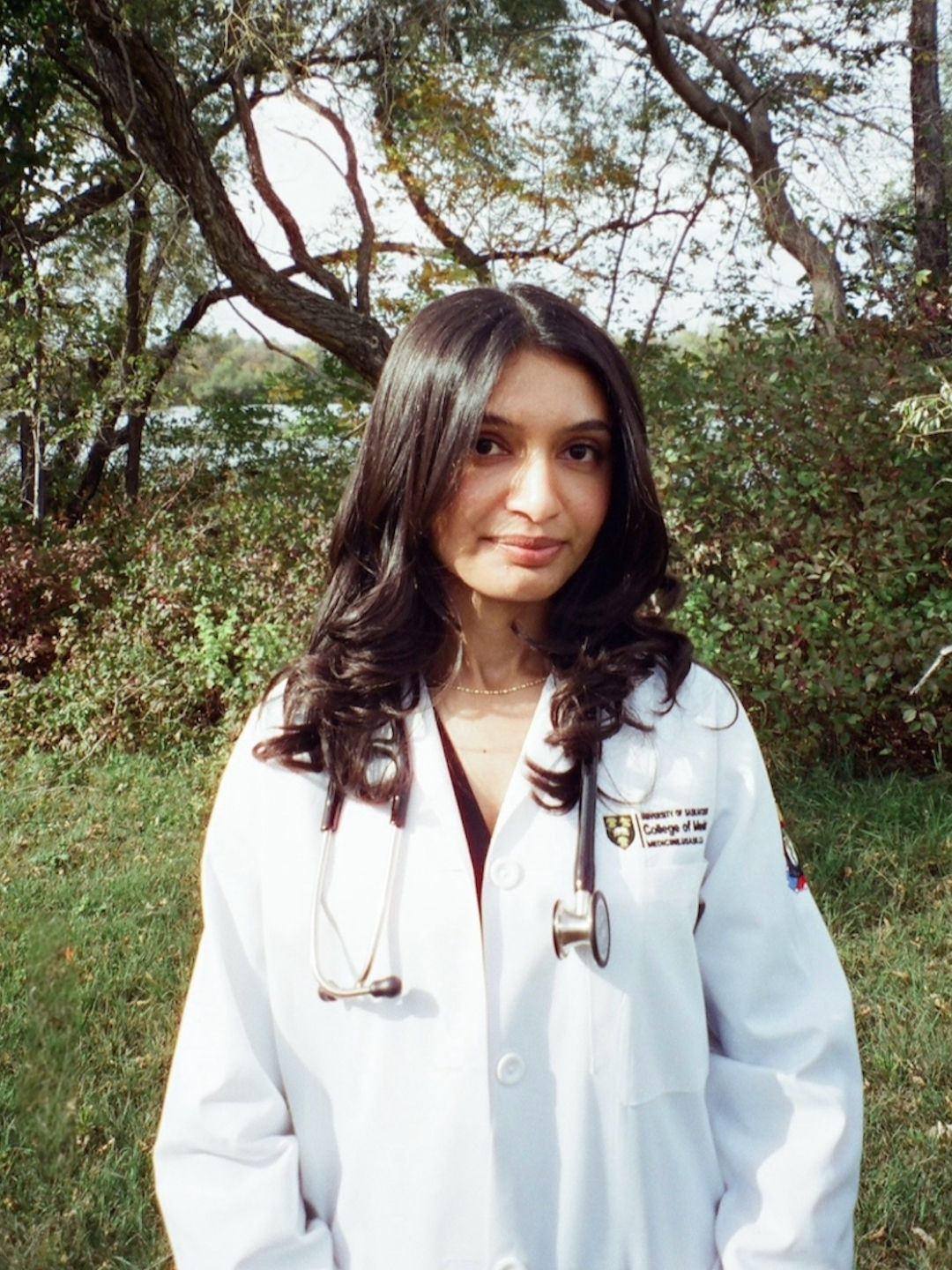
“Research has always been something that excites me because it allows me to contribute to work that is bigger than myself and has the potential to make a meaningful difference in people’s lives,” said Hani Rukh-E-Qamar, MD Class of 2029.
Over the summer, Hani worked on a Dean’s Summer Research Project to evaluate a newer and more simplified ultrasound for pregnancies.
“[It] uses a standardized sweeping motion across the abdomen,” said Hani. “AI analyzes the images to estimate fetal weight and gestational age. We aim to determine whether this approach is as accurate as traditional ultrasound and could improve access to reliable prenatal imaging in communities with limited ultrasound specialists or equipment.”
Hani is no stranger to research. Prior to beginning as an MD student at USask, she took part in research with digital health, health care access, and sexual and reproductive health while achieving her Master of Science in Epidemiology at McGill University.
“During medical school, I have continued research in reproductive and mental health, including projects on robotic surgery for gynecologic cancers, an AI-based mental health application, and AI-enabled pregnancy ultrasound,” shared Hani.
For learners interested in Dean’s Summer Research Projects, Hani advised, “There are many ways to get involved in research throughout medical school, and a Dean’s Summer Research Project is a great opportunity! I would recommend choosing a project you feel personally connected to or one that allows you to develop a skill you are interested in.”
Summer is also a time of rest – or in Hani’s case, adventure. In addition to research and travelling, she was able to attend a WNBA game. “[It was] the most attended WNBA game in regular season history!” said Hani.
Stuti Thakkar
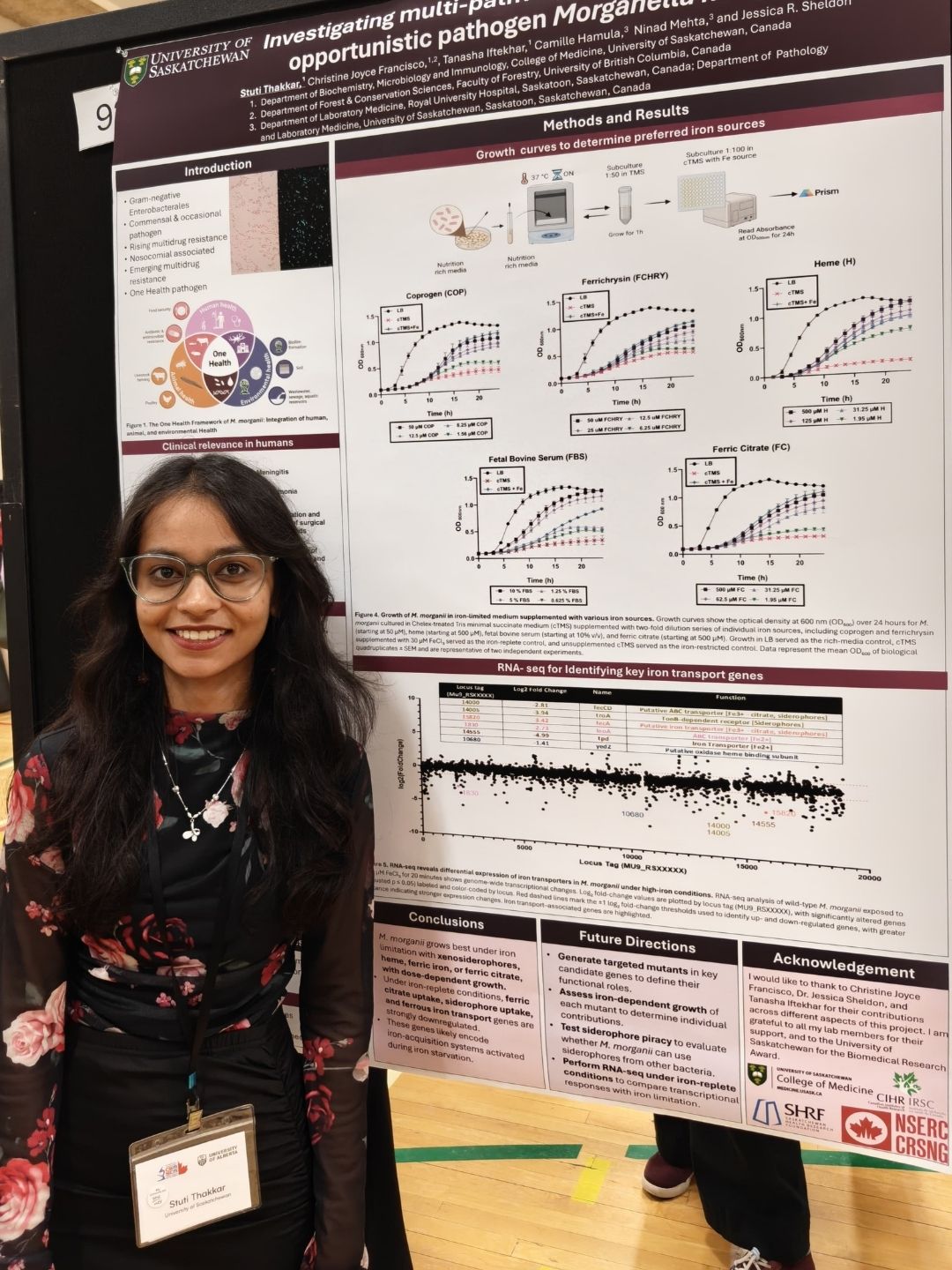
A fascination with the microscopic world led third-year USask biomedical sciences undergraduate student Stuti Thakkar to pursue research.
This summer, Stuti worked with Dr. Jessica Sheldon (PhD) to complete a research project studying a common gut bacterium called Morganella morganii. While the bacterium usually lives harmlessly in the gut, it can sometimes cause infection when conditions change. Stuti's project explored how it adapts when iron is limited and how those survival strategies may contribute to disease.
Supported by funding from the Office of the Vice-Dean Research, and the Natural Sciences and Engineering Research Council of Canada Undergraduate Student Awards, the project examined how small changes in a bacterium's environment can influence infection and survival.
Looking ahead, Stuti plans to continue her research in graduate school.
“What excites me most is how humbling it is to study organisms we can’t see with the naked eye and understand how they change when conditions shift. Even small behaviours can teach us a lot about infection and survival.”
Elizabeth Byambatseren
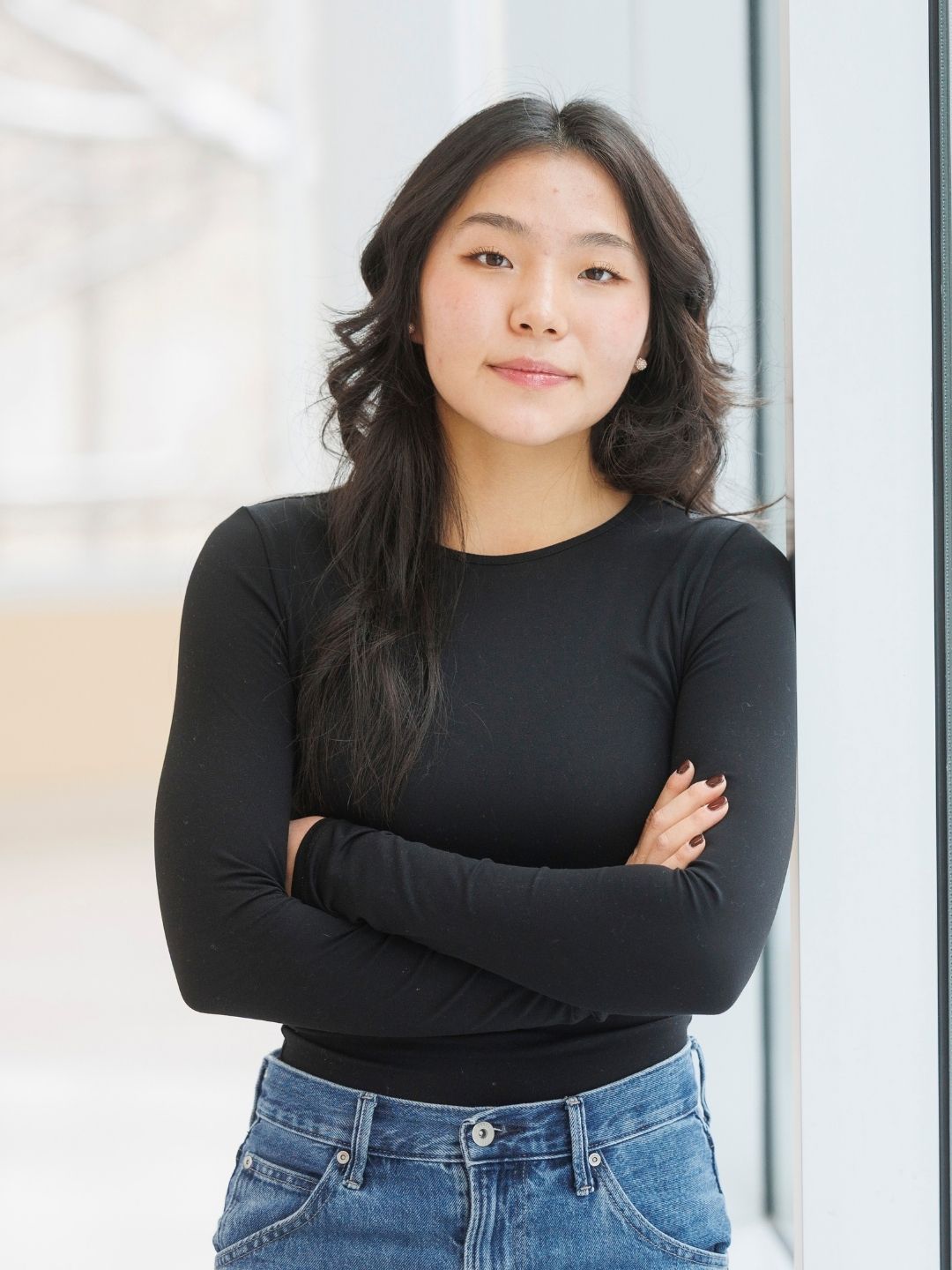
Meet Elizabeth Byambatseren, a fourth-year USask biomedical sciences honours student whose interest in neuroscience began at a young age.
This summer, Elizabeth worked with Dr. Darrell Mousseau (PhD) to study how brain cells respond to stress at the cellular level. Her project focused on monoamine oxidase, a protein found in mitochondria, the structures that produce energy for our cells, and how it behaves under different forms of cellular stress.
Elizabeth's research explores how brain cells respond to stress and what that might reveal about healthy brain function. While the project is not directly studying Alzheimer's disease, it could help researchers better understand the biological processes involved in aging and neurodegenerative diseases.
For Elizabeth, one of the most exciting aspects of research is discovering how fundamental cellular processes can have far-reaching implications for our understanding of health and disease.
“I'm amazed by how something that seems so small or straightforward can play such a significant role in research. It's exciting to see how each discovery helps build a better understanding of complex biological processes and has the potential to guide future research,” she said.
After graduation, Elizabeth hopes to pursue a career in health care while continuing to contribute to research.
Elizabeth's summer research was supported by a Natural Sciences and Engineering Research Council of Canada Undergraduate Student Award.
Annika Dixon

An interest in neurology led second-year USask medical student Annika Dixon to pursue a Dean's Summer Research Project. After participating in multiple sclerosis research during her undergraduate neuroscience degree, she was eager to continue building her research experience while exploring a new area of study.
For Annika, the experience was an opportunity to apply her research skills in a new area and gain exposure to clinical and translational research.
Over the summer, Annika worked with Dr. Eric Noyes (MD) on a research project focused on Parkinson's disease. Her project built on the lab's previous research aimed at identifying markers for earlier detection of the disease.
Earlier studies found seven markers in ear wax and skin oil samples that appeared to be unique to people with Parkinson's disease. By reviewing patient data, Annika explored whether clinical and demographic factors may help explain differences in these findings.
Her advice for students considering a Dean's Summer Research Project? Don't be afraid to try something new.
“Moving out of your comfort zone will always teach you the most. Even if a research area or specialty is new to you, I recommend applying to projects you find genuinely interesting. A genuine passion for any research project allows you to get the most out of it.”
Article re-posted on .
View original article.