

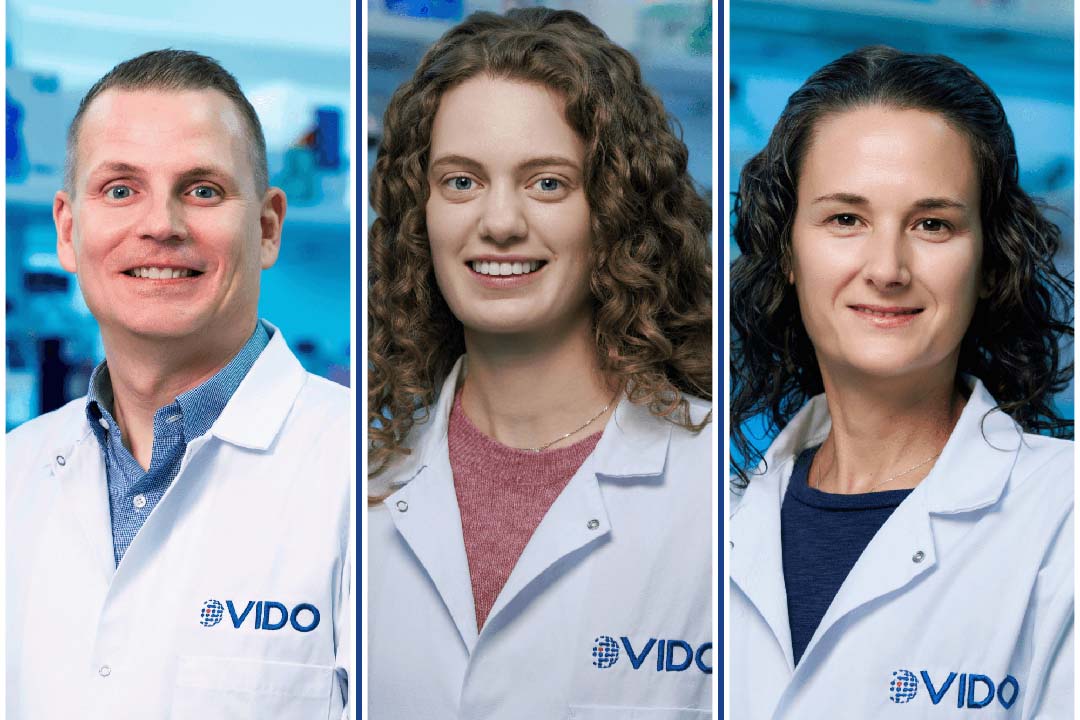
New scientists bring global animal health expertise to VIDO
SASKATOON — From emerging H5N1 influenza to African swine fever, three scientists recruited from around the world are joining the Vaccine and Infectious Disease Organization (VIDO) at the University of Saskatchewan (USask) to address diseases that threaten animals and food security in Canada and around the world.
Recruited to Saskatchewan from North America, Africa and Europe, the three scientists bring expertise in influenza, livestock vaccines and swine immunity. Their arrival strengthens VIDO’s capacity to address infectious disease challenges affecting animals and food production.
“Animal health has been a focus at VIDO for more than 50 years,” said Dr. Volker Gerdts, VIDO director and CEO. “At a time when livestock industries are facing increasingly difficult disease challenges, we continue to attract outstanding scientists from around the world and bring their knowledge to Saskatchewan.”
Dr. Troy Sutton joined VIDO in July 2026, returning to Canada after nearly a decade at Pennsylvania State University in the United States. His research focuses on emerging influenza viruses, including highly pathogenic H5N1, which has affected dairy cattle in the United States and led to poultry depopulation in Canada and around the world. His work examines how influenza viruses spread and cause disease, the risks they pose to animals and people, and how vaccines can help reduce those risks. In Canada, a recent economic impact study estimated that effective avian influenza vaccines could help protect $425 million in GDP and 3,200 jobs from outbreak-related losses.
Dr. Anna Lacasta, originally from Spain, joined VIDO in July 2026 from the International Livestock Research Institute in Kenya, where she led research on vaccines for African swine fever and East Coast fever. At VIDO, her research focuses on developing safer and more effective vaccines for African swine fever and other livestock diseases. ASF is one of the most serious foreign animal disease threats facing Canada’s swine industry, with the same economic impact study estimating that an effective ASF vaccine could help protect $5.5 billion in Canadian GDP and 42,000 jobs from losses associated with an outbreak.
Dr. Leonie Bettin joined VIDO in September 2026 after completing postdoctoral research at the University of Veterinary Medicine Vienna in Austria. A veterinarian and immunologist, she studies immune responses in pigs, including T cell biology and mucosal immunity. By better understanding how the porcine immune system responds to infection and vaccination, her work could help researchers design and evaluate more effective vaccines for swine diseases.
Together, the three scientists add new perspectives to VIDO’s longstanding animal health research and strengthen its work to develop better vaccines, protect livestock and support producers and food security.
“Troy, Anna and Leonie bring different expertise, but share the same goal: finding better ways to prevent disease, protect animals and strengthen the food security we all depend on,” said Gerdts.
-30-
For more information, contact:
Ashley Trask
USask Media Relations
Ashley.trask@usask.ca
306-966-4522
Caitlin Gill
VIDO Communications Advisor
caitlin.gill@usask.ca
306-966-2083
About the Vaccine and Infectious Disease Organization
The Vaccine and Infectious Disease Organization (VIDO) at the University of Saskatchewan is one of Canada’s national science facilities and a global leader in infectious disease research and vaccine development. For more than 50 years, VIDO has helped protect people, animals and food systems through science, with eight commercialized vaccines, including six world-firsts. As Canada’s Centre for Pandemic Research, VIDO operates one of the world’s largest and most advanced containment facilities, bringing together high-containment laboratories, large-animal research capacity and GMP-compliant vaccine manufacturing to advance solutions for emerging infectious diseases. VIDO receives operating support from the Canada Foundation for Innovation Major Science Initiatives Fund and the Government of Saskatchewan through Innovation Saskatchewan and the Ministry of Agriculture. Learn more at vido.org.