

Milestone year sets up veterinary college for future success
What lies ahead for the Western College of Veterinary Medicine (WCVM), one of Canada’s five veterinary colleges and an integral member of the University of Saskatchewan’s health sciences group?
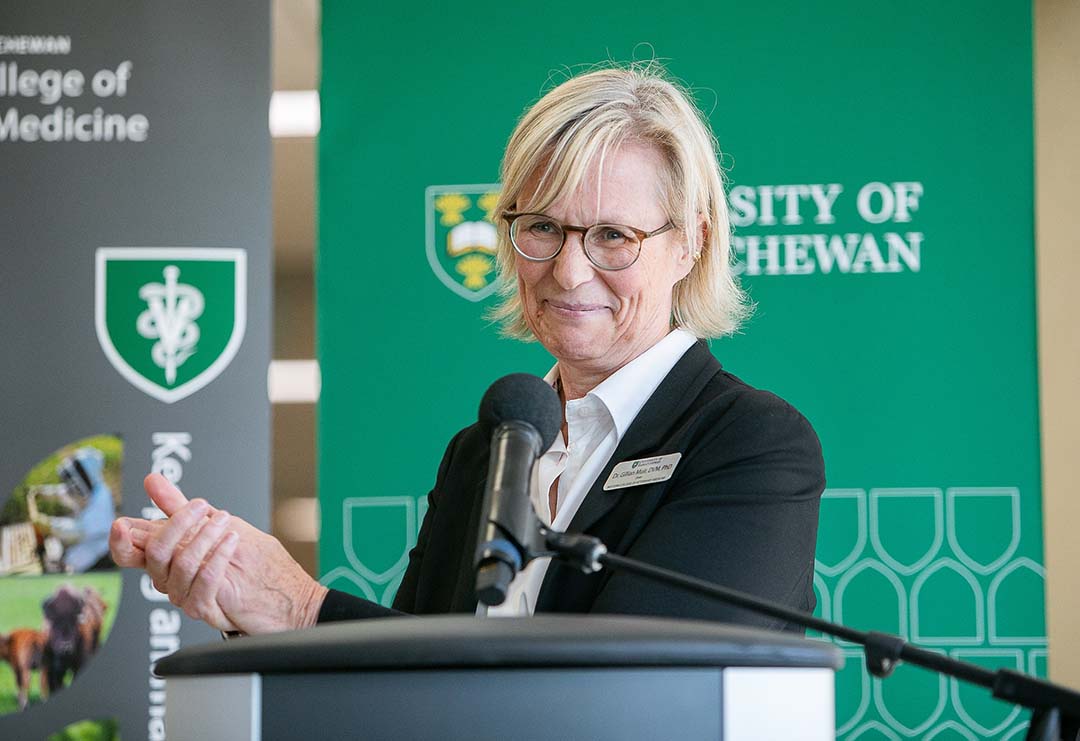
By Myrna MacDonaldThe ideal person to respond is Dr. Gillian Muir (DVM, PhD), a 1988 WCVM graduate who was recently reappointed as the college’s dean for a second term. In this article, she talks about the WCVM’s milestone year, its latest achievements and exciting plans for its future.
Q: The WCVM recently had an anniversary. How did the college celebrate?
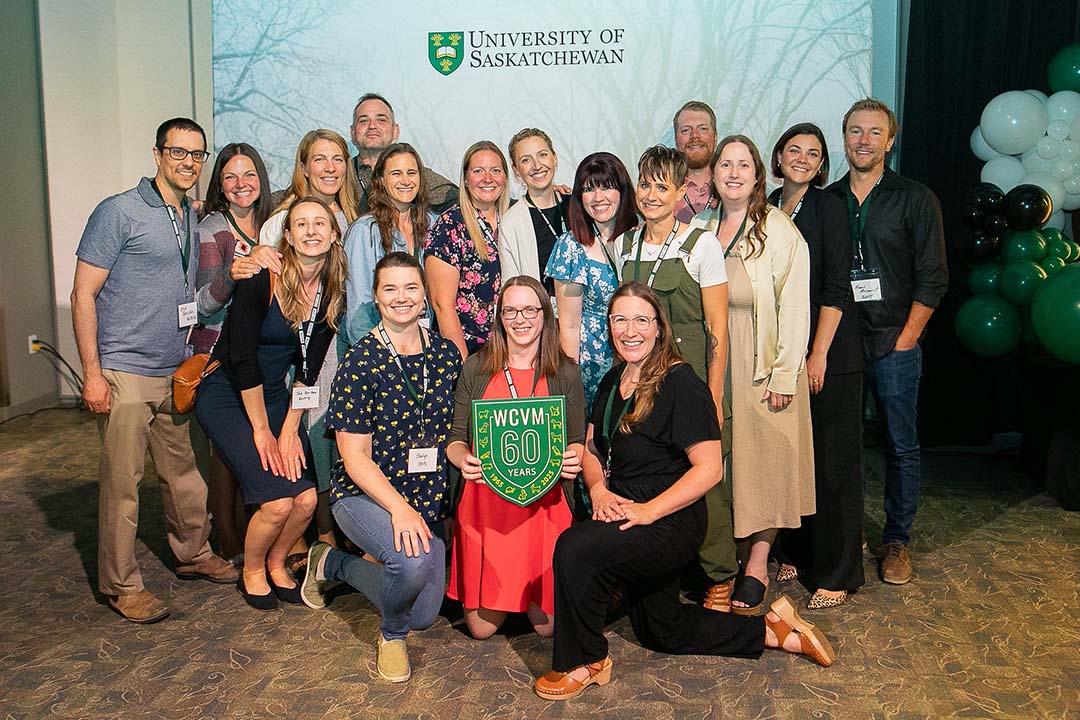
Yes, 2025 marked 60 years since our first class began veterinary studies in 1965. More than 600 people attended our anniversary celebrations in early June 2025, and it was a wonderful weekend full of reminiscing, renewed friendships and great conversations. A dozen classes also held reunions, so it was amazing to see so many alumni together. We’re grateful to everyone who attended the celebration—their enthusiasm and support was energizing!
Q: What else made 2025 memorable?
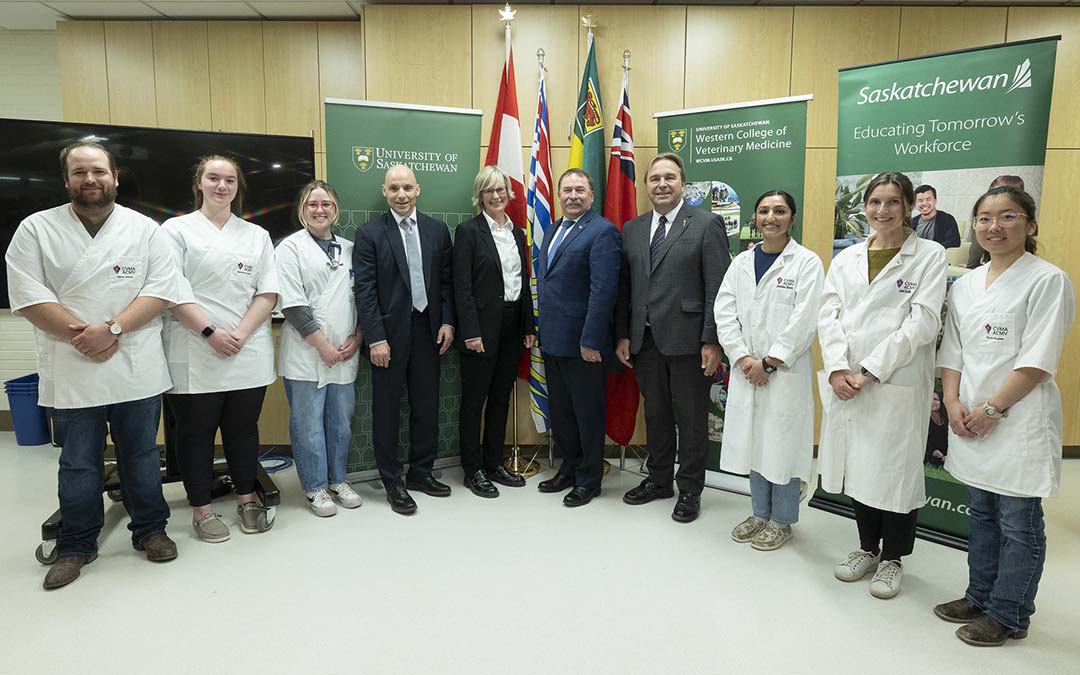
In May 2025, the Governments of Saskatchewan, British Columbia and Manitoba renewed their financial commitment to the WCVM. This agreement provides more than $194 million over the next five years, helping to ensure the college can deliver critical veterinary medicine programming, research and clinical services.
We also had great news about the WCVM’s international accreditation status in 2025. The American Veterinary Medical Association (AVMA) Council on Education granted full accreditation to the WCVM after a successful site visit in October 2024. The American Animal Hospital Association (AAHA) also reaffirmed accreditation for our Veterinary Medical Centre (VMC).
Q: How did the WCVM prepare for accreditation?
Accreditation by the AVMA Council on Education, which includes a comprehensive site visit every seven years, represents the highest standard for veterinary medical education. In the years leading up to our recent AVMA accreditation, we conducted an intensive revamp of our Doctor of Veterinary Medicine (DVM) curriculum and had it in place by the 2023/24 academic year.
Our curriculum uses the principles of competency-based veterinary education, which is based on the human medicine education model. This approach focuses on outcomes-based and learner-centred education and assessment, with goals of optimizing new graduate success and patient outcomes.
Feedback from WCVM graduates and employers also encouraged us to significantly increase the number of students’ hands-on training opportunities throughout the program’s four years. It ensures that graduates have the skills and hands-on experience they need to be “practice ready” in the profession.
Q: Why are you changing the length of the veterinary program’s final clinical year?
To meet AVMA’s new requirements, our final clinical year needs to be extended from 32 weeks to 40 weeks. This change was announced in 2024 and had to be in place by 2026, so we needed to work fast. Thanks to the extraordinary efforts of our academic team and with huge support from western Canadian veterinarians, we’re ready.
Q: What solution did the college come up with?
The WCVM is launching a four-week primary care experience rotation, which will give senior students more hands-on, practice-ready experience in primary care for companion animals as well as horses, cattle, sheep and other livestock. These rotations will take place in veterinary clinics across B.C., Saskatchewan and Manitoba in the spring and summer months.
All 88 students in the WCVM Class of 2027 must complete this rotation along with four weeks of WCVM-based clinical rotations. These experiences are over and above the current 32 weeks of clinical rotations that senior students must complete.
Q: How challenging was it to organize?
The timing was challenging, plus we had to ensure that all host clinics met the AVMA Council on Education’s requirements. Finding spots for 88 students seemed daunting, but it has been reassuring to see so many clinics in our partner provinces support the students’ education. We have 76 clinics (some clinics are taking multiple students) in 61 communities across B.C., Saskatchewan and Manitoba participating. Their support has been overwhelming.
Q. Do you have an update on the WCVM’s plans for an expansion?
Canada continues to face a nationwide shortage of veterinary professionals in all areas of practice, and the western provinces aren’t immune to this shortage.
The WCVM is at maximum capacity—we can’t increase our DVM class size any further without significant changes. That’s why the college and the university have teamed up to explore the option of expanding and renewing WCVM facilities and resources. These activities have received funding from the Government of Saskatchewan over the past few years, and we’re very grateful for the financial support. In the recent budget, the provincial government allocated $500,000 for investigations of the college’s space expansion and renewal needs.
In February, an external consultant team observed clinical operations in our Veterinary Medical Centre and met with people who work, teach, learn and care for animals in the hospital. The consultants want to better understand how people use existing space and how new or renovated space can be designed to support their work. Later this spring when we receive the consultants’ conceptual and phasing plan for the hospital, their recommendations will help guide next steps in project planning. We must take all these steps to determine what’s needed for a future expansion so we’re ready to go if funding is secured.
Q. Where will the WCVM seek funding support?
It’s a big project that we hope will attract both public and private support. For example, the WCVM and the Canadian Veterinary Medical Association (CVMA) are seeking federal funding for the development of a national training and testing centre for internationally trained veterinarians. The WCVM is Canada’s only English-language host site for the CVMA’s National Examining Board program, which helps to place up to 55 qualified veterinarians into the profession each year. Dedicated space for training and testing at the WCVM will help increase those numbers.
Q: What role do donors play?
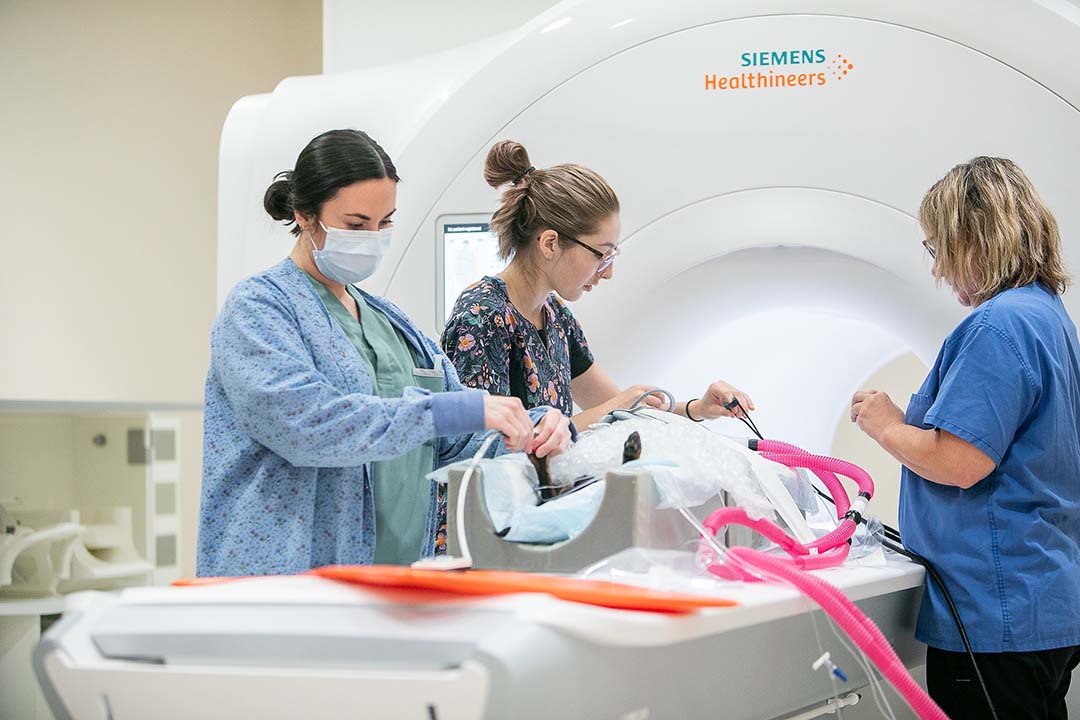
The WCVM is fortunate to have an extensive family of longtime donors as well as new supporters who want to contribute to scholarships, research studies, clinical tools and other initiatives. Our wonderful donors truly make a difference, which was demonstrated last fall when we celebrated the opening of our new magnetic resonance imaging (MRI) machine and linear accelerator. This project cost $9.1 million, with donors from across Canada contributing more than $5 million in support of this initiative at the Veterinary Medical Centre. We couldn’t have replaced these technologies without critical support from our donors.
Q. You’ve been reappointed as WCVM dean. What motivated you to continue in this role?
In the past four decades I’ve been a veterinary student as well as a professor, researcher, administrator and dean at this college. The WCVM’s future is very near and dear to me, so I’m excited and grateful for the opportunity to continue being dean for a second five-year term. These are exciting times for the WCVM, and I’m honoured to be part of long-term decisions that will help to shape the college’s future. I look forward to the next five years!
For more information, click here to view the 2025 WCVM Community Report.