

USask students tackle sustainability beyond the classroom
University of Saskatchewan (USask) undergraduate students from the College of Agriculture and Bioresources (AgBio), the College of Arts and Science, Edwards School of Business, and through the School of Environment and Sustainability (SENS)’s Undergraduate Certificate program, will present their capstone projects at the annual Sustainability Trade Show on April 2.
By Amy Janzen, SENS CommunicationsAcross the EVSC 485.3 Environmental Science Capstone and ENVS 401.3 Sustainability in Action courses, 50 students came together to explore eight unique projects and applied their learning to real-world sustainability challenges. These interdisciplinary projects go beyond environmental science to include community engagement, culture, and systems thinking, showing how social, cultural, and economic factors shape long-term sustainability. Together, they showcase the range of sustainability efforts on campus, and the impact students can have in creating practical, community-focused solutions.
“It’s the determination of this group that has really sparked some unique solutions to growing challenges,” said Dr. Colin Laroque (PhD), AgBio and EVSC 485.3 instructor. “We’re seeing students revisit and reimagine past work while also bringing forward entirely new ideas shaped by systems thinking.”
“Sustainability isn’t just a physical thing. It’s about how everything connects, from environmental systems to social and cultural realities,” said Dr. Vladimir Kricsfalusy (PhD), SENS and ENVS 401.3 instructor. “What’s encouraging about the work of this year’s capstone projects is seeing students recognize those connections and apply them in thoughtful, practical ways that can make a difference in local communities.”
Food Loops
Abby Machniak, Donovan Braaten, Kendall Trytten, Krishma Niazi, Shana Reanne Gumtang
Food waste remains a significant environmental and social challenge, yet awareness of its scale is often limited. The Food Loops project began with a campus-wide survey that revealed gaps in students’ understanding of how much food is wasted and the broader environmental and economic impacts associated with it.
In response, the group developed a website featuring recipes, educational materials, and data from outreach initiatives. Their work also includes community engagement through school visits and social media, helping to broaden the conversation beyond campus. While the group recognizes they cannot solve food waste on their own, they hope their efforts will create small, meaningful shifts that build over time.
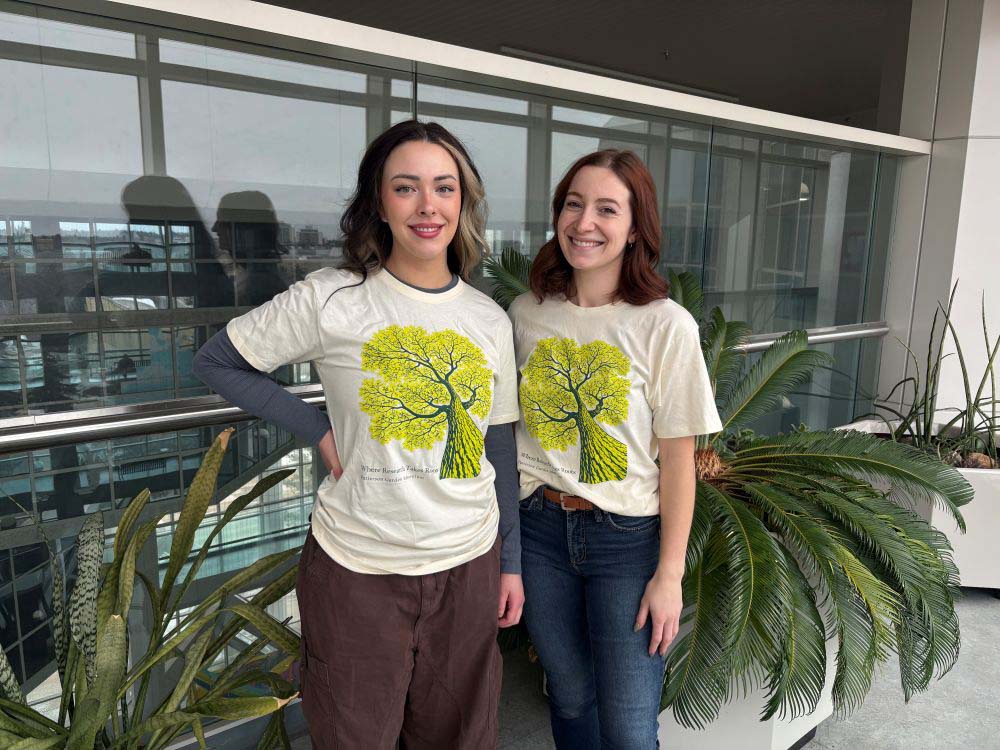
Where Research Takes Roots
Jessa Robb, Peydan Zeman
Urban green spaces play an important role in supporting ecological health, research, and community well-being. At USask, the Patterson Arboretum is widely used as a recreational space but is less recognized as the research and teaching resource that it is. This gap presents both a challenge and an opportunity to better connect people with the purpose and potential of the space.
Where Research Takes Roots aims to strengthen that connection by increasing awareness and engagement through surveys, faculty outreach, educational resources for schools, and a proposed adopt-a-tree initiative.
Luminous Berry
Emily Hamilton, Fikret Ükis, Jocelyn Hargreaves, Mackenzie Tuttle, Taya Fedorchuk
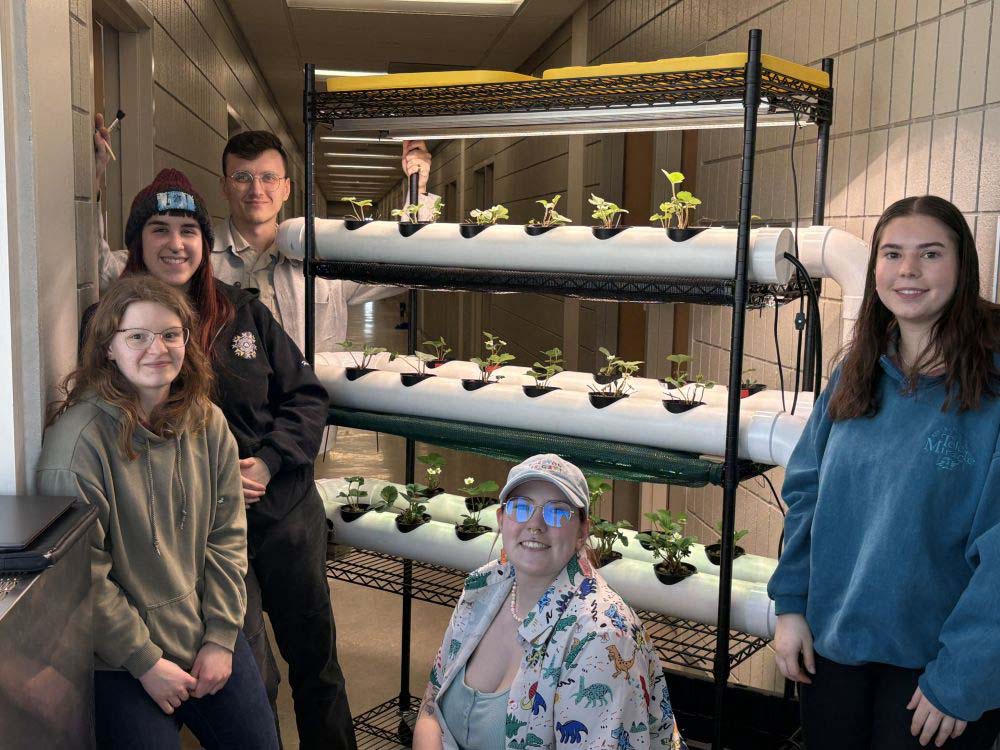
The Luminous Berry project explores hydroponics as a practical option for small-scale, indoor food production, especially in spaces where traditional growing conditions are limited.
The group designed and tested a hydroponic system growing strawberries under three different light conditions, collecting data on plant health, growth patterns, and reproduction over time.
The system and signage describing the project will be installed in the Agriculture Atrium at the end of the term, offering a visible and interactive example for students and visitors for years to come.
Second Life Threads
Chloe Olson, Emily Sewell, Esther Odetunde, Kaden Royer, Karly Nociar, Joseph Medernach
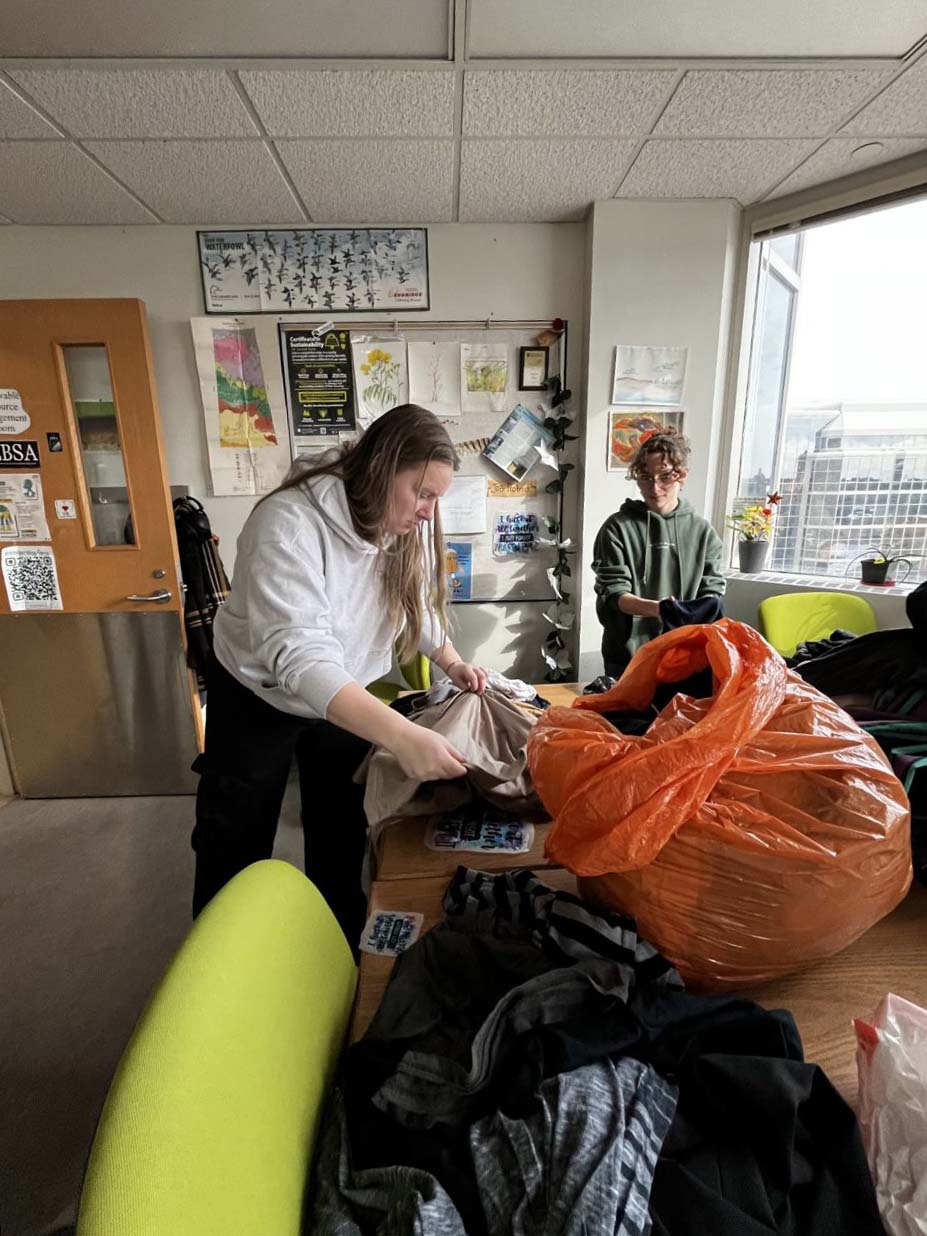
Textile waste continues to grow as clothing becomes more accessible with many items discarded before the end of their usable life, contributing to environmental strain and unnecessary consumption. Second Life Threads focuses on extending the life of clothing by teaching practical repair and upcycling skills.
Through sewing workshops, partnerships, and community events, the group has encouraged the campus community to rethink their relationship with clothing and consumption. The group has also upcycled materials to create winter items such as mitts and bags for individuals experiencing clothing insecurity.
The group will have resources and mini sewing kits available to hand out, while supplies last, at the Sustainability Trade Show.
Weed Warriors YXE
Bowen Webb, Brenn Currie, Cole Barry, Meghan Mickelson, Riley Romashenko, Shayla Woychyshyn
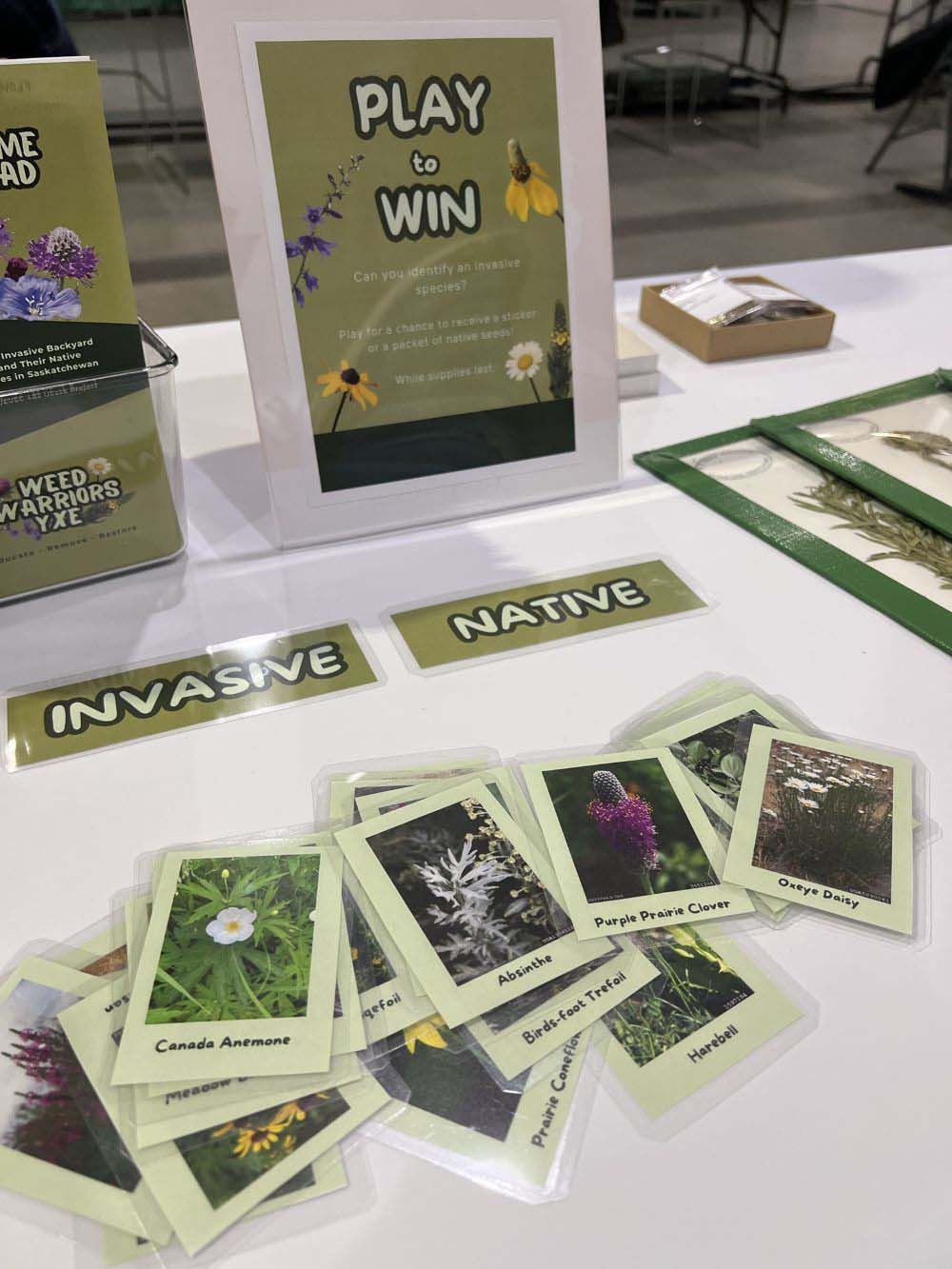
Invasive plant species pose a growing threat to biodiversity and ecosystem health in both urban and natural environments. Many commonly planted species can spread quickly and outcompete native plants, disrupting local ecosystems and making long-term management more difficult.
Weed Warriors YXE is working to raise awareness and provide practical tools to help the public identify, remove, and replace invasive plants with native alternatives. The group has built a website with plant information and identification tools and has been visiting elementary schools, attending community events like Gardenscape, to make it easier for the broader Saskatoon community to take action.
LIMINAL Language Learning
Malcolm McKay, Sunaina Solanki
Many Indigenous and endangered languages can be difficult for beginners to learn, especially online where most tools are built for widely spoken global languages. This can make it harder for new learners to find accessible and culturally relevant ways to get started.
LIMINAL Language Learning is working to change that through a prototype app focused initially on Cree. Using listening, storytelling, and word structure, the app offers a more natural and approachable way to begin learning. The group has worked closely with Elders and language speakers to understand not just pronunciation and spelling, but how these languages are taught, learned, and shared through stories.
This project is just the beginning for this group. Inspired by what they’ve learned throughout the process, they have every intention to keep working on the app and building on this initial phase.
Fruit Belt Project
Alan Fogel, Jayden Cornell, Kyle Niedermaier, Meliah Schwitzer, Phoenix Preston- Winder
Along the Meewasin Valley Trail is a fruit shelterbelt that was originally designed to provide food, habitat, and a shared community space. Over time, however, limited maintenance and site challenges have reduced its effectiveness and overall usability, making the space difficult to access, with some plants needing to be restored altogether.
The Fruit Belt Project aims to restore the site later this year through new plantings, including adding new fruit-bearing trees and shrubs, as well as a pollinator garden that supports biodiversity.
InVert Living Wall
Anaelle Chilton, Devayani Iyer, Gavin McMillan, Hunter Mackie, Lauren Nash, Nahin Sharif
Indoor air quality is an important but often overlooked factor in health and well-being, particularly as people spend more time indoors. Pollutants can build up in enclosed spaces, affecting comfort, concentration, and overall health.
The InVert Living Wall project is hoping to build a living wall that’s designed to help capture airborne pollutants while improving indoor environments on campus. It also serves as an educational tool, bringing visibility to an issue that is often overlooked.
Visitors are invited to explore these projects and meet the students behind them at the Sustainability Trade Show on Thursday, April 2 from 12-4 pm in the Agriculture Building Atrium. The event is free to attend, with visitors ranging from elementary school classes to the broader USask community.