

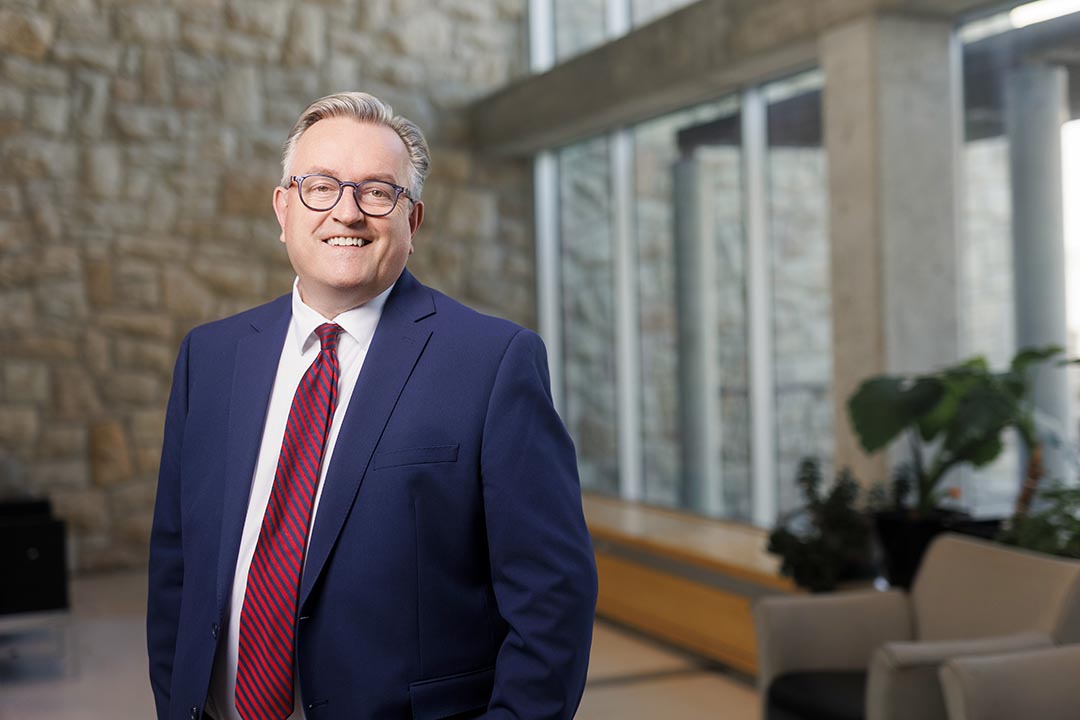
Phillipson bids fond farewell to USask Law
At the end of June, Dean Martin Phillipson wraps up two five-year terms at the helm of the University of Saskatchewan (USask) College of Law. Amy Liebaert from USask Law Communications recently chatted with Phillipson, looking back on his work as dean and learning about his hopes for the college.
By Amy LiebaertQ: If you could go back to your first day as dean and offer yourself one piece of advice, what would it be?
Decisions should always be guided by what’s in the best interests of the institution, the college, and the students. Of course, it’s nice when those decisions align with your own interests, but that will not always be the case. Sometimes it means being unpopular or having to make difficult choices, but the focus can’t be on how it reflects on you personally.
The second piece of advice would be to take your vacation time. I served 10 years straight as dean, even though you’re typically entitled to a year of leave after five. COVID hit during that period, and I couldn’t imagine stepping away then, but I still strongly believe in the importance of taking time to rest, reflect, and recharge. I often tell students that a healthy lawyer is a better lawyer, and the same applies here.
Editor’s Note: On March 13, 2020, the University of Saskatchewan closed for the COVID-19 pandemic. Classes shifted to online delivery for one full academic year due to health and safety concerns. The College of Law resumed in-person classes in Fall 2021 once provincial COVID-19 restrictions were lifted.
Q: What are you most proud of accomplishing during your 10 years as dean?
There are quite a few things but foremost has to be the successful delivery of the Nunavut Law Program. That was a highlight of my professional career. As a college, we delivered what was the most successful higher‑education program in the history of Nunavut, one that has had a transformational and ongoing impact on the territory, the legal community, and the delivery of legal services. I’m particularly proud that we delivered the final year of the program in the midst of a pandemic.
I’m also proud of my time serving as president of the Council of Canadian Law Deans for three years. What we accomplished collectively as deans, particularly in strengthening the relationship between law schools and our accreditors, the Federation of Law Societies of Canada, was deeply rewarding.
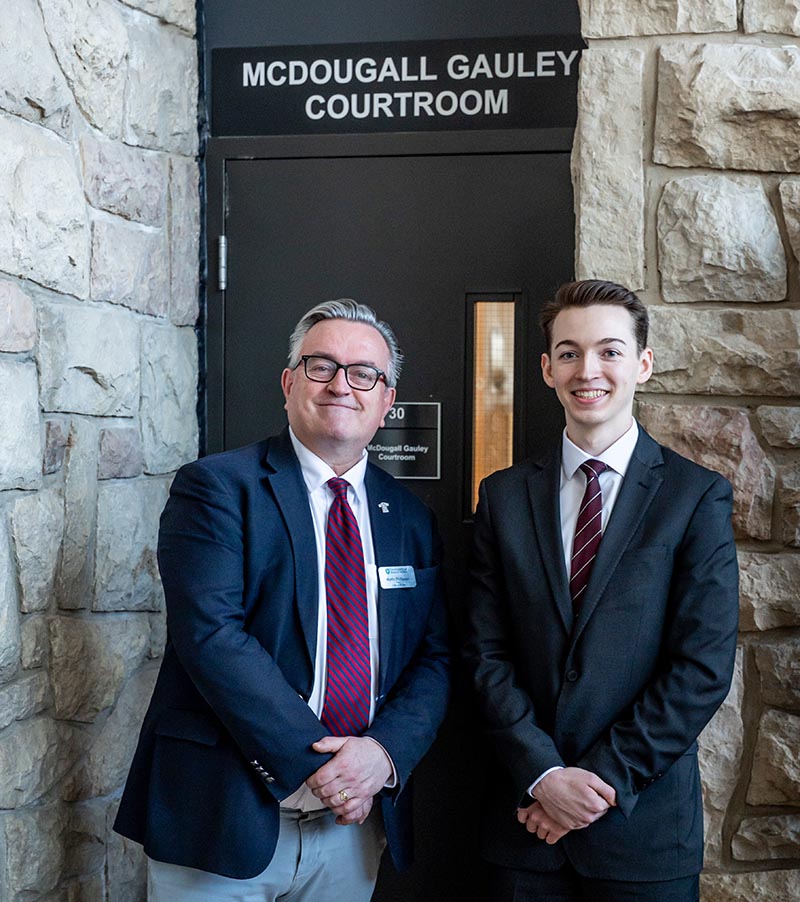
Q: What unexpected challenges did you encounter during your tenure?
Two things stand out. The first, of course, was COVID — talk about unexpected. Everything shut down in the middle of March. We managed to get through the final three weeks of classes, and then, about a month later, it became clear that we wouldn’t be coming back in September. At that point, it really hit me: we were going to have to completely change the way we teach.
The second challenge was budget constraints that emerged within my first six months as dean. Many of the things I had hoped to accomplish early on simply couldn’t happen. As a result, we had to rethink our approach and set clear priorities. Budgets are always an ongoing concern, but a significant cut so early in my tenure was a real surprise.
Q: What aspects of the dean’s job surprised you?
You’re given the illusion that you’re the CEO – and you’re not. The dean’s office is very well respected by students, alumni, and the legal profession, but you don’t actually have as much power as people expect. It’s a strange dichotomy. You’re not omnipotent. To be successful, you have to be a persuader and a negotiator, not a boss who simply says, “Do this, do that.”
Another surprise has been our alumni. I knew we had great alumni, but I’m constantly amazed by how successful so many have been and by the remarkable things they’ve accomplished. At the same time, we’re justifiably proud of the thousands of alumni who quietly go about their work and make a real difference in the lives of their clients and their communities. That impact is just as important.
Q: What underrated skills do you need as dean of a law school?
You need to be a good listener, and you have to be patient. This is my 35th year as a professor, and I’ve learned that there’s no magic wand in a university or in an academic institution. Progress requires collaboration, patience, and a lot of back and forth.
Q: What are the top three things students should know as they begin law school?
- From day one, every time I introduced myself to the first-year class and welcomed them to the college, I aimed to instil that the ethos of this law school is “lawyer as public servant.” I hope they really embrace and appreciate that they are there to serve the public.
- Law school is a team sport. You need support from family and friends, and you must be co-operative, collaborative, and collegial in every interaction.
- Your professional reputation is everything, and it’s one of the most valuable things you’ll gain during law school. It starts forming the moment you enter the college.
Q: What do you hope the next decade holds for the College of Law?
One of the things I love about this school, and about Saskatchewan generally, is our humility. We don’t brag about what we do; we just do it. And while that humility is a real strength, I would like to see the college blow its own trumpet a bit more in the next decade.
The college should continue to operate on the basis of the traditions, values, and ethos developed over the past 114 years — qualities that have made us so successful. A key milestone will be the successful completion of the project exploring competencies in legal education and the profession, which will position us as one of the leaders in legal education in Canada.
USask Law has also been a leader in Indigenous legal education, something reflected in the revitalization of our Indigenous Law Centre and I am particularly excited about the land-based learning course that will commence in the fall.
Finally, I am eager to watch the development of new faculty. We have hired really well in the last 10 years and I can’t wait to see what the next generation of USask Law teachers and scholars come up with.

Q: Without your day-to-day responsibilities as dean, how are you looking forward to spending your time?
Drumming. Reading. Golfing. Dogs. Family time. Getting back into writing and reading. This job is very reactive, and you don’t really have time to switch it off, so I’m looking forward to some rest and relaxation.
Q: What do you hope will stand as your lasting legacy for the College of Law?
I’m not really a legacy person. I think that’s something for others to judge and decide. If your motive for doing the job and making decisions is to construct a personal legacy, I think you’re probably doing it for the wrong reasons.
What matters most to me is recognizing that I’ve simply been a steward of a 114‑year‑old institution. I inherited a tremendous legacy of public service, hard work, humility, and success. All I hope is that I’ve lived up to those traditions and values and carried them forward so they can be passed on to the next dean.