

USask Library’s community-service learning partnership supports literacy in elementary schools
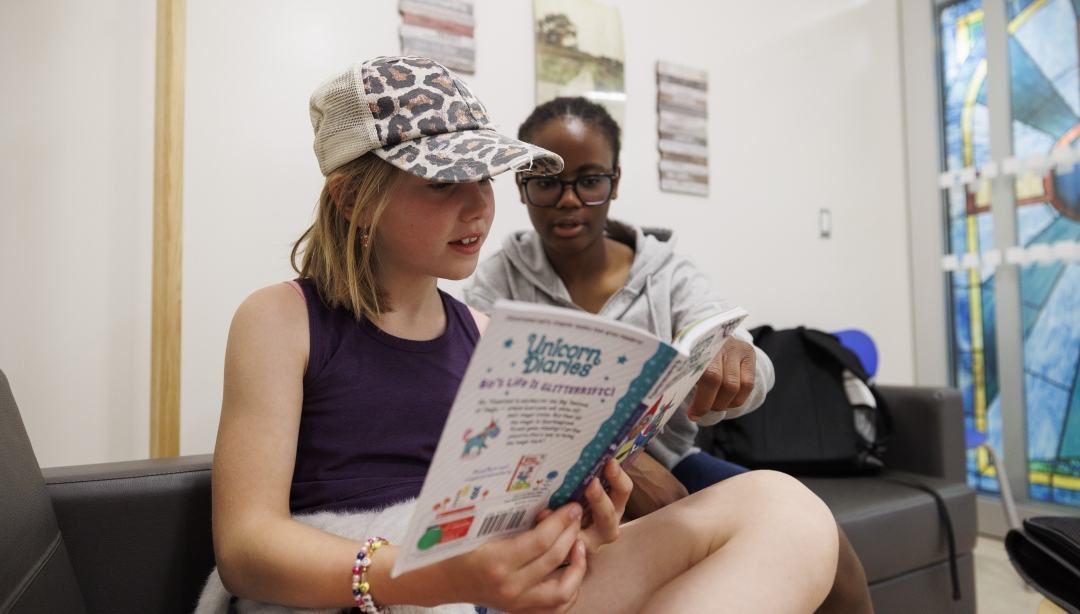
University students can volunteer to meet with learners in Grades 2 to 4 through the Spark program, coordinated by Foundations Learning & Skills Saskatchewan
By Shannon BoklaschukA partnership between the University of Saskatchewan (USask) Library and a non-profit organization is supporting elementary students’ reading skills while providing USask students with valuable volunteer opportunities.
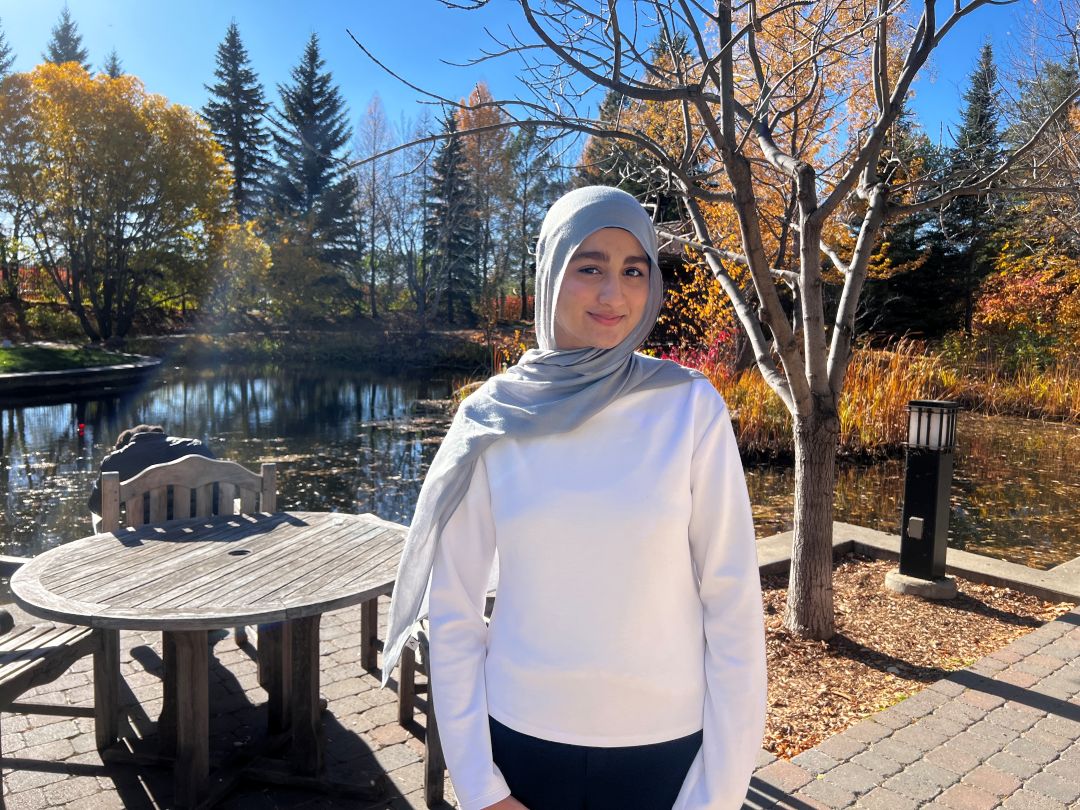
Areej Baig (BASc’25), a recent USask graduate, is encouraging current university students to get involved with Literacies in Community, a community-service learning partnership between the University Library and Foundations Learning & Skills Saskatchewan, an organization that offers free, practical programs that support adults, families, and children across Saskatchewan.
As part of the Literacies in Community partnership, USask student volunteers can serve as reading guides who offer one-on-one literacy support sessions to elementary school children over an eight-week period, coordinated through Foundations Learning’s Spark program.
“If you are looking for a volunteer opportunity where you can make a difference while also learning and growing yourself, I think this is an amazing experience,” Baig said.
Baig first volunteered with the Literacies in Community partnership as a health studies student in USask’s College of Arts and Science. Today, she is involved in coordinating the Spark program as a Foundations Learning employee.
The Spark program supports children in Grades 2 to 4 in building foundational skills for learning, school, and everyday life. Spark is delivered by trained volunteers in partnership with schools and educators during regular school hours. The elementary schools refer students who may benefit from extra support, and they are then matched with reading guide volunteers.
“I believe the partnership between USask Library and Foundations Learning is important because it brings together two organizations that share a commitment to education, learning, and community involvement,” said Baig, children’s literacy and volunteer coordinator at Foundations Learning & Skills Saskatchewan. “USask Library helps connect university students with community service-learning opportunities, while Foundations Learning provides students with opportunities to get involved in literacy programs and work directly with learners in the community.
“What makes this partnership special is that it connects classroom learning with real-life experiences,” she added. “I think sometimes, as university students, we focus so much on assignments, exams, and grades that we forget how much learning can happen outside the classroom. Through this partnership, students can apply their knowledge, meet people from different backgrounds, and develop a deeper understanding of the community they are studying in. It allows them to broaden their experiences beyond the classroom and university campus.”
The Literacies in Community partnership is currently recruiting USask student volunteers for the upcoming winter session, which will run from January through March 2027. Registration for the winter session closes on Nov. 18, 2026.
To prepare for providing literacy support in elementary schools, the USask student volunteers will take part in reading guide training through the Spark program prior to being matched with elementary students. The USask students will then meet with two elementary students twice a week for 30 minutes. Prior to offering literacy support, the USask student reading guides will also complete a criminal record and vulnerable sector check, watch a one-hour Foundations Learning orientation video, and participate in 3.5 hours of in-person reading guide training.
Osama Kamel, a third-year student in USask’s College of Kinesiology, volunteered through the Literacies in Community partnership in the winter of 2025. He offered support to two elementary students through the Spark program, including one student who was living in a remote area in northern Saskatchewan with whom Kamel met online.
Kamel, who came to USask’s Saskatoon campus after graduating from high school in Estevan, Sask., was accustomed to giving back to his community while living in Estevan. As a USask student, he began looking for new volunteer opportunities and for ways to become more involved in the community in Saskatoon. The Spark program proved to be the right fit for him.
“This seemed like a really interesting, enjoyable way of doing that, and I got to meet a lot of amazing people,” he said.
Kamel continues to volunteer with the USask Library as a peer mentor for the College of Kinesiology Learning Community (LC). Because he found participating in the Spark program to be a valuable experience, he now encourages other USask students to take part.
“When I go to my Learning Community, I encourage students to try this out. I think it was an amazing experience for me,” he said. “It’s a good way to get involved in the community, especially if you’re new to Saskatoon.”
By participating in the Literacies in Community partnership, USask students will engage in a meaningful community service-learning experience; gain a deeper understanding of literacy and privilege, particularly information privilege; examine their positionality within the university and the broader community; and connect with other engaged students and community members. The student volunteers will also participate in four 1.5-hour reflective sessions with community leaders and University Library staff during the eight-week volunteer period.
“Our reflective sessions are founded on Kolb’s Experiential Learning Cycle and focus on the topics of literacy, privilege, and citizenship/being an engaged community member,” said USask graduate Joel Fonstad (BA’06, MA’11), a USask Library learning specialist who helps coordinate the Literacies in Community partnership and serves as a facilitator for the reflective sessions.
“As a facilitator, it’s rewarding to hear how the students relate their volunteer experience to their growing understanding of the impacts of literacy and privilege on one’s community,” Fonstad said.
While elementary students benefit from the Literacies in Community partnership through one-on-one reading support, USask students also benefit through the opportunity to participate in deeper, engaged, and reflective learning, said JoAnn Murphy, USask Library assistant dean, learning and curriculum support. She said part of the role of the university, and the University Library, is to enrich USask students’ learning so that they can continue to be successful community members and lifelong learners.
“So, we designed facilitated learning opportunities for those students to connect their volunteer experience with their learning,” Murphy said.
Baig said the reflective learning sessions are very valuable, because USask students can apply what they learn in the reflective sessions to the one-on-one reading sessions with the elementary students.
“I think partnerships like this are a great reminder that education does not stop when you leave the classroom,” she added. “Some of the most valuable lessons come from the people you meet and the experiences you have in your community.”
Baig, who is now a full-time employee at Foundations Learning & Skills Saskatchewan, said it feels like a “full-circle moment” for her, since she went from volunteering for the Spark program as a USask student to now coordinating it and facilitating Foundations Learning’s partnership with USask.
“I think my experience shows how one volunteer opportunity can open doors, shape your interests, and lead you in directions you might not have expected,” she said. “If there is one thing I would encourage other students to do, it is to take advantage of opportunities like this. You never know how much of an impact an experience might have on you or where it might lead.”