

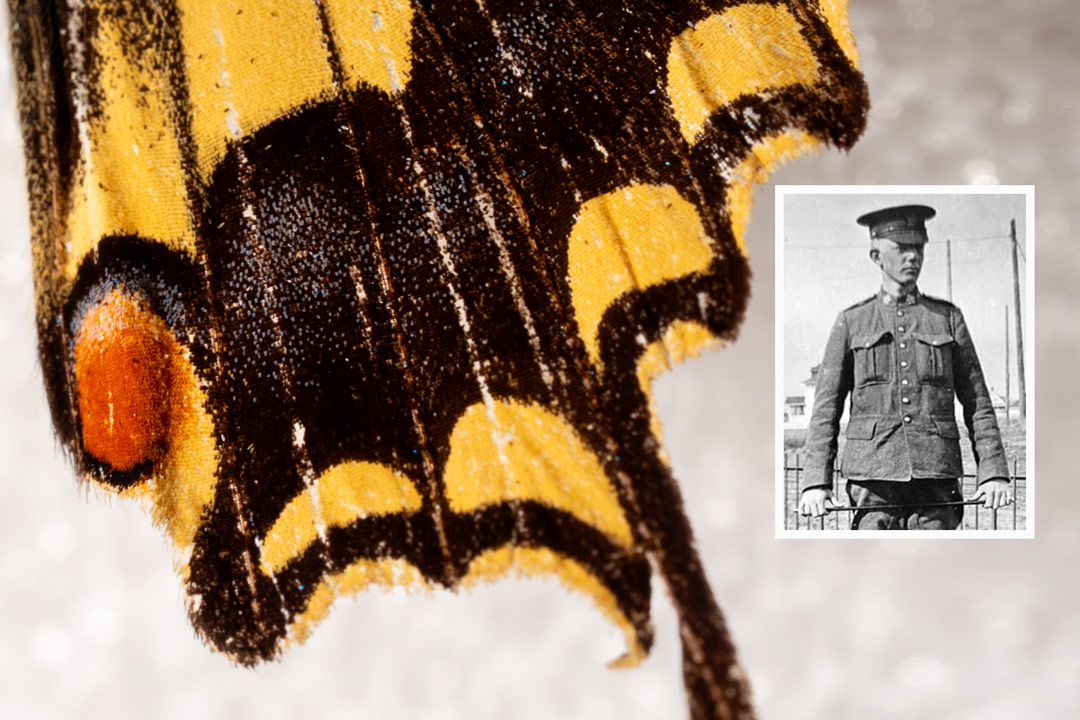
A speck of colour in the trenches
How did a butterfly come to USask from a First World War battlefield?
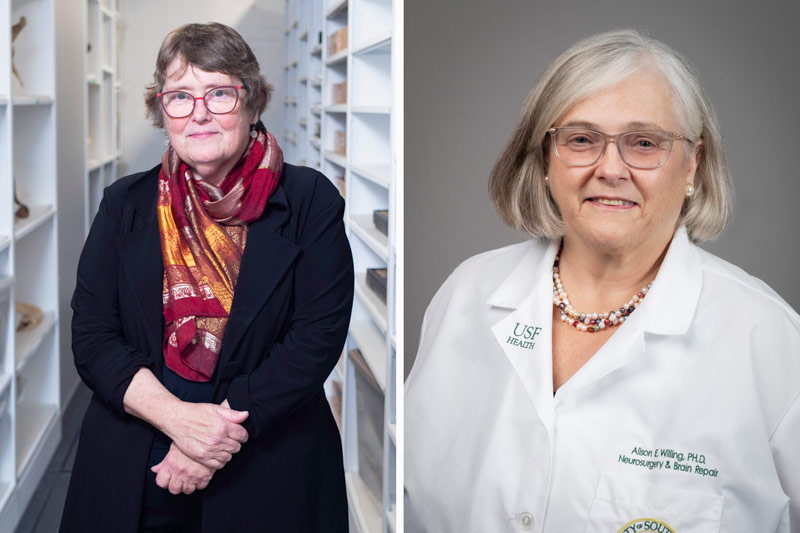
By Chris PutnamIn the Natural History Collection of the University of Saskatchewan (USask) Department of Biology, Dr. Tracy Marchant (PhD) likes to say that every specimen has a story.
She knew right away that this one must be something special.
This spring, the USask biology professor was conducting an inventory of butterfly specimens in the collection, examining and transcribing tiny handwritten labels attached to pinned insects.
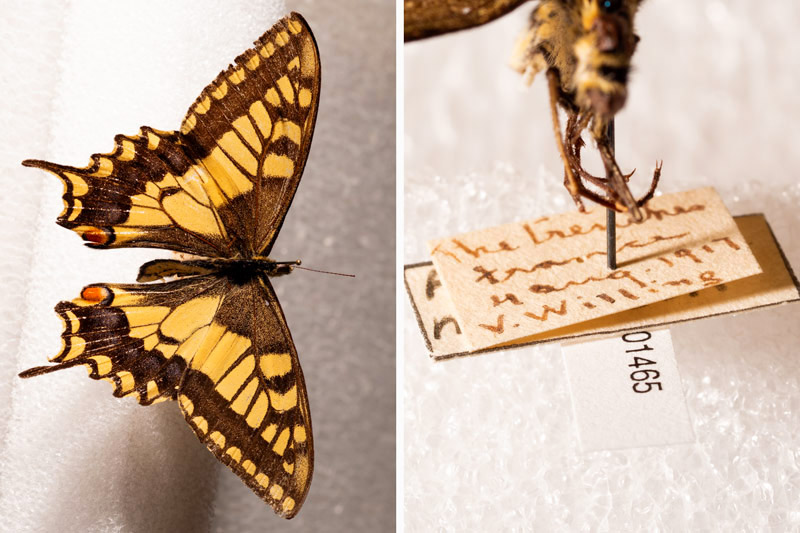
Many of the specimens were collected in the early 20th century by Thomas Nathaniel Willing, USask’s first professor of natural history. Marchant came across a common yellow swallowtail butterfly with a tag written in Thomas’s distinctive handwriting.
Studying it under a microscope, she eventually made out the words:
The Trenches
France
4 Aug. 1917
V. Willing
“I sort of sat there and thought, ‘That can’t be what it says.’ But it does,” said Marchant. “And that’s when I got interested and really went into trying to understand how that butterfly ended up in our collection.”
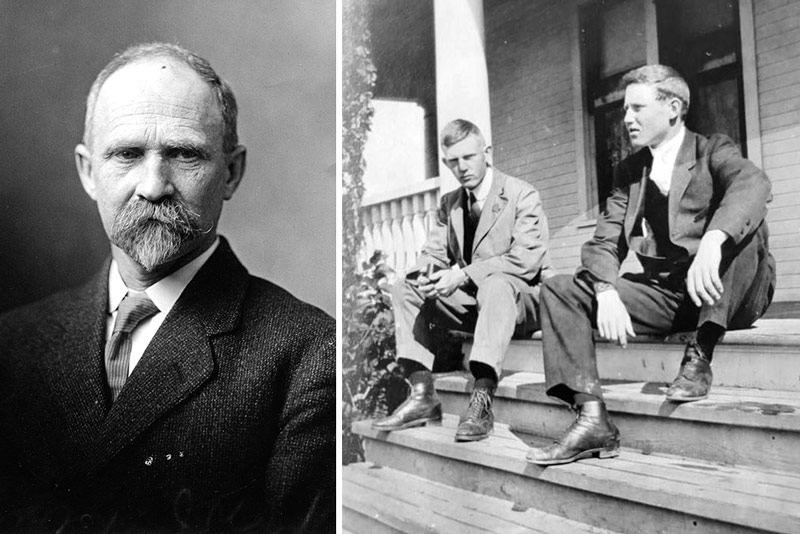
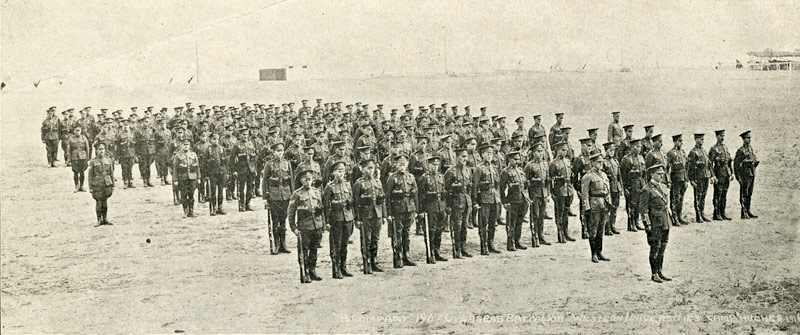
Her research into the Willing family revealed that V. Willing could only be Thomas’s son Victor (John) Willing: a USask student who, along with his younger brother Norman, joined the 196th Western Universities Battalion and served in France during the First World War.
Victor and Norman both survived the war. Victor later served as a Royal Canadian Air Force officer in the Second World War, raised a family, and left behind a wife, a son, and three grandchildren when he died in 1985.
The Department of Biology and the Willing family have no record of how Victor’s butterfly made it from the trenches of France to Saskatoon, but a few clues remain.
“To me, it’s a story about the war and what young men did to survive,” said Marchant.
After arriving in England in late 1916, 19-year-old Victor and other members of the 196th transferred to the 46th Battalion of the Canadian Expeditionary Force and deployed to France. On the day the butterfly was collected, Victor’s unit was likely near the city of Lens carrying out final preparations for the Battle of Hill 70 that would begin on Aug. 15, 1917.
The Canadian soldiers spent the days leading up to the battle improving trenches, raiding German outposts, cutting wires, and destroying German artillery positions.
Somewhere in the middle of this, Victor must have spotted a yellow butterfly.
Before becoming a USask College of Agriculture professor, Victor’s father Thomas was a farmer and self-taught scientist with a lifelong fascination for insects. Based on the number of butterfly specimens attributed to him in the USask Natural History Collection, butterflies seem to have been one of his special interests.
“My grandfather was in those trenches, and I think he would have had a pretty good idea of what his dad did and the kind of things that his dad liked,” said Victor’s granddaughter, Dr. Alison Willing (PhD).
There are other insects in the USask collection that bear Victor and Norman’s names, suggesting the brothers inherited something of their father’s interest. The condition of Victor’s butterfly from the trenches also indicates an expert touch.
“It is in remarkably good shape,” said Marchant. “It has all of its legs. It’s missing one antenna, but that could have happened while we had it.”
This can only mean Victor himself pinned the butterfly in the field for safe transport, Marchant believes.
Victor’s battalion helped successfully capture Hill 70 that August. He went on to fight in the Battle of Vimy Ridge and the Battle of Passchendaele, where on Oct. 25, 1917, he was severely wounded in both legs. He spent more than eight months in hospitals before being discharged from service the next year.
“He always walked with a limp after that,” recalled Alison.
How Victor transported his butterfly is a mystery. Did he mail it home from the front in a container such as a tobacco tin, or did he keep it with him through months of battles and hospital stays to deliver it in person? Either possibility suggests a poignant moment for Thomas back home in Saskatoon.
“I would think that would be very emotional. Knowing what little I know about World War One and the conditions that my grandfather would have dealt with, I would think that it would have moved his father quite a bit to get this little piece of beauty from such a horrific situation,” said Alison.
Victor returned in 1918 to Saskatoon, where he enrolled in vocational training in mechanical engineering at USask. Norman, discharged from service due to illness, came home the next year, and the brothers eventually moved to British Columbia with their mother, Maude, after the death of their father in 1920.
Alison, a neuroscience professor at the University of South Florida, only saw her grandfather occasionally when she was growing up on Vancouver Island. But she learned pieces of his remarkable experiences across two world wars from her father—Victor’s son, A. Douglas Willing—until her father passed away last year.
“The last time I’d been up there visiting with him, I heard more about my granddad and the fact that dad was very proud of him and wished he could have been more like him in many ways,” she said.
USask remains important to the Willing family, Alison said, and she is glad to know the butterfly is here.
“I like the idea that even if I don’t know all the intimate details, there’s a family history there.”
The Department of Biology has placed the Willing butterfly on public display in a case on the second floor of the W.P. Thompson Building on the USask campus.
Along with roughly 50,000 insects, the department’s Natural History Collection contains a huge assortment of animal specimens ranging from narwhal tusks to a passenger pigeon to a hippopotamus skull.
These specimens are a “tangible tie to the past,” Marchant said. They represent not only the historical biodiversity that is being lost, but the state of society when they were collected and the personal stories of the people who collected them.
The department plans to carefully preserve the Willing butterfly: as a piece of scientific history and as a reminder of a soldier who, on the eve of a brutal battle, saw a butterfly and thought of home.