

Building Canada’s vaccine expertise: From the classroom to the front lines
Canada’s ability to respond to emerging infectious diseases depends not only on cutting-edge research, but on the development of a strong, well-trained scientific workforce.
By Caitlin GillAt the University of Saskatchewan (USask), that workforce is being strengthened through BMIS 319.3: Vaccinology Principles and Practice, a course offered through the Department of Biochemistry, Microbiology and Immunology at the College of Medicine. Now in its second year, the course provides students with a multidisciplinary understanding of how vaccines are developed, evaluated, manufactured, and deployed, reflecting the growing strategic importance of vaccinology to public health, animal health, and food security.
The course was initiated by Dr. Scott Napper (PhD), a professor in the College of Medicine and a scientist at the Vaccine and Infectious Disease Organization (VIDO). A five-time recipient of student-nominated teaching awards, Napper has had a significant impact in the classroom. He led the course’s development and approval, designing it to integrate academic instruction with active research and development. As a result, students gain insight into how vaccines move from concept to real-world impact, protecting individuals, populations, and entire systems.
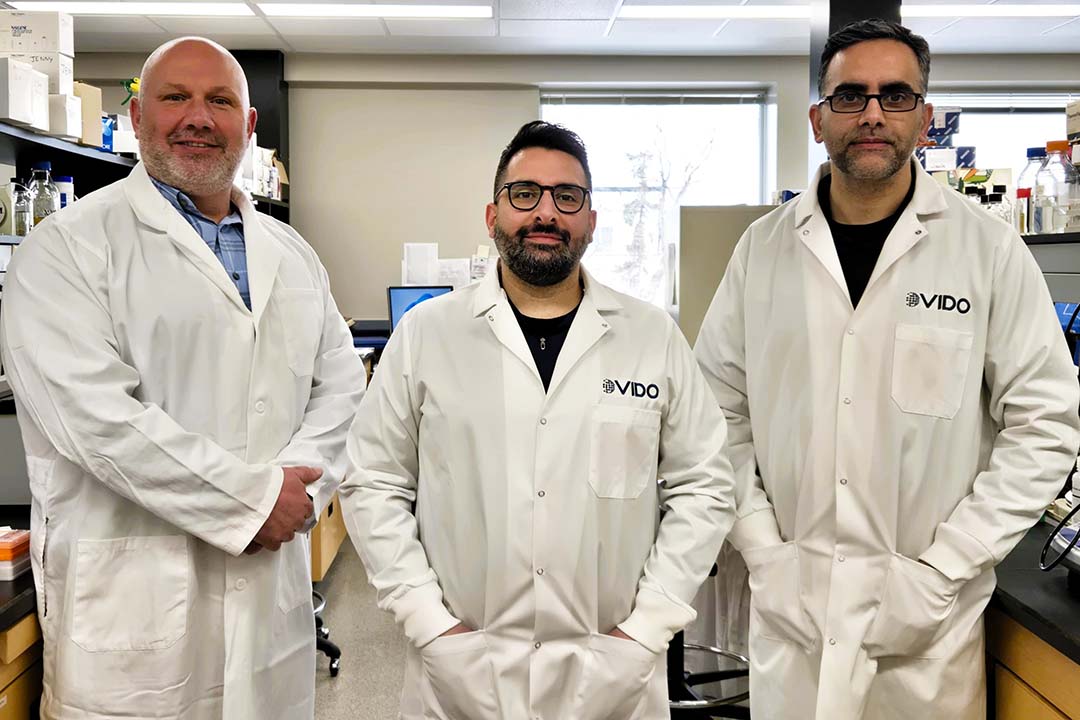
Napper delivers the course alongside fellow VIDO scientists Dr. Aneesh Thakur (PhD) and Dr. Antonio Facciuolo (PhD), providing students with direct access to specialized expertise. Thakur focuses on mRNA and inhalable vaccine delivery systems, while Facciuolo specializes in animal vaccines and delivery systems, together highlighting approaches across both human and animal health. Guest lectures from VIDO experts, including Colin Strauss and Dr. Trina Racine (PhD) on manufacturing and regulatory approval, and Dr. Bryce Warner (PhD) on pandemic preparedness and animal health, further broaden the course and expose students to the full vaccine development pathway.
“Vaccinology sits at the intersection of science, policy, and public trust,” said Napper. “Giving students an early, realistic understanding of that complexity is essential for Canada’s future preparedness.”
For these researchers, teaching is a natural extension of their scientific work. Alongside leading research programs and laboratories, they are also helping shape the next generation of scientists, equipping students with the knowledge, perspective, and critical thinking skills needed to address future infectious disease threats and prepare them to contribute to Canada’s research, regulatory, and innovation ecosystems.
“When students learn directly from active vaccine researchers, they see how classroom concepts translate into real-world impact,” said Facciuolo. “That connection is critical for developing confident, capable scientists.”
While BMIS 319.3 is a USask course, it also reflects the broader research environment on campus. With VIDO located at USask, students benefit from proximity to one of Canada’s national science facilities and the expertise of researchers actively working in vaccinology and pandemic preparedness. This includes access to high-containment Level 3 (CL3) laboratories and on-site vaccine manufacturing capabilities. Together, this integrated infrastructure is unique in Canada and rare globally, providing students with exposure to the full continuum of vaccine development, from discovery through to production.
As Thakur noted, “Training the next generation is one of the most meaningful ways we can strengthen Canada’s response to future infectious disease threats and is a critical part of maintaining our national sovereignty in the face of global health challenges.”
Together, this collaboration helps ensure Canada continues to develop the skilled talent required to protect public health, safeguard animal health, and strengthen national resilience against future infectious disease challenges.