

USask acquires quantum computer in huge step for research and innovation
The University of Saskatchewan (USask) will soon be home to the first university owned-and-operated, vendor-supported, full-stack, open-architecture quantum computer in Canada, positioning the university as a unique hub for quantum innovation.
The new technology will enhance quantum computing application development and cutting-edge research collaborations in disciplines including human health research, energy and agriculture.
New avenues for research include discovering new drugs and vaccines in partnership with research teams at the Vaccine and Infectious Disease Organization (VIDO), defence innovations such as accelerated decision-making and quantum-secure data encryption and hardware and process optimization in energy and agriculture industries.
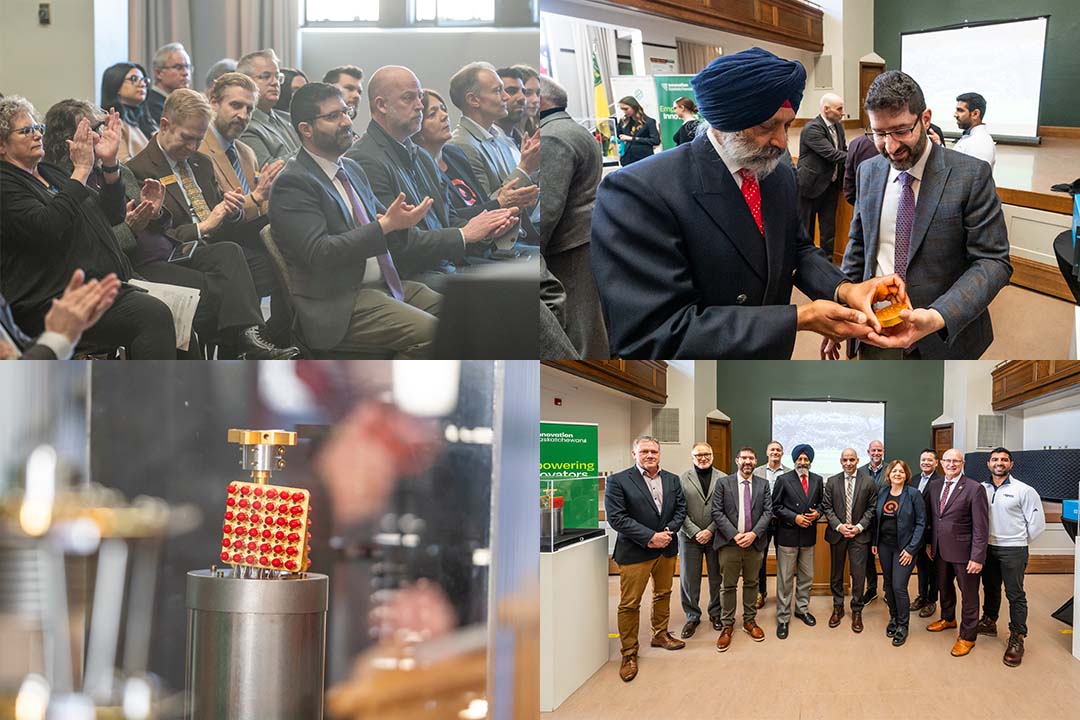
USask, with support from Prairies Economic Development Canada (PrairiesCan) and Innovation Saskatchewan, will be installing the new quantum computer on-campus for research and education. The PrairiesCan funding of $1.93 million is through the Regional Innovation Ecosystems program, and Innovation Saskatchewan provided an additional $400,000 through its Innovation & Science Fund.
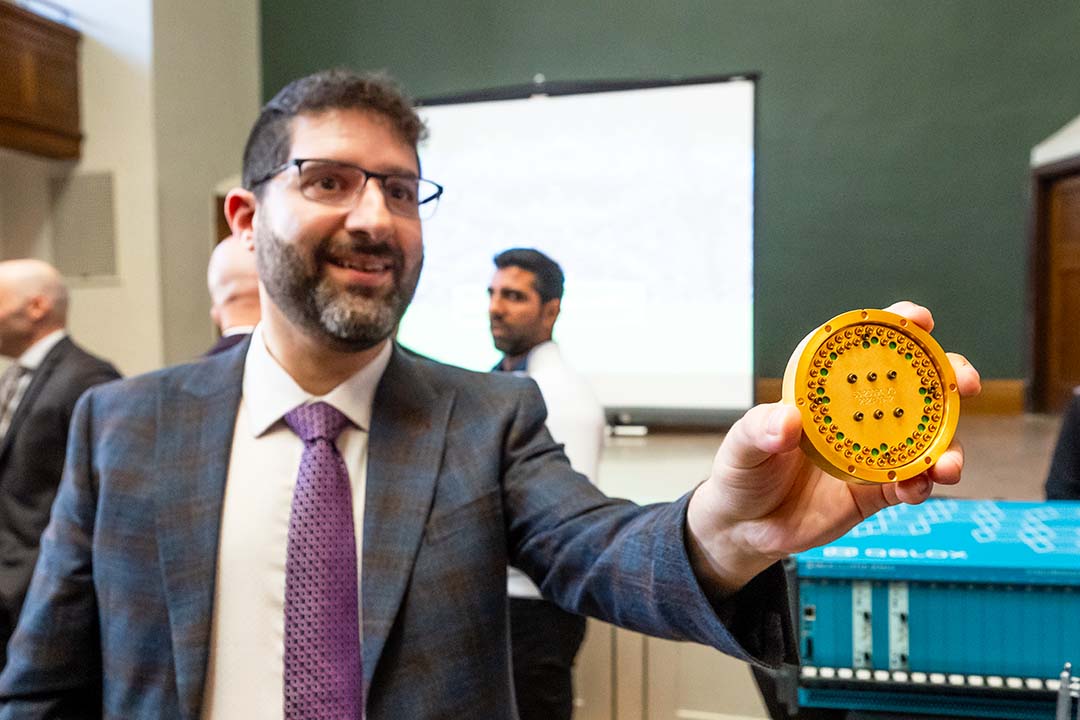
Dr. Steven Rayan (PhD), the director of USask’s Centre for Quantum Topology and Its Applications (quanTA) and a professor of mathematics and statistics at USask’s College of Arts and Science, is the principal investigator on the project.
Rayan, a leading quantum researcher at USask and internationally-renowned for his work in the field, expressed his gratitude to the Government of Canada and Government of Saskatchewan, as well as numerous quantum industry partners and USask affiliates including VIDO and the College of Engineering, for their support in bringing this unique venture to life.
The computer was developed with industry partners Rigetti Computing, Qblox, QuantrolOx and Zero Point Cryogenics, with additional support from Testforce Systems. The full-stack quantum computer — meaning all necessary pieces for running and controlling the computer are included — was built with crucial hardware and software contributions from these partners to make it a reality. Two of the partner companies have Canadian roots and are connected to the Prairies: Rigetti Computing was founded by Moose Jaw’s Dr. Chad Rigetti (PhD), and Zero Point Cryogenics is based in Edmonton.
The quantum computer will feature 14 total superconducting quantum bits or "qubits" across two computer chips. Direct access to those qubits will allow staff and faculty to explore the great computational power of a quantum computer and create many new research opportunities that would not be possible without a computer like this on USask's campus.
Today’s announcement of a quantum computer at USask strengthens the quantum research foothold in the Canadian Prairies. It builds on a Letter of Intent between USask and the University of Calgary (UCalgary) to develop a shared global quantum ecosystem by connecting quanTA with UCalgary’s Quantum City hub. Together, these efforts contribute to the emerging Quantum Corridor linking researchers and partners advancing quantum innovation in Saskatchewan.
Quotes:
“Canada’s future prosperity will depend on our ability to compete and lead in the technologies shaping the world ahead. By investing in quantum computing capacity at the University of Saskatchewan, we are building on Saskatchewan’s research strengths, supporting the next generation of innovators, and helping Canada build a stronger, more resilient economy.”
— The Honourable Eleanor Olszewksi, Minister of Emergency Management and Community Resilience and Minister responsible for Prairies Economic Development Canada
"What's happening at the University of Saskatchewan is remarkable — a made-in-Canada quantum computer, built with Prairie partners, advancing research that will touch the lives of Canadians. Our investment through PrairiesCan reflects our confidence in this team and in the Prairies as a growing hub for world-class innovation. From drug discovery to secure data technologies, the possibilities unlocked by this machine are extraordinary, and we're proud to have played a role in making it happen.”
— The Honourable Evan Solomon, Minister of Artificial Intelligence and Digital Innovation
“This is Saskatchewan leading, plain and simple. We’re bringing one of the most advanced computers in the world right here to USask. This is Prairie innovation, made possible by investments from PrairiesCan and Innovation Saskatchewan, and means real benefits for people — better services, better jobs, and making sure people in Saskatchewan benefit from the breakthroughs happening in our own backyard.”
— The Honourable Buckley Belanger, Secretary of State for Rural Development
“This investment puts Saskatchewan at the leading edge of a technology that is reshaping how quickly we can solve complex challenges. By building quantum capacity at USask, we are accelerating discovery, training the next generation of talent and creating new economic opportunities across key sectors that will keep our province competitive and future-ready in a rapidly evolving global economy.”
— Warren Kaeding, Minister responsible for Innovation Saskatchewan
"This remarkable milestone is a monumental achievement that positions USask as a key player in quantum research on the world stage. As we step into the future, USask is continuing to establish itself as a cutting-edge institution and a hub for national and international quantum-focused research that will propel work in agriculture, health sciences, defense technologies and more across the Prairies.”
— Vince Bruni-Bossio, USask President and Vice-Chancellor
"The acquisition of a quantum computer represents a tremendous leap forward for the future of USask’s contributions to Canada’s research and innovation agenda. I am excited to see what Dr. Rayan, our incredible partners across Canada, and so many other students and researchers will be able to accomplish with a quantum computer by leveraging some of Canada’s unique research infrastructure located at USask as we continue to strive to be the university the world needs.”
— Baljit Singh, USask Vice-President Research
"Just like logging many hours on a flight simulator, you can experience some aspects of quantum computing by accessing hardware remotely. However, just like there is no substitute for flying the actual plane, there is no substitute for having novel technology like this on premises. Today, we enter a whole new world of quantum-accelerated research and training at USask, which expands the quanTA Centre into a major hub for quantum innovation in the country. We will solve the most challenging problems of today and train the quantum leaders of tomorrow right here, right now.”
— Dr. Steven Rayan (PhD), Director of the quanTA Centre and Professor, Mathematics and Statistics, USask College of Arts and Science
“We are extremely excited to develop a shared global quantum ecosystem with quanTA at the University of Saskatchewan. Extending the Quantum Corridor on the prairies to advance mutual interests in the development and commercialization of quantum technologies and innovation ecosystems just makes sense. Our combined expertise will accelerate knowledge exchange, support innovation, and enhance Canada’s global competitiveness in quantum and adjacent sectors.”
— Dr. William Ghali, MD, vice-president (research), University of Calgary