

New polar bear research gives insight into human-animal encounters
Polar bear encounters with humans are a regular concern for scientists and communities near polar bear habitats, but new research is showing the bears’ reasons for coming in contact with humans might not be what was initially expected.
By Matt Olson, Research Profile and ImpactThe conventional theory for researchers is that a reduction in sea ice leads to polar bears straying closer to humans out of desperation for food. A new research paper published in Arctic Science with contributions from University of Saskatchewan (USask) and University of Manitoba researchers suggests that while increases in polar bears encountering humans can be linked to years in which they spend less time on the sea ice, it’s probably not because they’re starving.
“Our observations are more consistent with the observations of locals than with the assumptions that really became dogma in the polar bear scientific community,” said Dr. Doug Clark (PhD), a professor in USask’s School of Environment and Sustainability (SENS) and the corresponding author on the study. “This happens in research, finding out ‘Oh, that really wasn’t the way we thought it worked,’ and I’m happy we were able to reveal it.”
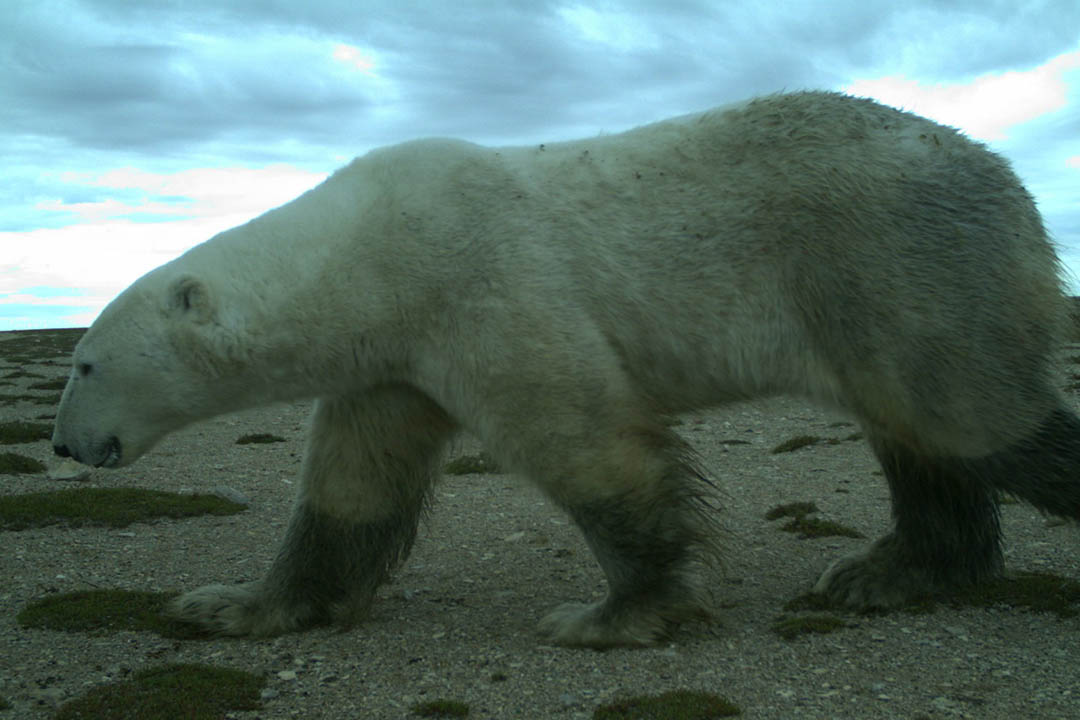
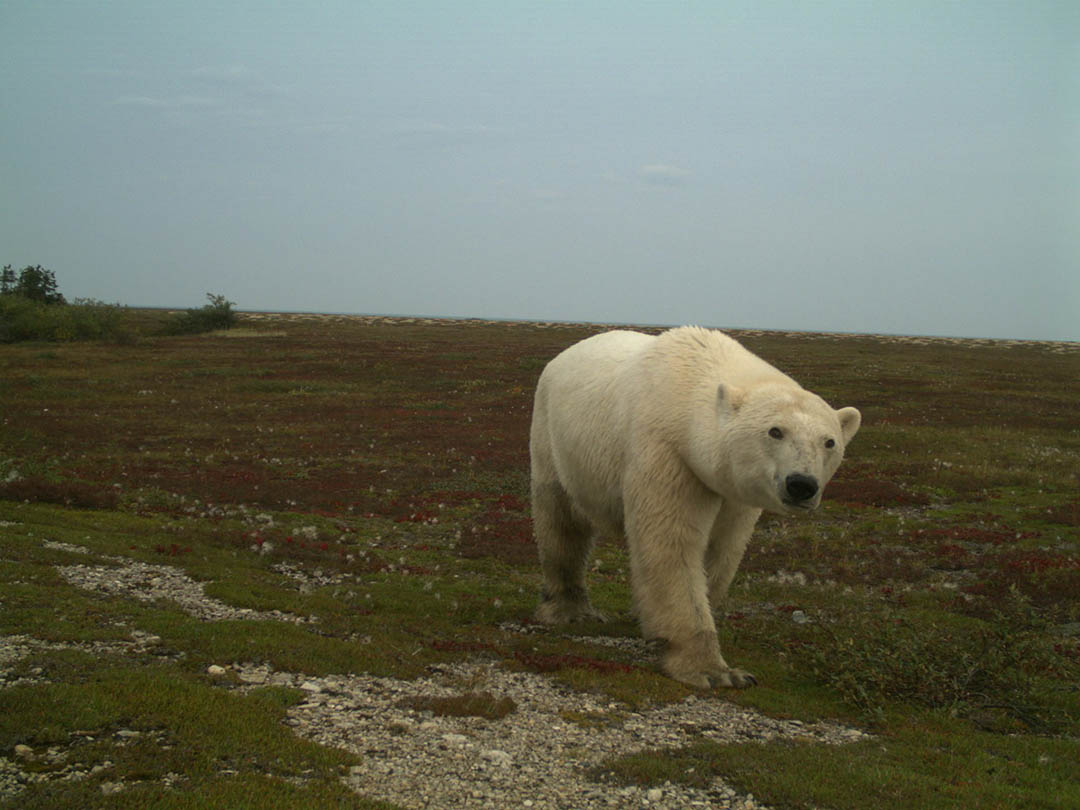
The paper brings together different kinds of data, including the body condition of polar bears observed through remote cameras, the physical status and quality of sea ice, and human activity in nearby areas.
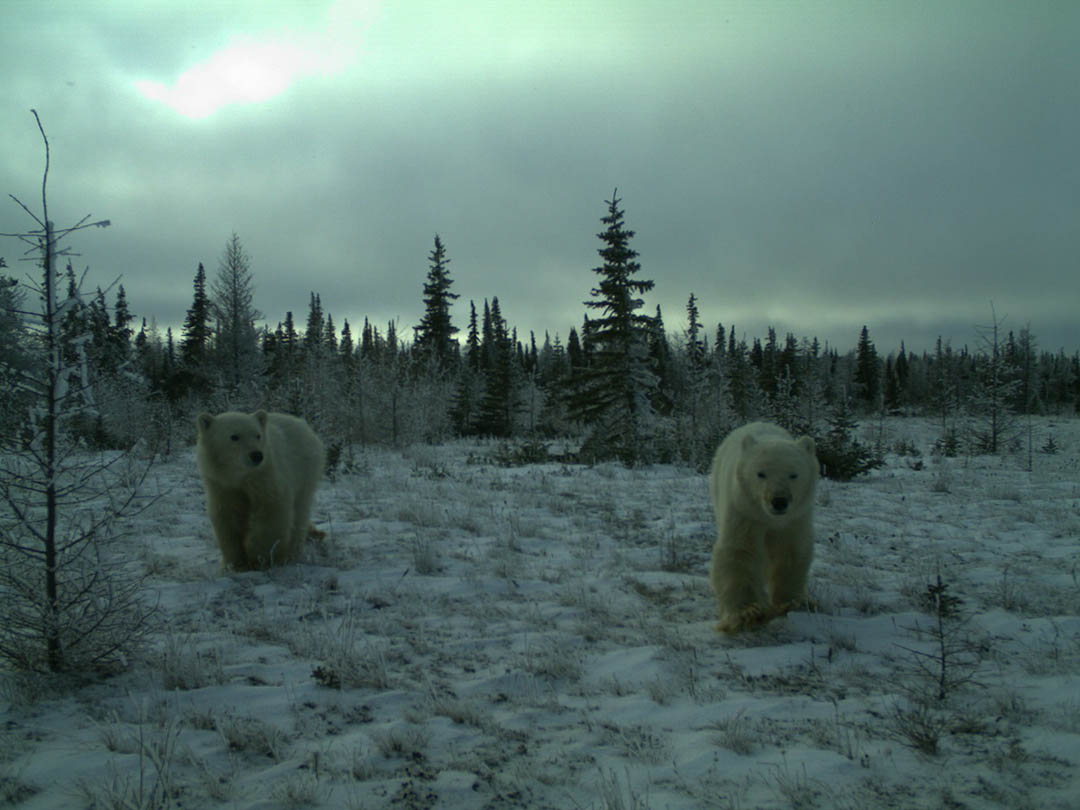
Clark said scientists have long used a visual grading scale of one to five to assess polar bears physically – one would be malnourished or starving, and five would be fat and healthy and thriving. During the period from 2011 to 2021, more than 580 polar bear visits to remote camera stations in the western Hudson Bay region were recorded, and bears’ body condition could be scored for more than 80 per cent of those visits.
Clark noted that the bears observed in this research graded, on average, much closer to the middle of that scale, indicating nutritional stress was not the motive for more interactions with humans.
“What we think is going on, which needs to be investigated further, is that the longer they’re off the ice, the bears are just more likely to come by humans,” Clark said. “But what determines whether an interaction between bears and people escalates into a conflict, that’s where a bear experiencing nutritional stress factors in.”
Dr. Alex Crawford (PhD), an assistant professor at the University of Manitoba who specializes in the analysis of sea ice, said there was a clear shift in the availability of ice for polars bears to live on during the year over the past several decades, causing the bears to spend more of their year on land.
However, while the change in sea ice is inevitably tied to shore time for the bears, Crawford said the new research suggested it could be that increased time on land that leads to more interactions with humans is simply due to increased proximity.
“The data is telling us it’s not as though humans are more likely to be interacting with bears that are stressed,” he said. “If they’re just spending more time on shore, you’re going to have more chances for interactions, and that informs what we should expect from polar bear-human interactions ... It means the outcome has a lot to do with the humans, not a lot to do with the condition of the bear.”
Crawford’s sea ice data comes from cutting-edge analysis using satellite data to examine when, where and how much ice forms and becomes firm year after year.
He lauded what he called a “holistic” approach to studying polar bears for this project, combining data and expertise from polar bear experts, with his innovative sea ice research. As Crawford puts it, he hopes this study can form the basis of more long-term studies of sea ice and polar bears, and drive even better understandings of polar bear behaviour.
Those long-term studies may take a different, less invasive form. Dr. Danielle Rivet (PhD), a wildlife biologist and USask alum who was the first author on this study, said one of the biggest takeaways is this interdisciplinary team was able to gather specific and detailed data about the population of polar bears in the western Hudson Bay region without any direct interventions.
A regular practice for studying polar bears involves “mark-recapture” techniques of tranquilizing the bears so that population levels can be estimated by capturing them again over time and extrapolating the population number from the proportion of previously captured bears in later years. Often other samples and measurements are taken at the same time. The methodology used in this paper was all minimally invasive, but its data on bear body condition and demographics appears to match the quality of studies that involve capturing and handling polar bears.
“We’re able to use these trail cameras and get pretty comparable data that we can then use to try to answer these questions,” Rivet said. “I would recommend using that in co-operation with things like mark-recapture studies, but I think we’re headed in the direction where once we get the methodology nailed down, you’ll be able to use remote methods for monitoring polar bear populations.”
Clark and Crawford both echoed that sentiment, emphasizing the value of non-invasive methods for studying polar bears by combining satellite and remote sensing information.
The data gathered for this research and the innovative remote monitoring methodologies that led to these results – which provided new insights while also proving to be of similar quality to traditional scientific techniques – could have wide-reaching impacts on how polar bears are studied in the future.
“It’s orders of magnitude cheaper. It’s less invasive for the animals, far less risky for animals and people,” Clark said. “If we can collect data that we need to monitor polar bear population health in these ways, then it’s an enormous advantage.”