

New USask poultry laying facility receives $6.2 million CFI funding boost
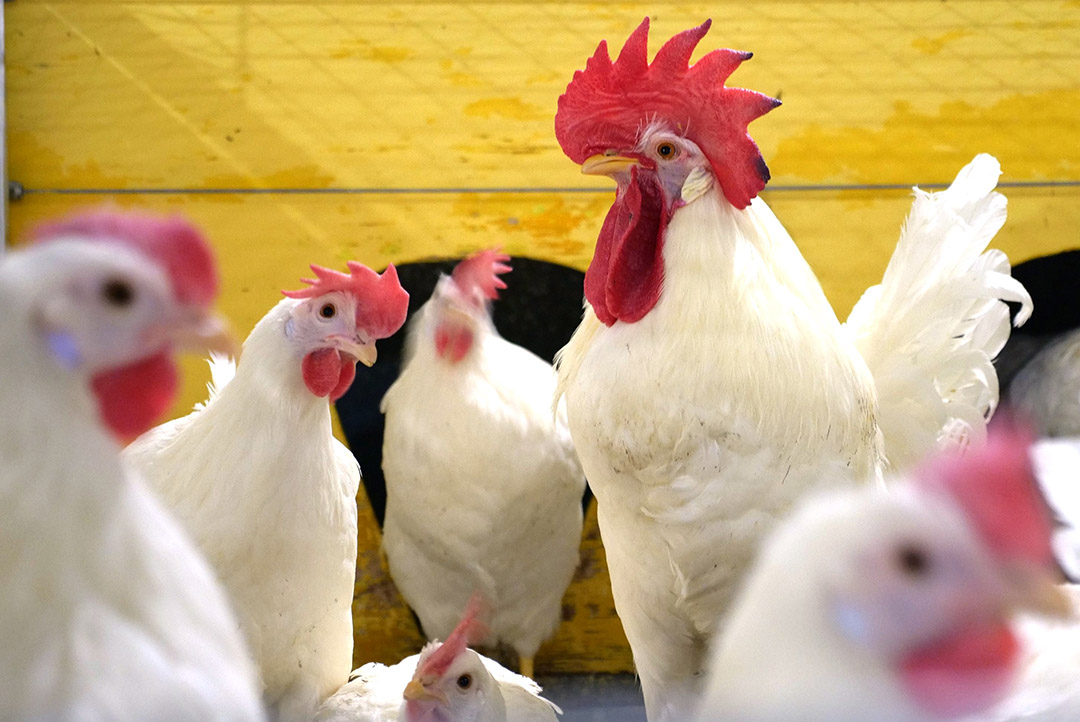
Dr. Karen Schwean-Lardner (PhD) loves chickens.
By Matt Olson, Research Profile and ImpactAs a leading poultry researcher at the University of Saskatchewan (USask), Schwean-Lardner explores improved light, housing, and feed systems for better welfare, healthier chicken, and egg production in Canada — and she’s not afraid to feed the wild chickens she meets on holiday in Hawaii.
And nobody is more excited than Schwean-Lardner about what a new state-of-the-art poultry laying facility at USask would mean for her research field — and her birds.
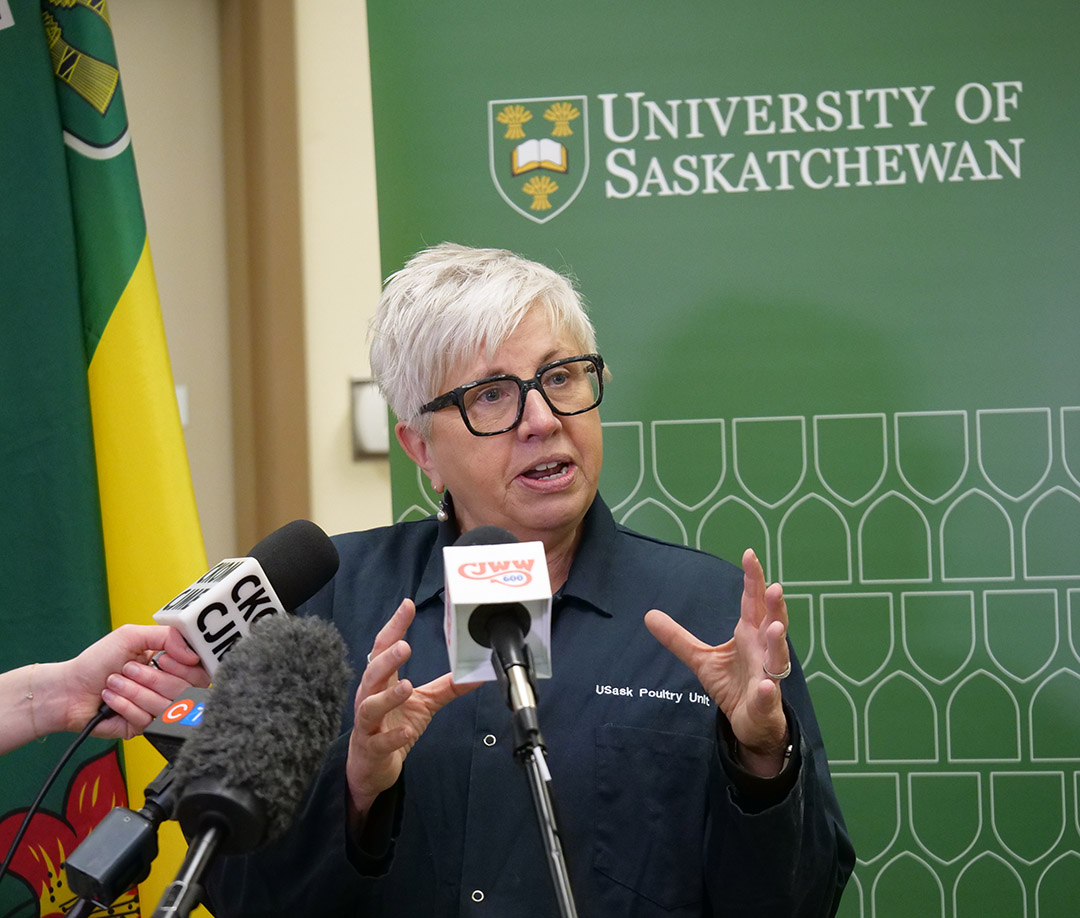
“This will move us so far forward in poultry research,” she said. “This is causing me to push back my retirement because I want the first experiment in a system like this. This is so exciting.”
A proposed, cutting-edge poultry laying facility has received more than $6.2 million from the Canada Foundation for Innovation (CFI) Innovation Fund, which supports developing infrastructure to further world-leading research in Canada. In addition, $3 million has been contributed to the new facility by Saskatchewan Egg Producers, an independent farmer-run organization of egg producers in the province, and an additional $1 million has been contributed by USask’s College of Agriculture and Bioresources.
“At the University of Saskatchewan and the University of Regina, researchers are doing work that improves food production, supports industry, and tackles real challenges facing Canadians. With our government’s Innovation Fund investments, we’re helping to make sure some of the best research in the world continues to happen right here at home," said the Honourable Buckley Belanger, Secretary of State for Rural Development.
“The development of this new facility positions USask to continue as a Canadian and world leader in poultry research and animal welfare,” said USask Vice-President Research Baljit Singh. “This funding is a tremendous show of support and vote of confidence from the government and our industry partners for the excellent agricultural research that takes place at USask.”
Schwean-Lardner is a professor in USask’s Department of Animal and Poultry Science in the College of Agriculture and Bioresources and the lead researcher on the project. She and Dr. Deborah Adewole (PhD), an assistant professor and poultry expert in the same department, are excited for the opportunity to set a new standard in Canadian poultry research with these new facilities.
As part of new guidelines set out by Egg Farmers Canada, “conventional” housing systems for chickens will need to be phased out for all Canadian producers by 2036.
Schwean-Lardner and Adewole both said the proposed new facilities would put USask well ahead of the curve and help researchers and industry leaders stay on the cutting edge of poultry and egg production research.
“This project makes us commercially relevant for our research, regardless of which system our producers move to,” Schwean-Lardner said. “We can do the research for any producer in Canada, and that’s so cool.”
Using these new tools and facilities, researchers at USask will be able to precisely experiment with different types of feed and environments for chickens at an advanced scale, giving new data-driven insights to producers to enhance best practices for poultry welfare and egg production.
The blueprints for the proposed new facility emphasize precision and control for researchers, and comfort for the laying hens which will be housed there. Schwean-Lardner said the new, nearly 24,000-square foot facility they hope to build on the USask campus will utilize three types of housing systems for hens: enriched housing, free run, and free-range systems.
The enriched housing systems are designed to promote living conditions and reduce aggression levels for chickens. Ten individual housing rooms will be equipped with lighting, temperature, and other environmental variable controls to let the researchers conduct experiments safely and ethically, and the free-range systems will allow the birds to wander the Prairie outdoors.
“Big data is getting more attention these days. We have a lot of data that can be gathered over time, and this unit is going to allow us to manage that data and collect it over a long period of time,” Adewole said. “There are going to be a lot of new things that we can do for poultry research.”
In addition, special viewing rooms will be available for public groups — from board meetings to schoolchildren — to see the chickens living at the facility. These viewing areas will allow consumers to directly see how housing systems affect birds, without risking biosecurity on farms.
“We can control the environment. Right now, we cannot do that in the same way,” Adewole said. “This facility is one of its kind in Canada. There are other universities that have built new facilities, but this one is encompassing all systems and has space for public viewing systems as well — which is a first in Canada.”
USask has long been a pillar of agricultural research in Saskatchewan, across Canada, and around the world. Schwean-Lardner said the support of the CFI and Saskatchewan Egg Producers was a tremendous step towards making the new facility a reality.
As Schwean-Larder puts it, this facility has the potential to be a USask research cornerstone.
“This will be a relevant research facility for the next 50 years. It’s huge, huge, huge,” she said.
Read the release from Canada Foundation for Innovation: https://www.innovation.ca/news/innovation-fund-march-2026