


Tick Talk: USask researcher’s tips for limiting risk
You don’t have to tell hikers, golfers and dog walkers that tick risk has increased this spring in Saskatchewan.
By James ShewagaDr. Maarten Voordouw (PhD), an associate professor in the Department of Veterinary Microbiology in the Western College of Veterinary Medicine (WCVM) at the University of Saskatchewan (USask) leads a research group that studies the ecology of ticks and tick-borne diseases in Canada, such as Lyme disease. He sat down to discuss the risks and offer tips for tick prevention.
1. With the growing risk of tick-borne diseases, how important is to try to avoid picking up ticks?
The risk of tick-borne disease depends on the tick species. For example, the blacklegged tick can transmit the causative agents of Lyme disease. In Saskatchewan, 97 per cent of reported tick bites are caused by the American dog tick. These ticks are active from mid-April to the end of July with peak activity in May and June. American dog ticks bite both people and pets. Although these ticks are a nuisance, the risk of tick-borne disease from American dog ticks in Saskatchewan is considered low. However, last year the CBC reported that a person in Prince Albert contracted Rocky Mountain spotted fever from a tick that was most likely an American dog tick. So, the risk of tick-borne disease from American dog ticks is low, but it is not zero. In Eastern Canada and the Eastern United States, where Lyme borreliosis is endemic, the percentage of blacklegged ticks infected is often 20 to 40 per cent, which is why Lyme disease is such a big deal. Although blacklegged ticks are much less common than American dog ticks in Saskatchewan, the number of encounters with blacklegged ticks has been increasing. Adult female blacklegged ticks often bite in the fall months (September to November) when most of us believe that tick season is over and are no longer on guard against tick bites.
2. What are tips for people doing yardwork, hiking, or walking the dog, to limit the chance of being bitten by a tick?
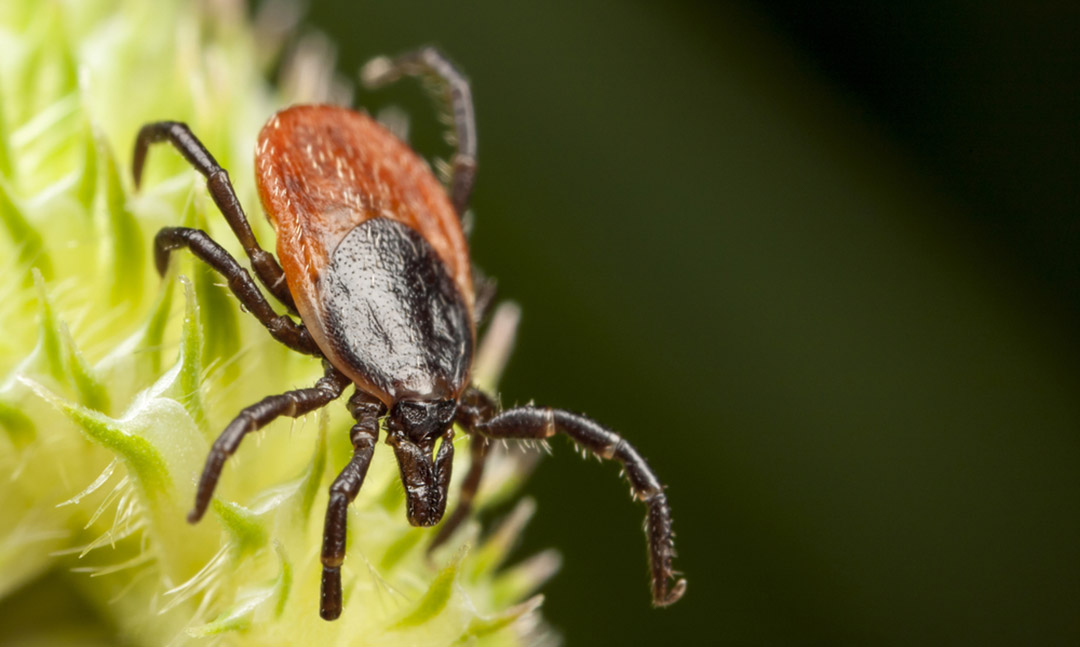
Ticks tend to hang out on vegetation waiting for hosts to pass by so that they can grapple on to them. If you are hiking, staying on a designated trail can help with reducing the chances that ticks will attach to you. For people and dogs, who like to go off trail and crash through the bush, they will encounter many more ticks. Unlike mosquitoes, ticks cannot bite through clothes. Tucking your socks into your pants is a good way to reduce the chances of a tick attaching to you. You can also use repellents like DEET on your skin and clothes to prevent tick bites. In Canada, you can purchase permethrin-treated clothes; permethrin is an acaracide that kills ticks. If you have been in an area where you might have been exposed to ticks, a good habit is to inspect your body for any attached ticks and remove them promptly. Ticks can attach in unexpected places like armpits, groin, back of the neck, and head, so parents should inspect their kids.
Dogs are excellent at collecting ticks because they like to run through brush and vegetation where ticks are waiting. For dogs, you can purchase medications that will kill blood-sucking arthropods, such as fleas, ticks, and mites. Dogs can also be vaccinated against Lyme disease. Some owners like to co-sleep with their dogs, and this can be a way to introduce unwelcome visitors in their beds. If a dog brings a tick into your house or bed and then grooms off the tick before it has started or completed its blood meal, the tick might attach for a second time on the dog owner.
3. What is the best way to remove a tick when it has buried its head into you?
Once a tick has started to blood feed, its mouthparts and head are buried in the skin. Use tweezers to remove an attached tick and be sure to grasp the tick as close to the head as possible and pull straight back. If you are concerned about the tick that bit you and the risk of tick-borne disease, take a photo and submit it on the free eTick app, which is funded by the Public Health Agency of Canada. When users submit a photo of the tick that bit them or their pet, researchers will identify it and provide the user with information about the tick ID and the risk of tick-borne pathogens. In Saskatchewan, the USask research groups of Dr. Emily Jenkins and myself are providing these tick IDs in eTick. Once people have submitted photos, they should keep the tick in a Ziplock bag or pillbox and place it in the freezer to kill it. If the tick turns out to be a blacklegged tick, eTick will request you to send the tick to them for research purposes.
4. Is this season shaping up to be a bad one for ticks in Saskatchewan?
The American dog tick has dramatically expanded its geographic range in Saskatchewan over the last decades and is continuing to expand its range. American dog ticks are now routinely encountered by people in Saskatoon and surrounding areas and further north around Prince Albert. Dr. Neil Chilton (PhD) in the USask biology department has documented this dramatic geographic range expansion of the American dog tick in Saskatchewan and has also shown that American dog tick populations in Saskatchewan are very resistant to cold temperatures. We expect that this tick species will continue increasing its geographic range and increasing its abundance in Saskatchewan. Nevertheless, we don’t have very good data on the abundance of American dog ticks in this province over time.
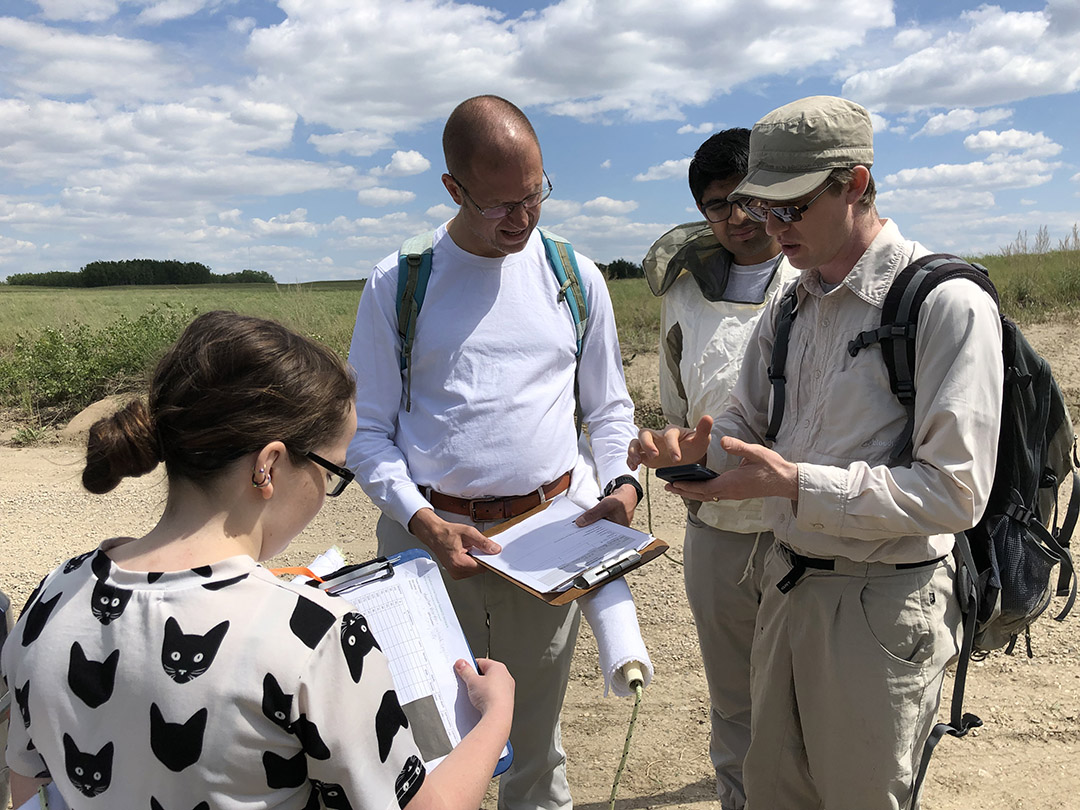
My research group and Dr. Emily Jenkins’ (DVM, PhD) group have done active surveillance for ticks in the summer at various field sites around Saskatchewan. However, this surveillance is mostly to see if we can find blacklegged ticks and is not designed to be a good estimate of the density of American dog ticks (mostly because sampling dates are opportunistic and not sufficiently standardized).
5. What is the current focus of your tick research?
My research is centred on Borrelia burgdorferi, the spirochete bacterium that causes Lyme disease. My research is focused on comparing the performance of these different strains in mice and ticks and how they interact with the host immune system. For example, we have shown that some B. burgdorferi strains establish higher abundance in the tissues of mice and have higher transmission to feeding ticks and appear to be more common in nature. We and others have shown that infection with B. burgdorferi strains induces a strong antibody response in the host that is highly specific for that strain. This means that the antibody response can protect you from reinfection with the same strain, but it provides no protection against other B. burgdorferi strains. This is one reason why in areas where Lyme disease is endemic, human patients have had Lyme disease multiple times over the years because they were infected with different strains.
We have also shown that female mice infected with B. burgdorferi develop a strong maternal antibody response that they transmit their offspring and that this maternal antibody response provides the offspring with strain-specific protection against infectious tick bite challenge. These strain-specific antibody responses probably play an important role in determining the community of B. burgdorferi strains found in nature.
Tick Surveillance in Saskatchewan:
https://research-groups.usask.ca/ticks/
E-tick:
https://www.etick.ca/