

USask facility expands genomics services nationwide
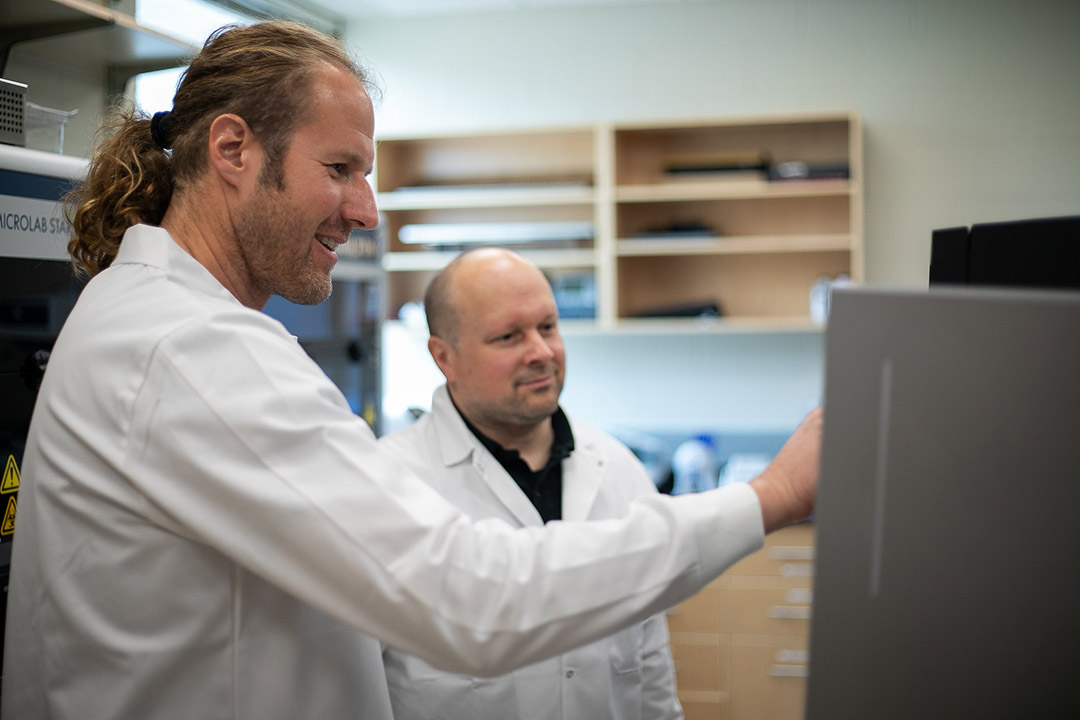
The University of Saskatchewan (USask) is expanding access to advanced genomics tools for researchers through its new Omics Resource Centre (ORC).
By Cat ZensBased at the Western College of Veterinary Medicine (WCVM), this specialized centre has been operating since fall 2025. It’s already supporting projects across the USask campus and beyond, offering genetic sequencing, research consultation and sample processing resources—all aimed to make genomics services more accessible.
High precision short-read DNA and RNA sequencing—the centre’s primary service—allows scientists to read and analyze the complete set of genetic instructions in an organism’s cells, providing them with information about biological functions, evolutionary relationships, inherited disorders and regulatory elements of any organism.
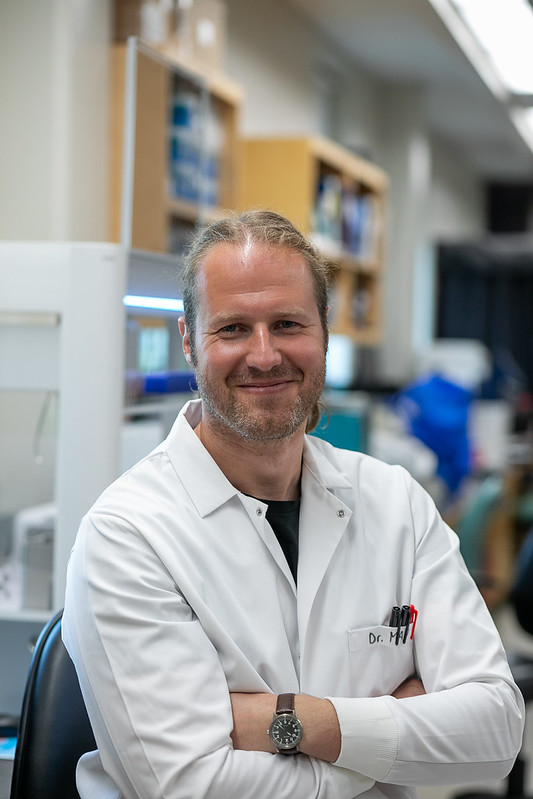
“The focus of ORC is to bring the latest technologies to animal research and other research areas,” said genomics laboratory manager Dr. Martin Mau (PhD), who leads the facility.
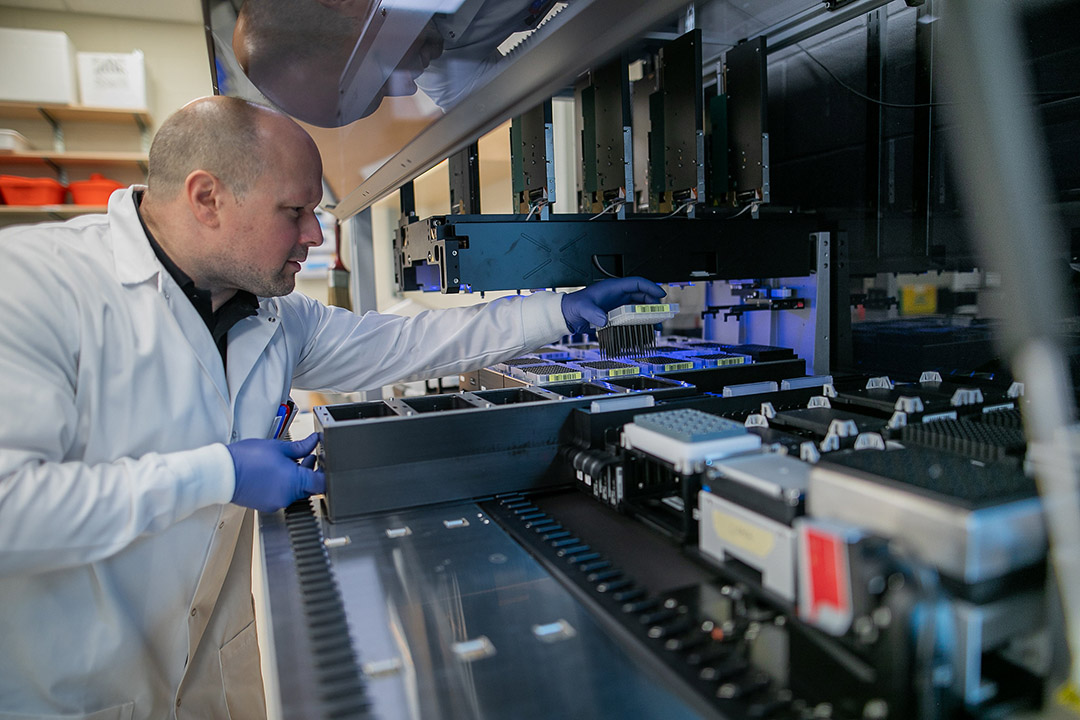
One recent addition is the AVITI24 sequencing platform, which has significantly expanded the resource centre’s capabilities. This exciting new technology allows researchers to capture multiple layers of information from different biological contexts at once, including DNA, RNA, protein, cell structure, spatial contexts and cellular responses.
The AVITI24 platform aptly demonstrates “multiomics,” a term describing a new approach that combines the data from different “omes,” such as the genome, transcriptome and proteome during analysis. With this approach, users can employ specialized software to visualize the activity of genetic material and proteins on a cell-by-cell basis in fresh and fixed tissues or cell cultures without needing to extract the genetic information or proteins in the first place.
Traditionally, researchers would need separate pieces of equipment to study DNA, RNA, proteins and cell structure. The AVITI24 sequencer integrates these approaches, allowing scientists to study their relationship and identify novel associations among biological entities and functions.
By combining sequencing with imaging and protein detection, users can complete multiple genomics services with just one machine, explained Mau.
“It’s one of the holy grails of technology integration,” he said.
ORC forms one pillar of IntegrOmes (Integrated Genomics for Sustainable Animal Agriculture and Environmental Stewardship) initiative, a $17.5-million research investment supported by USask and the governments of Canada and Saskatchewan. The project aims to advance beef and bison genetics and strengthen sustainable livestock production. It also expands access to genomic tools for scientists to expand their research work and assist livestock producers with their management goals.
In addition to ORC, IntegrOmes includes the development of a bison genome biobank and a new beef ReproTech facility at USask’s Livestock and Forage Centre of Excellence (LFCE). Combined, these facilities enable researchers—with help from producers—to collect samples from livestock and then link genetic information with observable traits such as fertility, feed efficiency, weight gain and disease resistance.
Dr. Lynn Weber (PhD), the WCVM’s associate dean of research and graduate studies, described ORC as central to these efforts.
“The omics facility is the bridge between the new beef and the bison resources because both involve sequencing for a variety of reasons,” she said.
By connecting genetic data with physical traits, researchers aim to help livestock producers make more informed breeding decisions, improve productivity and reduce environmental impacts. For example, genomics can support efforts to better understand antimicrobial resistance in cattle or verify the genetic purity of bison, which are sometimes crossbred with cattle.
By enabling more precise breeding strategies and better monitoring of animal health, ORC will support both economic and environmental sustainability in agriculture. Weber points to the benefits of genomics to help improve a herd’s reproductive potential as one real-world example of its economic and environmental benefits.
“There are sometimes a significant number of cows that never get pregnant in a cow-calf herd,” said Weber. “They’re making the environmental impact worse and costing the producers money, so if we can pick better genetic statistics to ensure we have better breeding success, then you can really minimize those impacts.”
ORC distinguishes itself from many sequencing facilities by offering true multiomics capabilities and by accepting a wide range of crude, unprocessed samples including animal tissues, bodily fluids and feces as well as plant, microbial and environmental samples such as soil and water. Other sequencing facilities typically accept only “pre-processed” samples, meaning DNA or RNA needs to be extracted from a sample before being sent in for sequencing.
“[Crude] sample types are usually complicated to work with, and it is difficult to retrieve unbiased genetic information, so developing methods that make the extraction process easy and cost-effective is one of our main focuses,” said Mau.

This approach lowers barriers for researchers who may not have specialized genomics training. In addition to processing samples, ORC provides extensive consultation to help users design experiments and select the most efficient methods for their research questions. The resource centre also supports researchers who have limited capacity or individuals without lab experience and resources by providing them with the items they need to properly collect and store crude samples.
“Training [clients], spreading knowledge about the newest technology and how that can help their research is a big part of my job,” added Mau. “Eighty per cent of my time is devoted to consulting customers.”
Graduate students also benefit from the centre’s services, with numerous chances to observe the lab work and receive guidance from staff.
“They have the opportunity to look over [the lab manager’s] shoulder and see things in action,” said Weber. “At the same time [they can] receive some one-on-one instruction on sample preparation processes.”
For graduate students and researchers, access to the ORC means access to tools that support their work—especially the new ATIVI24 sequencing platform that allows multiple genomics services to run at once on a single machine.
ATIVI24 also includes spatial transcriptomics services, an emerging molecular profiling method that enables researchers to map gene expression in intact tissue sections—capturing the positional context of gene activity.
“You get a three-dimensional reconstruction of what the tissue looks like, what the cells in the tissue look like and what RNA is being produced in each of those [tissues],” said Weber.
Applications for the ATIVI24 platform’s multiomics capacities range widely—from cancer and drug-response studies and cell phenotyping to infectious disease research, microbiome analysis and livestock breeding. While similar technology exists in very few Canadian medical hospitals for use on patient samples, ORC is the first facility in Canada to offer this service to researchers in multiple disciplines.
“This is the new wave of [technologies for] human medicine, plants and veterinary medicine,” said Weber.
While the centre is still in its early stages, it’s already attracting users from other USask colleges as well as from government agencies and research partners from across the country.
In addition to continuing current research on diseases and breeding patterns in food animals, the centre looks to expand to emphasize any area of research involving living organisms.
Looking ahead, Mau envisions more integration of services including combining genomic, transcriptomic and protein analysis. He’s eager to intersect the resource centre with his client’s labs to better understand how their samples perform under different circumstances and potentially expanding into data analysis support.
“We want to always cater to the individual researchers and their needs and provide the latest genomic technologies to our customers—that’s what our vision and mission is at ORC,” said Mau.