

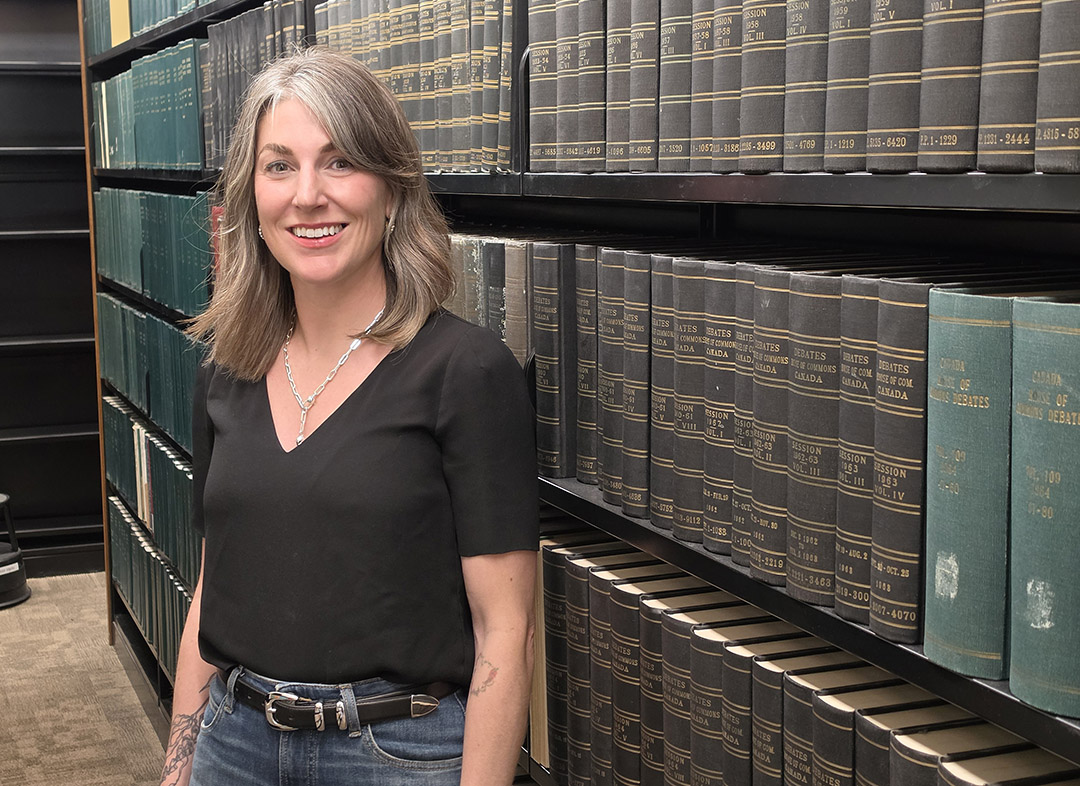
“It's all about the kids”: USask law professor receives community impact award
Professor Jamesy Patrick has spent her career trying to make the law accessible to others.
By Matt Olson, Research Profile and ImpactTwice in the past year, Patrick — an assistant professor in the University of Saskatchewan’s (USask) College of Law — said she received phone calls from lawyers in Saskatchewan to let her know they used the legal tools she and her students developed to help keep a child in Saskatchewan with their family.
For Patrick, seeing that real-world impact makes all the difference.
“For me, it’s all about the kids and the future of the province and the country as we face the realities of reconciliation,” she said. “If we make a difference for one kid, if we’re going to break the cycle and trauma of residential schools, this is where we’re going to start.”
Patrick is this year’s recipient of the Publicly Engaged Scholarship Team Award (PESTA), given annually to a member of the USask faculty to recognize collaboration and achievement with students, faculty and partners to create an impact in the community.
She earned her Juris Doctor and Master of Law degrees at USask. After graduating from USask, Patrick said she fell into the specialization of child welfare law, sometimes called child protection law in Saskatchewan.
Very quickly, Patrick saw the flaws in the system built on colonial practices that disproportionately affect Indigenous families in the province.
Or, put more simply, there are more Indigenous children in provincial care in Saskatchewan today than there were in residential schools in Saskatchewan at the height of the residential school system.
“We have an epidemic of kids in care,” Patrick said. “We have a major systemic over-representation of Indigenous youth and children in care ... and I saw there’s a gap in research in this area, and there’s a gap in resources.”
Patrick proposed a course on child protection law to the College of Law as a sessional lecture in 2021.
Since that time, Patrick has become a full faculty member at USask, the child protection law course is always completely full with eager-to-learn students, and Patrick has worked to build connections between her students and the Federation of Sovereign Indigenous Nations (FSIN) and individual communities.
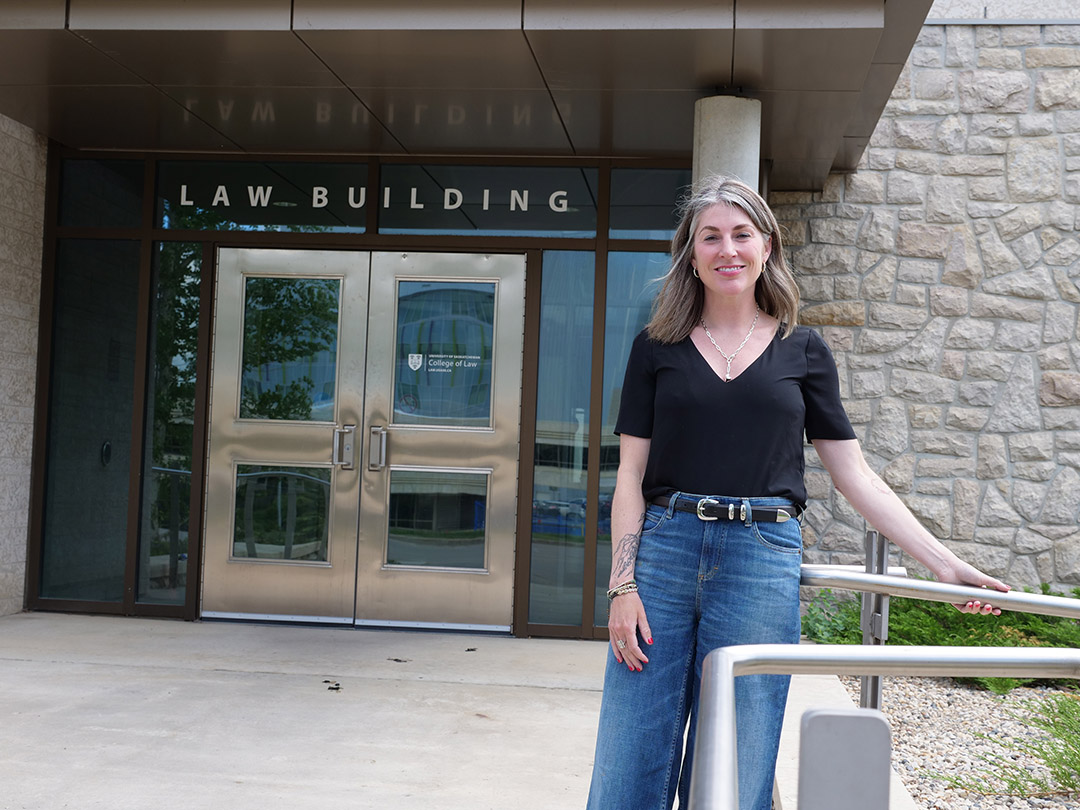
Specifically, Patrick helped create a special practicum program in collaboration with the FSIN. The College of Law and FSIN entered into a Memorandum of Understanding in 2023 to facilitate this collaboration.
Questions and research topics from the community fuel the focus of the practicum for students, who Patrick said are meant to come out of the program with both a better understanding of Indigenous communities they work with as well as something tangible to bring back to the community.
One of those final projects was a step-by-step framework to help families and First Nations understand their rights and options in child welfare cases – the same tool lawyers called Patrick about to tell her how well it worked for them.
“Every single student who’s gone through the practicum, indicates that they love that they got to do work in a law school that has a purpose,” Patrick said. “It’s not just a paper that gets filed away. It’s a process map a mom is using in court. It’s a guidebook on things to consider when asserting jurisdiction over child welfare for your nation. They did these things that communities are using, which is so cool.”
It has been a meteoric rise for Patrick’s research and child protection law course, starting from the course not existing to now being a mainstay in the College of Law.
Research and education into child protection law continues to grow at USask, with Patrick also arranging placements with groups like Legal Aid Saskatchewan to help students continue to explore this area of the law in Saskatchewan.
Patrick called receiving the PESTA “humbling” and said it reflected her goal of making a definitive impact for the province through the law and through her students.
“I think this is scholarship in action,” she said. “It’s the students, it’s the communities, it’s tangible. I’m seeing the impact, and it’s important that we have these types of relationships as a university.”