

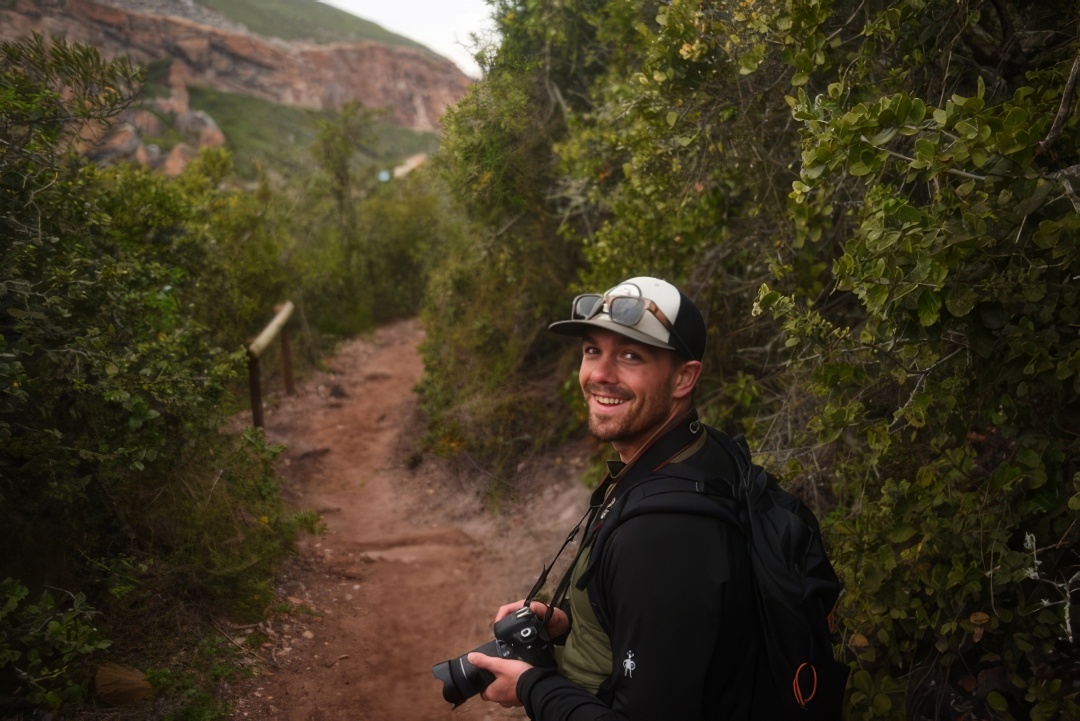
USask graduate student explores passion for regenerative sustainability
Ryan Sojnocki, who will receive a Master of Sustainability degree during Fall Convocation on Nov. 10, is the founder and host of The Regenerative Way
By Shannon BoklaschukAs a graduate student at the University of Saskatchewan (USask), Ryan Sojnocki had the opportunity to visit South Africa in 2025 and connect with local conservation organizations there.
It was an eye-opening experience that he will cherish for years to come.
“I never had dreamt of going to South Africa. It completely changed my life,” said Sojnocki, who will graduate with a Master of Sustainability (MSs) degree in Regenerative Sustainability from USask’s School of Environment and Sustainability (SENS) during Fall Convocation on Nov. 10.
Through SENS, Sojnocki became involved in TRANSECTS, the Transdisciplinary Education Collaboration for Transformations in Sustainability. TRANSECTS is a transdisciplinary research training partnership that reconfigures sustainability science education, prepares graduates to be the next generation of sustainability changemakers, and offers opportunities for intercultural learning through shared international experiences and comparative analysis across the Global North and South.
As part of TRANSECTS, Sojnocki attended the 2025 Transdisciplinary International Learning Lab (TILL) in South Africa. At the TILL, which was hosted in the Garden Route Biosphere, he co-developed a replicable toolkit to assist CapeNature in capturing visitor values and cultural ecosystem services at their nature reserves. The experience deepened Sojnocki’s understanding of how cultural, political, and historical contexts can shape the foundations of solutions to “wicked problems”—or problems that are very complex and difficult to solve.
Following the program, Sojnocki and his fiancée, Elsa Grude, travelled extensively throughout South Africa and Namibia, living out of a camper van and connecting with conservation organizations and local communities. It was during these travels that the vision began to take shape for The Regenerative Way, a podcast and an emerging international storytelling platform that Sojnocki created to explore humans’ relationships with the natural world and the interconnected systems that sustain us.
One experience became a defining moment. While visiting Timbavati Game Reserve, Sojnocki and Grude joined Matt Lindenberg, founder of Global Conservation Corps, and Orlat Ndlovu, the head ranger at Timbavati Game Reserve, to spend time in the bush and learn about the region’s wildlife, ecology, and culture. While tracking white rhinos on foot, they inadvertently startled one just 50 feet away. What began as an extraordinary wildlife encounter soon became something more profound.
Afterward, Ndlovu shared the realities of wildlife poaching in South Africa, where nearly one rhino was killed every day in 2025 for its horn to be sold on the illegal market. He also spoke of the murder of his close friend and former head ranger, Anton Mzimba, who was killed while dedicating his life to protecting rhinos. Hearing these experiences firsthand, on the landscape where they had unfolded, left a lasting impression on Sojnocki.
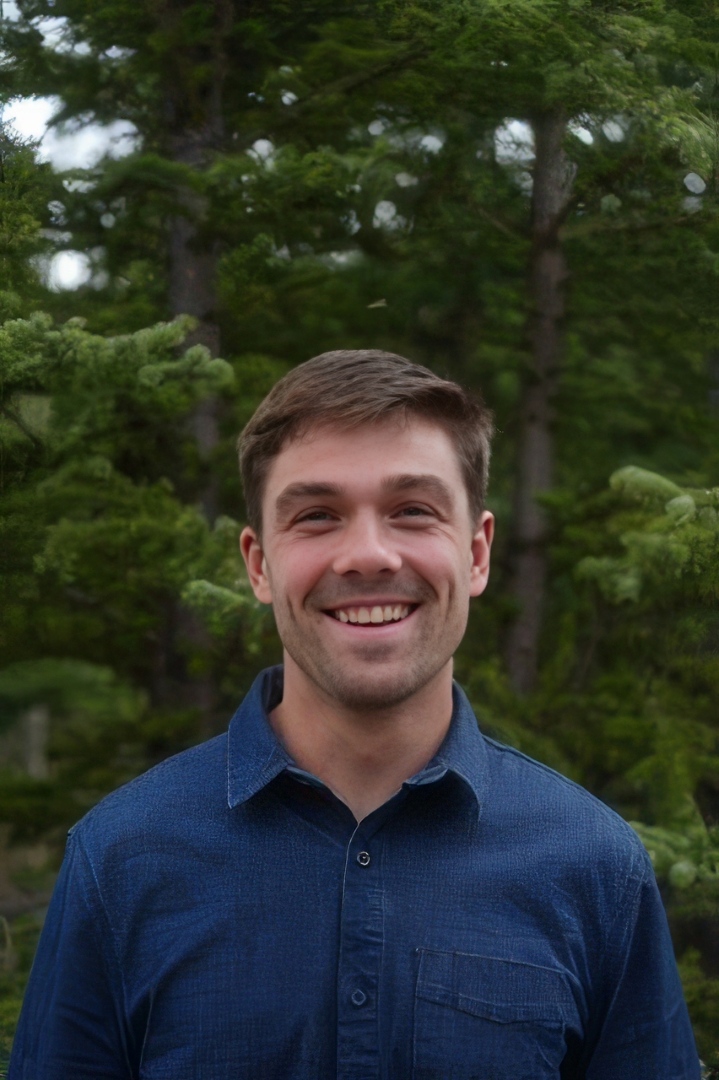
The encounter brought to life something that he had been exploring throughout his studies: that understanding complex conservation challenges requires listening to the people whose lives are intertwined with the landscapes. It inspired him to seek out and amplify the stories, perspectives, and lived experiences of those working on the frontlines of conservation.
Upon returning to Canada, Sojnocki became determined to build on the relationships he had established. Less than a year later, he returned to northeastern South Africa, collaborating with TRANSECTS to record long-form conversations with researchers and local conservation leaders, alongside independently produced episodes with organizations he had connected with during his earlier travels.
“Travelling across the Vhembe and Kruger to Canyons Biosphere Reserves, I learned alongside researchers, conservationists, and local communities navigating the intersections of biodiversity, livelihoods, and culture,” he said. “From community conversations to lion collaring with the Endangered Wildlife Trust and discussions about wildlife poaching with Global Conservation Corps and Timbavati Game Reserve, these experiences reinforced the importance of bringing different ways of knowing together.”
Sojnocki’s time in South Africa resulted in a short film that he created to explore how different ways of knowing—such as scientific research, traditional knowledge, lived experiences, conservation practices, and community perspectives—can come together to help people better understand complex socio-ecological issues. The film was Sojnocki’s capstone project for his master’s degree and was also an extension of The Regenerative Way.
“A core part of my vision for The Regenerative Way is to collaborate with socio-ecological researchers to help amplify their work, insights, and findings,” Sojnocki said.
“Through long-form podcasting, documentary filmmaking, and photography, I hope to join researchers in the field, document their work firsthand, and bring their research to life through accessible and engaging storytelling. I see tremendous value in bridging the gap between academic research and broader audiences, particularly when exploring complex environmental challenges and the relationships between people and the natural world.”
At the heart of The Regenerative Way is a commitment to transdisciplinarity and the belief that understanding socio-ecological challenges requires diverse perspectives, meaningful relationships, and immersion in the landscapes and communities where they are unfolding, said Sojnocki.
“I’m actively looking to build collaborations with researchers and organizations across Canada and internationally, finding opportunities to support their work, share their knowledge, and bring greater visibility to the important research happening around the world,” he said.
Sojnocki, who lives outside of Whitehorse, Yukon, completed his USask master’s degree online. One of the highlights of his time as a graduate student was the mentorship he received from Dr. Douglas A. Clark (PhD), a SENS professor who is known for his research on Indigenous co-management of resources and ecosystems, polar bear-human conflicts, wildlife and protected area management under conditions of rapid social-ecological change, and environmental governance and policy processes.
Sojnocki described Clark as one of his heroes, noting that Clark’s teaching has transformed his life by shifting his thinking around wicked problems and socio-ecological issues.
Clark was also impressed with Sojnocki’s enthusiasm for learning.
“Ryan was based in Whitehorse during his program, which gave us a strong connection since I moved down to USask from up there once upon a time,” said Clark. “Ryan stood out for his adventurous spirit and eagerness to tackle all kinds of challenges, from intellectual ones debating ideas in classes to physical ones, such as organizing and documenting an international paddling expedition on the Yukon River. Everywhere he went, north and south, he brought his inquiring mind, fully engaged, and took evident delight in learning along the way.”
Before enrolling at USask, Sojnocki completed an undergraduate degree at the University of Waterloo, where he focused on renewable energy and launched a business which looked to convert people’s backyards into organic garden beds that grew produce to feed them, with Sojnocki taking the excess to market. The experience inspired him to explore how businesses centred around a triple bottom line—people, planet, and profit—could remain financially viable while contributing to solutions for complex socio-ecological challenges.
Sojnocki’s interest in the environment continued when he moved to Vancouver Island and completed a 100-day outdoor leadership and guide training program, developing the technical skills, wilderness survival skills, and expedition leadership experience needed to guide groups through remote environments. He went on to work as an outdoor educator and wilderness guide at Strathcona Park Lodge & Outdoor Education Centre, leading multi-day expeditions in mountaineering, sea kayaking, and lake travel.
“I would say that is probably one of the most pivotal moments in my life. It helped me see this idea of you only protect and preserve the things that you're in relationship with, but you have to build that relationship,” Sojnocki said.
“I grew up close to Toronto, so I didn’t have access to wild places and never knew how to get there. And then through finding Strathcona Park Lodge and this incredible community, doing the program, and then going on to be an outdoor educator, it just really taught me the value of that, which kind of brought me to my master’s degree.”
Today, as a resident of Yukon Territory, Sojnocki works at Yukonstruct Society, where he leads programs that empower Yukon entrepreneurs and communities to build capacity, develop skills, and grow resilient local economies. His work focuses on expanding access to entrepreneurship, trades, and skills development while building partnerships that support sustainable economic development across the territory.
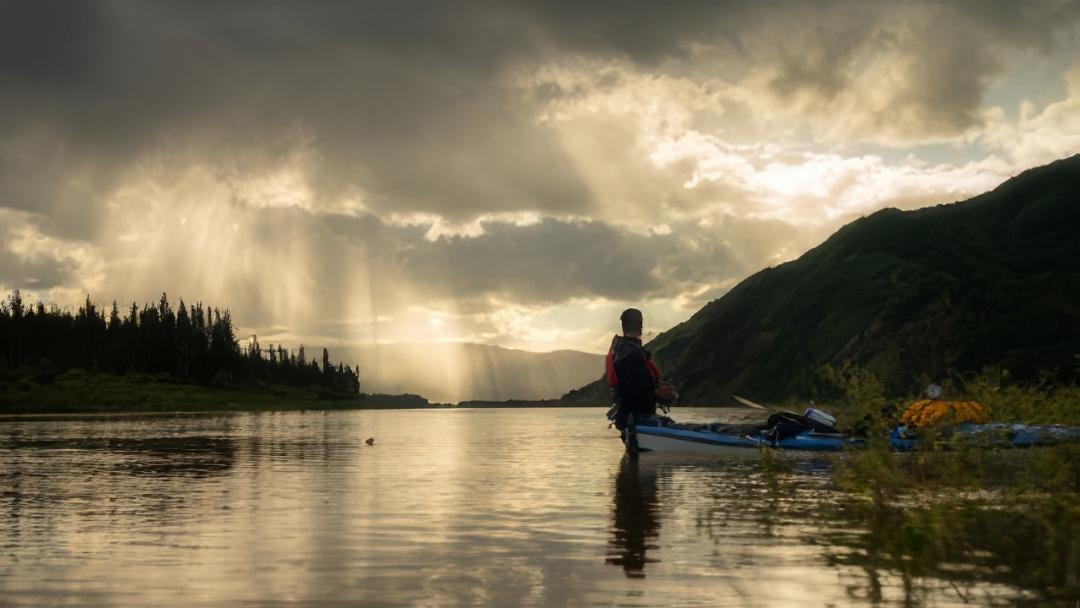
Outside of his role at Yukonstruct, Sojnocki is committed to growing The Regenerative Way and reinforcing the importance of bringing together different ways of knowing. This past summer, he led a 1,000-mile expedition along the Yukon River, bringing this approach into the field to explore the interconnected relationships between resource extraction, northern communities, declining salmon populations, and changing ecological systems.
“I believe understanding these relationships requires getting our hands dirty, spending time on the land, and listening to those who know it intimately. Over the coming years, I am looking to build a series of research and storytelling initiatives across the Arctic. Through multidisciplinary expeditions, I aim to explore the intersections of culture, conservation, climate change, resource extraction, and geopolitics to better understand how these interconnected forces are shaping Arctic landscapes and communities,” Sojnocki said.
“Beyond exploring environmental challenges, I want to amplify individuals and organizations advancing regenerative practices, from ecological restoration and agriculture to outdoor education and land-based traditions. Through storytelling, consulting, and collaboration, my ambition is to help share their knowledge, expand their impact, and inspire deeper connections with the natural world. At its heart is a simple belief: We only protect and steward what we are in relationship with.”