


USask Métis graduate student awarded $90,000 scholarship
Nicole Mercereau has been awarded a 2026 Indigenous Graduate Leadership Scholarship from the University of Saskatchewan (USask).
By Connor JayMercereau (BEd’04, MEd’25) will receive $30,000 over three years through the scholarship, which supports First Nations (status or non-status), Métis, and Inuit students in master’s or PhD programs who demonstrate academic achievement, research excellence, and leadership through community engagement.
“As a mother, I can be a role model for my two kids and they can see that their mom can do hard things and that the work pays off,” Mercereau said. “The scholarship provides financial stability and knowing that I can concentrate on my studies.”
From Duck Lake, Mercereau recently completed her master’s thesis on Métis education across generations in Saskatchewan and has continued directly into her PhD.
“Never in my wildest imagination would I think that I would be doing the things I’m doing,” Mercereau said. “It’s unbelievable that I get the recognition to be able to do the things I’m so passionate about.”
Her leadership includes volunteering in her children’s school and community, as well as working as a research assistant and sessional lecturer with the Saskatchewan Urban Native Teacher Education Program (SUNTEP) situated on campus at USask.
Drawing on her family’s intergenerational resilience as racialized Métis learners, her research examines the impacts of colonialism, resistance to assimilation, and the persistence of Métis identity. It also critiques Western ideologies embedded in Saskatchewan’s provincial education system.
“My master’s research was an amazing experience,” she said. “I feel so privileged that I can share my family members’ stories. My PhD will expand on this research as I explore Métis pre-service educators racialized practicum experiences within the K-12 system, an area that is overlooked in research.”
Mercereau said conversations with family members, combined with academic coursework, helped her better understand their experiences and identify ways to create a more inclusive education system.
“I can understand the ‘whys’ behind things I had always felt but couldn’t explain,” she said. “It motivated me to use that lens within my own family.”
A graduate of SUNTEP, Mercereau said she experienced systemic barriers during her training.
“While my undergraduate degree coursework and early practicums were positive, my final internship was far from positive,” she said. “I carried guilt for many years, thinking it was my fault and that I was a failed teacher.”
She said later coursework helped her realize that other non-White teachers had similar experiences.
“I always thought it was just me,” she said. “Then I understood it’s the system. The systemic racism is ingrained in our institutions.”
Mercereau credits mentors Dr. Carmen Gillies (PhD) and Dr. Gordon Martell (PhD) with helping her better understand and articulate those challenges.
“They have been a huge part of my academic success,” she said. “They provided extensive knowledge and strengthened my confidence.”
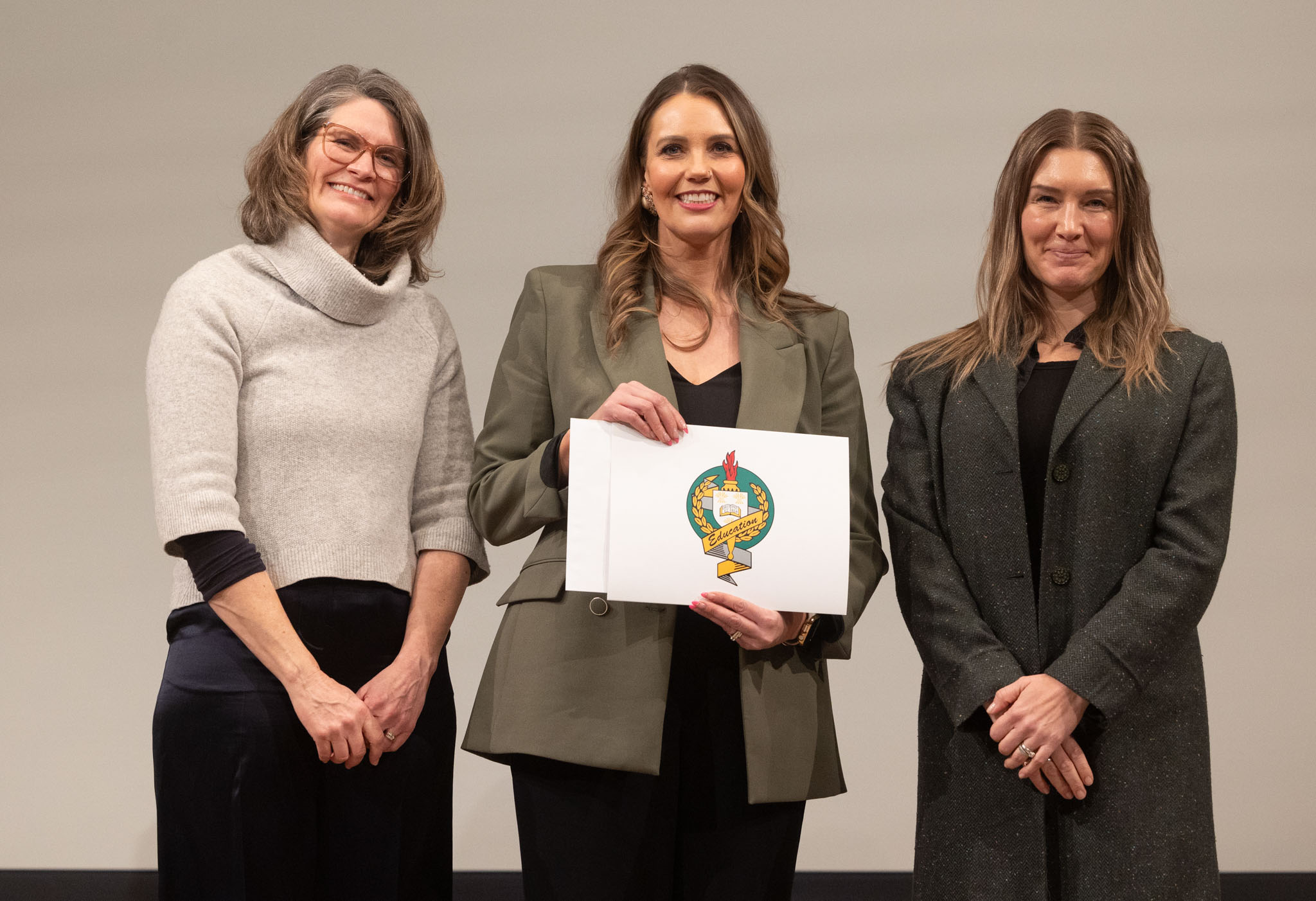
Mercereau has also been recognized with the Moss Bag Project Award for Indigenous mothers and Two-Spirit parents. The award, presented by SUNTEP graduate Jessie Fiddler-Kiss (BEd’10), supports Indigenous parents in the College of Education pursuing graduate studies in areas such as anti-racism, human rights, law or environmental justice.
“It’s important to recognize the resiliency and fortitude of moms like us,” Mercereau said. “Meeting and talking with Jessie, we see the importance of raising our own kids and supporting others, especially Métis earners who are often overlooked.”
As efforts to Indigenize curriculum continue, Mercereau said it is important that Métis perspectives are not overlooked.
“It’s easy to say we’re doing the work, but ‘Indigenous’ is often used as an umbrella term without acknowledging distinct groups,” she said. “We’re not just checking a box.”
Her doctoral research will explore racialized Métis pre-service educators’ practicum experiences and intersectionality in education, with the goal of challenging stereotypes and reshaping discourse.
“I recognize my proximity to white privilege through my white-presenting identity. However, I witnessed my father face overt racism through his life,” she said. “I’m white-presenting, but the colour of my skin doesn’t make me less Métis. It allows me to enter spaces and challenge the dominant narrative and bring about positive change.”
Her master’s thesis also incorporated Métis flower beadwork as a visual representation of a multi-generational framework, highlighting themes of kinship, resistance, identity, and resurgence.
Mercereau hopes her research will better prepare future teachers to meet the needs of diverse students and encourage more Métis people to pursue careers in education.
“I graduated in 2004 and thought there would be more diversity in teaching by now,” she said. “There’s still a lot of work to do.”
In the short term, the stability of the scholarship will provide time for Mercereau to dive deep into her research to create a more inclusive world for her children.
“My kids always see me working at the computer, but they don’t fully understand what I’m doing yet,” she said. “When they’re older, I hope they’ll appreciate the anti-racism work I’ve done to help create a better space for them.”
Together, we will work towards Truth and Reconciliation. We invite you to join by supporting Indigenous achievement at USask.
Article re-posted on .
View original article.