

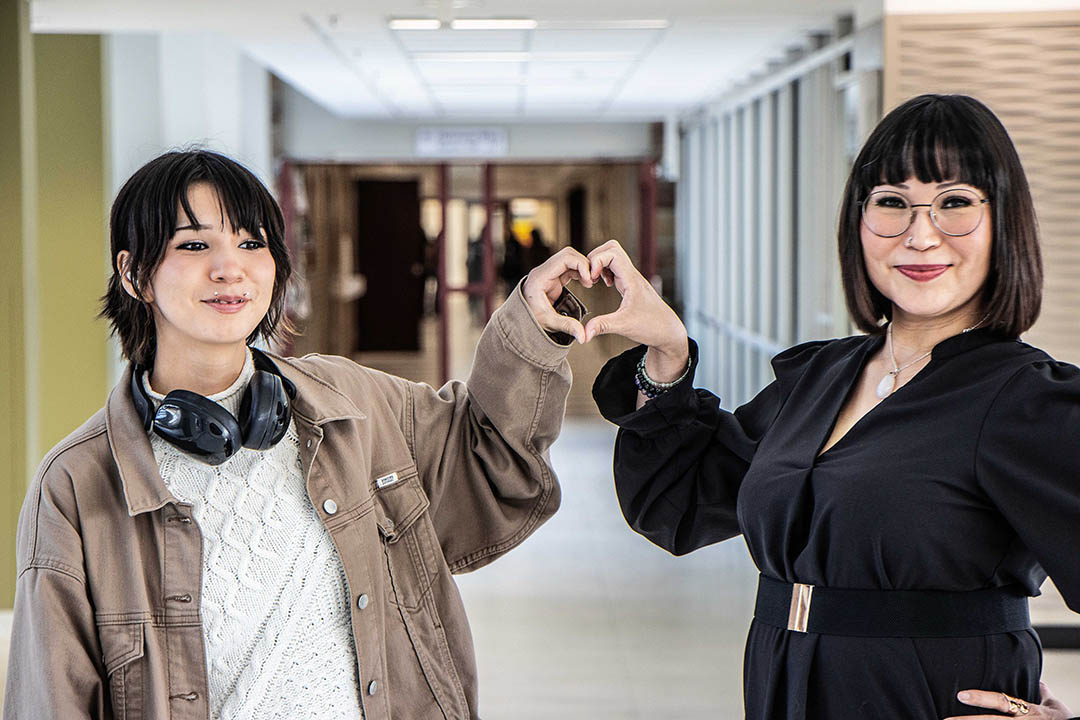
Breaking cycles: Indigenous USask student navigates university with daughter
Marcia Little will graduate with a Bachelor of Arts in Psychology (with Distinction) at the 2026 USask Spring Convocation.
By Kristen McEwenWhen Marcia Little first attended classes as a mature student and single parent at the University of Saskatchewan (USask), she felt some imposter syndrome.
“There were times that I didn’t feel like I belonged due to my age and being the first member of my family attending university,” she said.
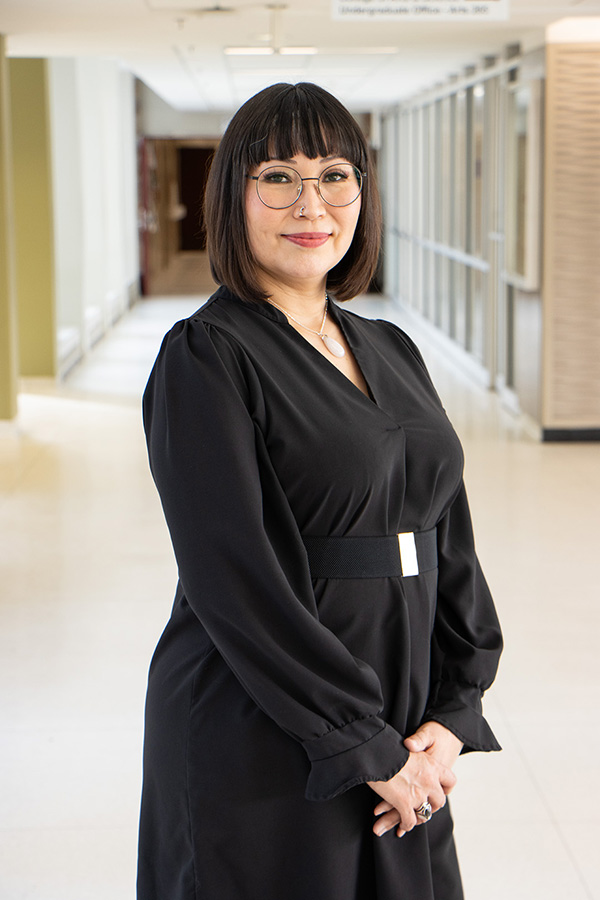
Little is from Ahtahkakoop Cree Nation, located on Treaty 6 Territory and traditional homelands of the Métis. She has four children and two grandchildren.
Intergenerational trauma played a role in her family’s education journey—her father, late-mother and late-grandparents all attended residential schools. As an Indian Day School survivor, Little recognizes how those experiences resulted in addictions, abuse, and loss of culture and way of life.
“Attending university has aided me in rewriting and reframing my stories of trauma and embracing my healing journey. There was a lot to unpack, and I wrote about these experiences in my papers throughout the years,” Little said. “That’s what kept me going. I was like, ‘Well, someone has to do it and be that cycle breaker in ending intergenerational trauma.’”
She will be graduating at the USask Spring Convocation with a Bachelor of Arts in psychology (with distinction), and a minor in studio arts. Little shared how her education journey was not always straightforward.
A sense of belonging at USask
Little credits the Indigenous Student Achievement Pathways (ISAP) with resolving a lot of her uncertainty. When starting university, she joined an ISAP learning community.
ISAP mentors and faculty help students in the learning communities develop academic skills and relationships. Little also later became an ISAP peer mentor. She studied hard, eventually receiving an Indigenous Student Achievement Award for academic achievement in 2019.
Little took two introductory psychology courses from adjunct professor Dr. Richard Katz (PhD), which incorporated Indigenous storytelling with Indigenous Elders. It was a two-eyed seeing approach, with Indigenous and western worldviews.
“Elders are the original psychologists, as shared by Dr. Katz,” she said. “In hearing their stories, they encouraged me to continue this journey.”
She spoke with Katz to discuss majoring in psychology. He shared the potential barriers and challenges she would face as an Indigenous person and a woman.
“He told me, don’t give up. Just keep pushing through,” she said. “And I’m glad I did.”
Little found that many of her classes could be related to her own experiences. Sociology classes helped her make sense of her experiences with domestic violence. Psychology helped to deconstruct knowledge and ask questions about what shapes individuals.
“It helped me make sense of everything that happened to me, where I stood and where my daughter and family stand—where everyone is standing within society,” Little said.
Pushing through barriers—including a pandemic
In 2020, Little withdrew from classes due to the pandemic and emerging issues within her family. This left Little on her own with her youngest daughter, Celeste McAdam.
“It was a painful choice to make, but I needed to ensure that we were safe,” Little said. “I felt like that’s when my mental health was truly impacted and things were starting to compound. I feel most of it was from undiagnosed ADHD and generalized anxiety disorder.”
Little said she chooses to talk about ADHD and her experience with domestic and family violence, even if it can be uncomfortable.
“I think it’s really important to get our stories out there and empower others to leave situations that are harming them,” she said. “There are so many variables that contribute to obstacles—such as lack of resources, healthy support from immediate family, friends, and community. Sometimes shame keeps one from reaching out, and fear of being judged for the situation they are in.
“It’s important to reach out for help too. I accessed the Student Wellness Centre and received the help I needed.”
When Little returned in Fall 2020, she applied and received a $5,000 scholarship through Susan’s Award for First Nations Female Students with Dependent Children.
The following year, Little withdrew from university again. She was couch surfing—experiencing hidden homelessness. She moved back to her community to live with family and work through issues that could no longer be avoided.
She returned to USask in Fall 2023 to complete her degree.
“I’m from Ahtahkakoop Cree Nation,” she said. “Education is our new buffalo. It’s a powerful, visionary phrase often attributed to Plains Cree leaders, including Chief Ahtahkakoop. Education is the new means of survival, self-determination and prosperity for Indigenous children in a changing world.”
Though she chose psychology as a major, she noted that the profession has not always been safe for Indigenous people. In 2018, the Canadian Psychological Association released a response to the Truth and Reconciliation Commission of Canada: Calls to Action report in 2015. A task force recommended a two-part statement of accountability from the association, including a formal apology and a position statement on how psychology can support Indigenous peoples in Canada moving forward.
Little explored this historical moment in a paper for one of her final-year psychology classes.
“There are so many empowering Indigenous women and men that have been doing amazing healing work, trailblazing, making it easier for the rest of us to follow. I thank them for doing that, because I feel like I wouldn’t be here today if it wasn’t for them. You’ve got to acknowledge all of those that did the work before us, learn and understand how history and all the harm that was caused, colonization, so it doesn’t repeat itself.”
Like mother, like daughter
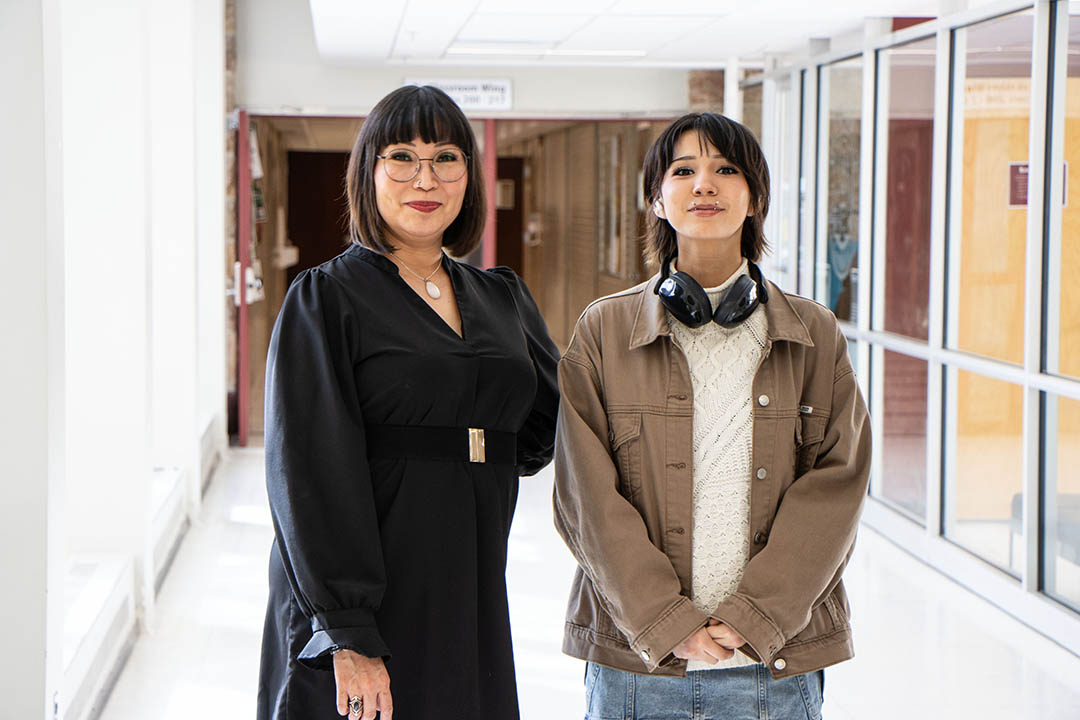
Little had the opportunity to navigate university alongside her daughter in 2025. McAdam, a member of Big River First Nation, is the youngest of Little’s four children. McAdam recently completed her first year in an ISAP learning community and intends to major in fine or studio arts.
While attending university together, mother and daughter learned more about each other and themselves.
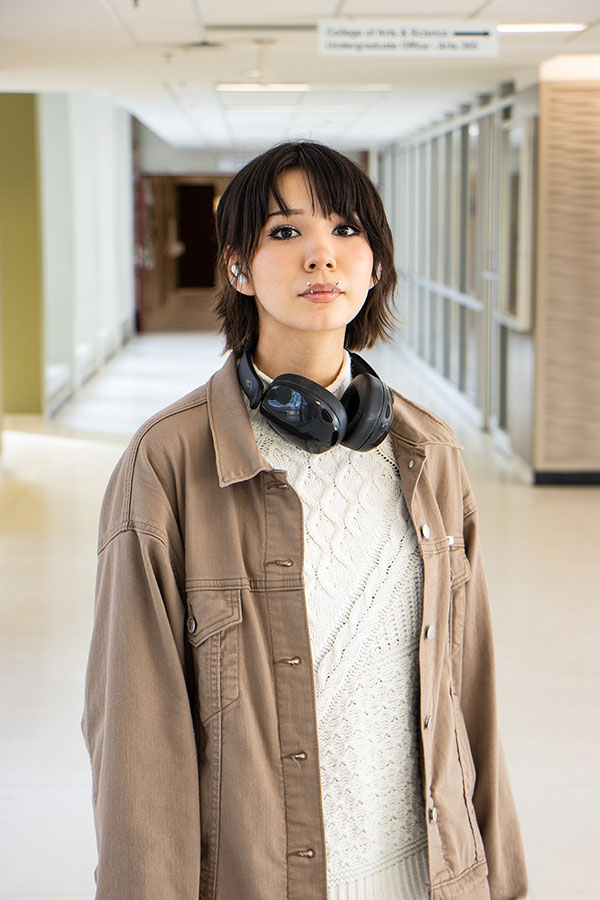
"My first year at ISAP was intellectually stimulating and engaging, but there were moments I was too overwhelmed to function,” McAdam said.
“Whenever I look back at my mom when she was a university student, I can finally grasp the amount of mental effort it took to study,” McAdam said. “My mom often spends her nights hunching over her textbook, laptop, or whatever she was working on. I was worried at times because she was such a busy bee.”
A staff member at Gordon Oakes Red Bear Student Centre encouraged McAdam to be assessed at CAIRS in the College of Education. She was diagnosed with autism and ADHD, leading to access to support through Access and Equity Services on campus.
McAdam’s journey encouraged Little to find out more about her own neurodivergence, resulting in her ADHD diagnosis.
“It can really take a physical toll on your health being undiagnosed. When I try to push myself past my limit like (my mom), my brain fog gets worse and my arms start to ache,” McAdam said. “Now, instead of beating myself up, I listen to my body because I am literally wired differently—like my mom. I am so proud of her for being persistent.”
Little added that she’s happy to see her daughter experience university with support.
“I’m so grateful and happy that she has the opportunity to succeed where I had to navigate,” Little said. “I’m so proud of her.”
As Little takes on a new role in the Undergraduate Support Office in the College of Arts and Science, McAdam looks forward to cheering her on at Spring Convocation.
“My mom watched me graduate (high school),” she said. “Now, I get to watch her graduate.”