

Then and now: From greenhouse laboratory to the College of Medicine for Saskatchewan
From greenhouse laboratory to teaching sites across the province, the University of Saskatchewan (USask) College of Medicine has been shaping health care in Saskatchewan and beyond for a century. This year the college celebrates two milestones—100 years since the two-year School of Medical Sciences was established and 70 years since students have been able to take their entire four-year medical degree at USask.
By Trenna BruskyLaying the foundation for medical education
Medicine was among the colleges originally envisioned by the USask Board of Governors and its first president, Walter Murray, who believed the university should serve the province’s needs. However, the end of Saskatoon’s early boom and the start of the First World War delayed plans for a medical school and teaching hospital.
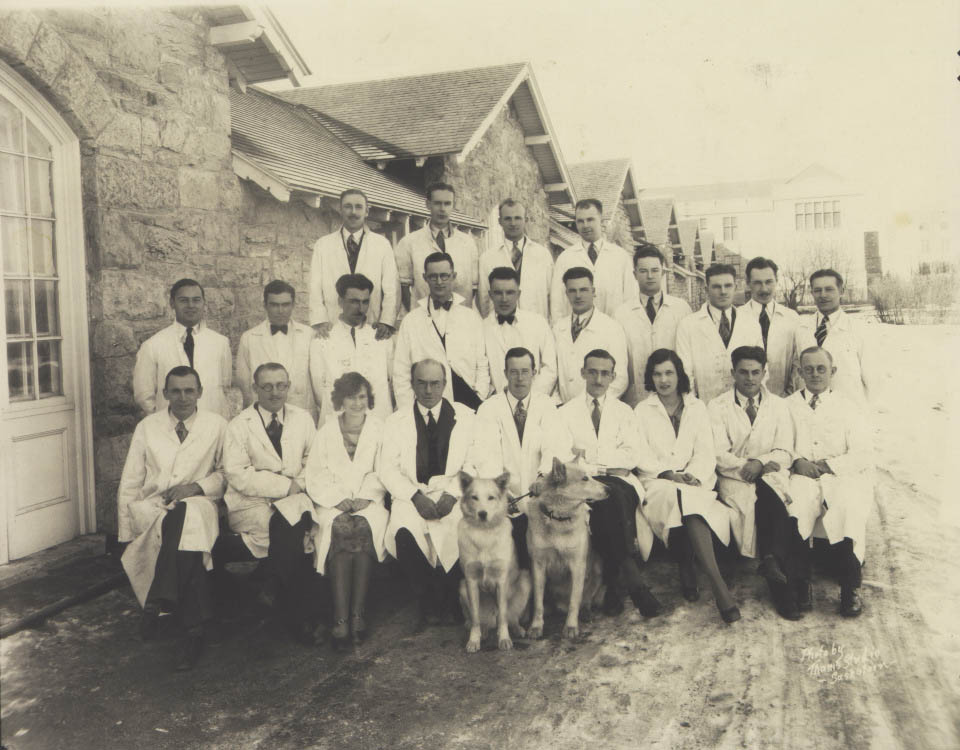
In 1919, Dr. W. Stewart Lindsay (MD) joined the university as its first professor of pathology and bacteriology. Working out of a laboratory in the university greenhouses, Lindsay began teaching and conducting research that would lay the groundwork for what would become the School of Medical Sciences in 1926, and he served as its first dean.
From 1926 until 1956, students could complete their first two years of medical training at USask before enrolling elsewhere for their final two clinically focused years. From 1928 to 1954, 605 students completed the program.
Expanding to a full medical degree
In 1950 the school moved into the new Medical Building. Two years later, it became a college and was renamed the College of Medicine in 1953, with Dr. John Wendell Macleod (MD) succeeding Lindsay as the dean.
Macleod became known as a pioneer in medical education and the social aspects of medicine. According to archives, he emphasized the importance of understanding the social, economic, and political contexts of health and made those a central part of the curriculum.
“Macleod’s views and his early life experiences led to his work with Premier Tommy Douglas creating what we now recognize as the universal health care system. This system removed what Macleod referred to as ‘the fee problem’ or charges people paid for medical care, so it was no longer a barrier for patients,” said Dr. Sarah Forgie (MD), dean of the College of Medicine. “He left a wonderful legacy within our college—building the medical education piece, the research piece, and then helping to shape the system that our graduates work in.”
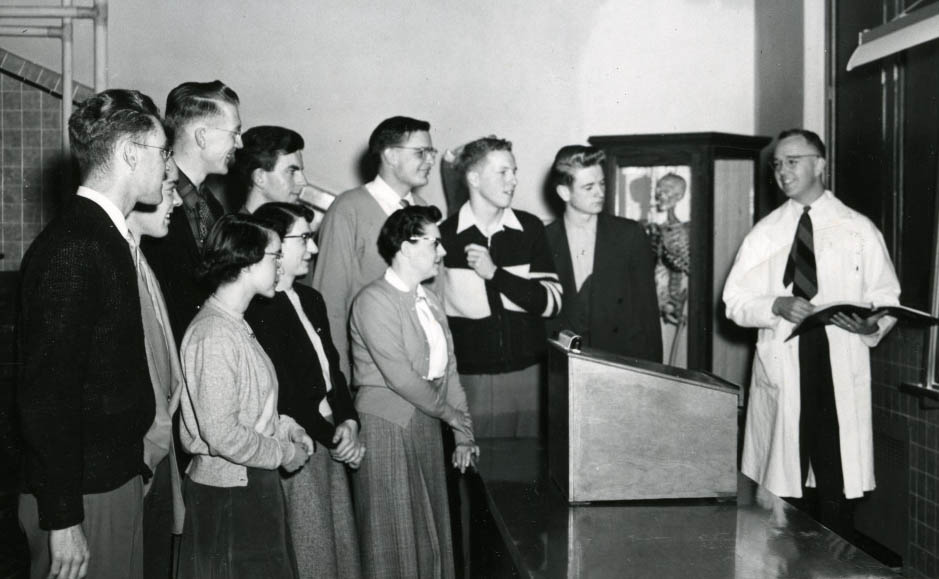
The opening of University Hospital (now Royal University Hospital) in 1955 marked a turning point. Beginning in 1956, medical students could complete their entire four-year medical degree in Saskatchewan.
“This was a huge transition to a four-year medical program—a milestone that showed the importance of medical and health education to the university and to the province,” said Forgie.
She notes that signs of this period remain visible in the Health Sciences Building on the Saskatoon campus.
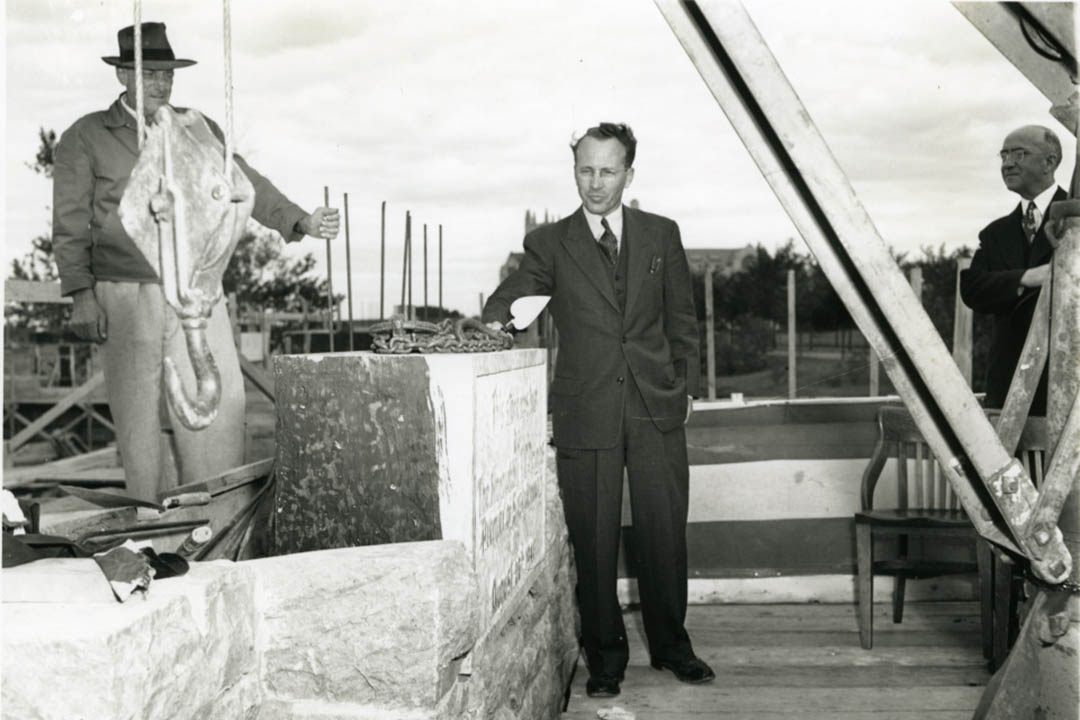
“When you walk in the front doors of ‘A Wing,’ you can see a mural of Premier Douglas laying the building’s cornerstone,” she said.
The mural and the original cornerstone are a reminder of a moment reported as “a new era in the history of the university” and a “dream come true.”
Growth to meet Saskatchewan’s needs and beyond
“For Saskatchewan, for the university, and for our college, we will continue the legacy of excellent training, and the social vision of what medicine can do,” said Forgie. “We have grown our programming to meet what the province needs and to ensure learners have access to a range of opportunities. This includes changing where learners are taught, expanding our class sizes, and launching new programs.”
Today, the College of Medicine has campuses in Regina and Saskatoon, over 20 training sites, and more than 25 academic units. It is one of the largest colleges at USask—and it keeps growing.
“We are training more physical therapists, physician assistants, physicians, and scientists than ever before,” said Forgie.
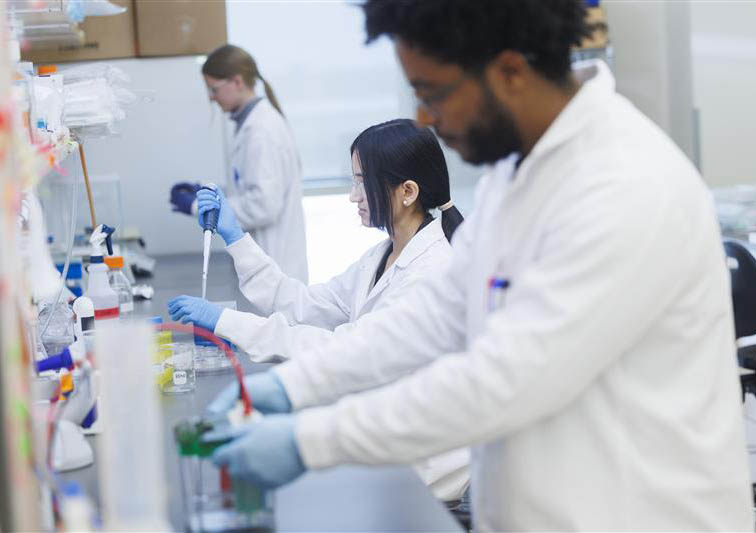
The biomedical sciences program, launched in partnership with the College of Arts and Science in 2021, has grown every year, and now has more than 1,000 students. Both the medical doctor (MD) and physical therapy class sizes have increased—to 108 and 55 seats each year, respectively—and postgraduate medical education now includes 29 different residency programs across the province.
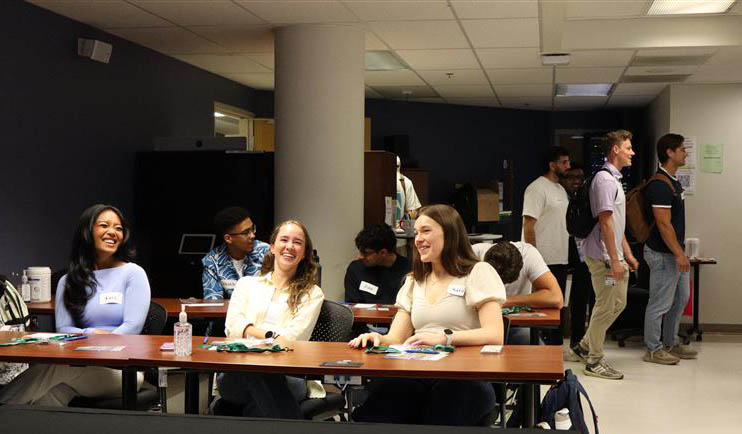
Three first-in-Saskatchewan training programs have been established to help improve access to care. The Master of Occupational Therapy and Master of Speech-Language Pathology programs in the School of Rehabilitation Science will begin this fall and the Master of Physician Assistant Studies program welcomed its first student cohort last August.
"Our physician assistant learners are excited about the prospect of where they can go and what they can do,” said Forgie. “At their Stethoscope Ceremony, the Minister of Health said he would have a job for every single one of them when they graduated.”
Forgie added that attracting and retaining students with connections to the province remains crucial.
“We know from research done here that, if you are from Saskatchewan, or if you do your residency in Saskatchewan, you are very likely to stay in Saskatchewan to practise.”
This is reflected in other programs, like physical therapy, where approximately 90 per cent of graduates have stayed to practise in the province.
“Saskatchewan is special, for many reasons, including having one medical school,” Forgie said. “By virtue of our size and organization we are able to listen to what people need, look at how we can do things in a different way, and how we work together. I’m very proud of how connected we are—with the other health sciences disciplines and colleges at USask, with the government, with our partners like the Saskatchewan Health Authority, and with our communities. Where else could you do something like that?”
In addition to education, faculty and students engage in research, innovation, and scholarship aimed at improving health outcomes across the province.
“What we are really looking at is how we can improve health, and that goes beyond acute care and includes community care, and population and preventative health,” said Forgie.
“There is so much impactful research happening across our college and beyond as well, and we are building a leadership team that focuses on both biomedical research, and clinical health systems and population health. By providing that leadership, I hope to continue to increase research in preventative medicine, in health systems, and in clinical research.”
Paving our path to the future
Building on the momentum, the college will be guided by the new strategic plan, Paving Our Path to 2030.
“One of the most exciting things about our plan was in the creation of the plan using a strength-based approach,” said Forgie. “Our process was a way for people to engage, and for us to listen and to learn. That level of engagement has been awesome. I wanted people to have the opportunity to contribute to our future direction and to see themselves in the plan, to help make our college even better.”
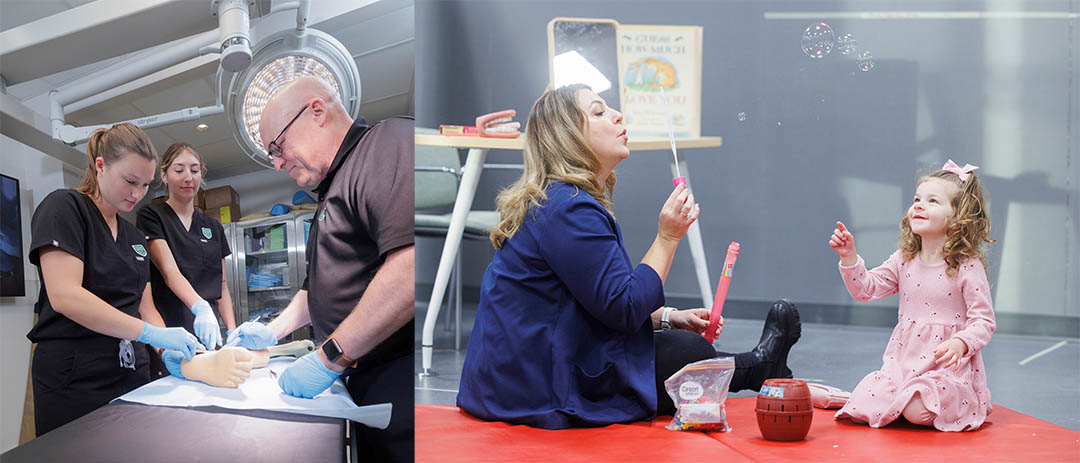
The new plan includes three focus areas—people, education, and research—supported by new values and cross-cutting commitments.
“A people-first approach is essential,” Forgie emphasized. “If our people are engaged and supported, then the research and the teaching will fall into place.”
Looking ahead, Forgie sees the college’s century-long journey as the foundation for continued impact.
“Our history demonstrates the important role we have played for the province and beyond—whether it is through our innovation or high-quality education. Our strategic plan will help ensure this role continues. Our college is a gem, and I feel proud to be part of it and the University of Saskatchewan.”