

USask Indigenous art project marks the coming of spring
Everyone is invited to make art from found materials at the Snelgrove Gallery
By Chris PutnamRenewal, Indigenous knowledge sharing, and the changing of the seasons are themes of a collaborative community art project at the University of Saskatchewan (USask) during the first two weeks of March.
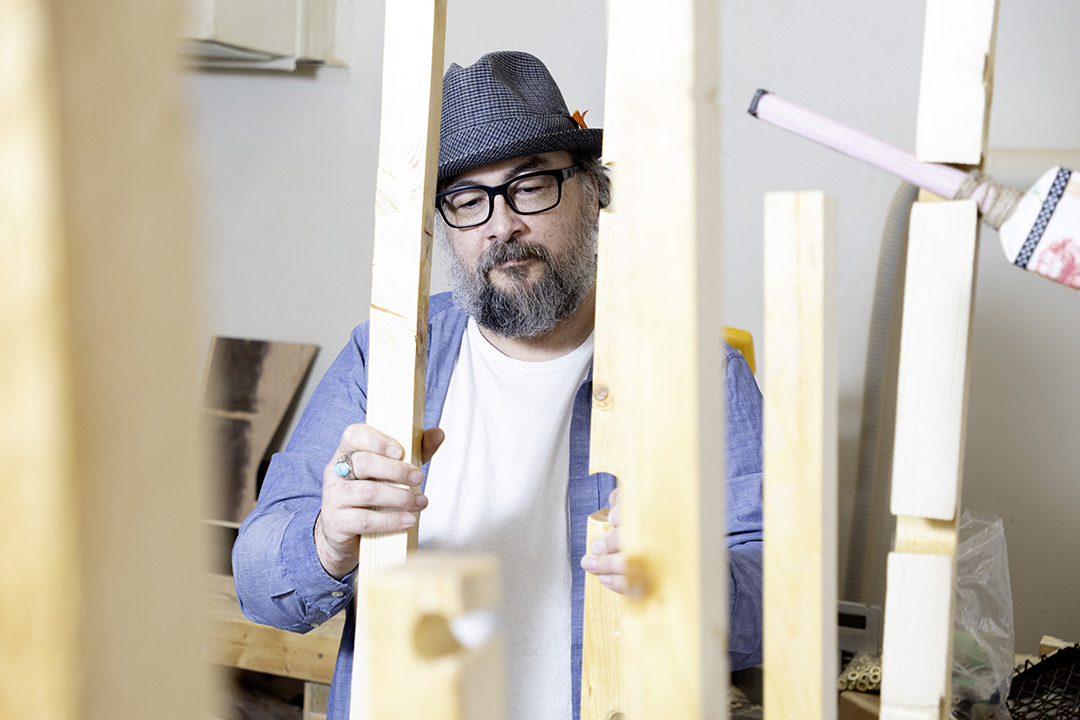
The Gordon Snelgrove Gallery is being transformed into a sculpture studio and teaching space from March 2–13 for a project led by Indigenous Student Achievement Pathways (ISAP) and USask BFA (honours) student Ryan Richard.
Members of the university community and the public are invited to the Snelgrove from March 2–6 to create “upcycled” art out of discarded materials. Their work will become part of an exhibition titled ᑮᐦᑖᐧᒼ ᐋᐸᒋᐦᑖᐃᐧᐣ – kihtwâm âpacihtâwin – using again/re-purposing open throughout USask Indigenous Achievement Week.
“The idea reflects two things for me: my own personal journey, and something I feel is very important in society today—our throwaway culture,” said Richard, a fourth-year student in the School for the Arts studio art program.
Richard—who is Métis and grew up in an area of Prince Albert that was once a Métis community called Fox Farm—drew inspiration from sîsîkwan, or the Rattle, a constellation known to the Cree, Anishinaabe and other North American Indigenous groups. A change in sîsîkwan signals the coming of spring: a time of renewal, rebuilding, and the rattling sound of ice crystals moved by the wind.
The sculptor sees those same ideas running through the sculptural process and his personal story.
“In my own life, I’ve overcome addiction, homelessness, and incarceration in my 20s to be where I’m at today,” Richard said. “I was also undiagnosed dyslexic as a kid, which drove me away from education for a long time. And now I’m sitting here about to finish my bachelor’s. I’ve won 12 academic awards and I’m going into my MFA.
“And so that’s sort of the whole idea behind the concept, too. It’s not just to represent reusing of things, but how useful people can be, even though they might have a troubled past, no matter where we come from.”
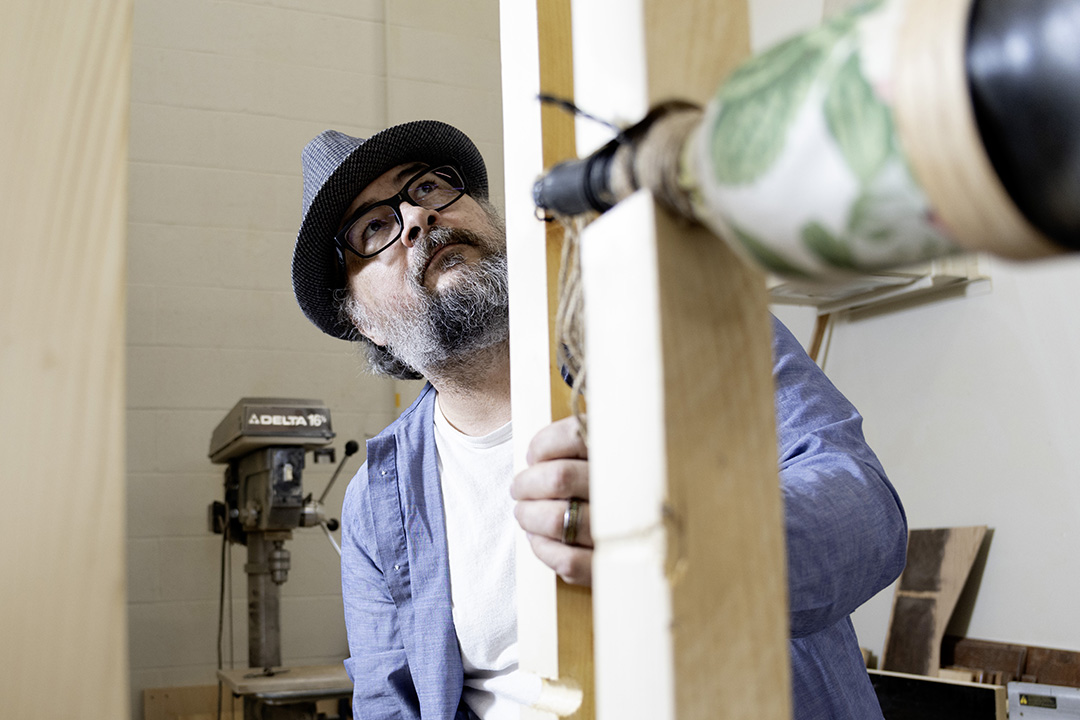
As part of the exhibition, Richard is creating a moving sculpture called sîsîkwan that will hold and shake some of the objects created by participants.
Visitors during the first week can learn processes for creating rattles and noisemakers. “Or you can just let your imagination soar and use what’s there and create stuff,” Richard said.
The project will also feature a display of constellation-themed artwork by first-year ISAP Willow Hoop Learning Community students and guest appearances by Knowledge Keepers Joseph Naytowhow, Barry Shingoose, Randy Morin, Candace Longjohn, and Bruce Sinclair.
Students in 10 ISAP courses will participate in activities during the first week of the event, which is the 10th annual Winter Term art and dialogue project organized by ISAP.
“We consider these projects to be the best kind of experiential learning, grounded in conversation and collaborative/relational creativity. Projects that link course objectives with social and cultural engagement build community and provide a great opportunity to celebrate student contributions, and to invite diverse ways of knowing into our teaching and learning activities,” said Dr. Sandy Bonny (PhD), team lead of ISAP and STEM Access Initiatives in the College of Arts and Science.
Bonny is co-curator of the exhibition alongside School for the Arts assistant professor of sculpture Dr. Ella Dawn McGeough (PhD).
Richard, a former ISAP student, was invited to lead this year’s project after he won the Peter Stoicheff ISAP Undergraduate Leadership Award. Recipients of the award commit to giving back by participating in an activity that supports the success of first-year students.
The Snelgrove project builds on a theme of Indigenous star knowledge that has been woven throughout ISAP courses this academic year.
Cross-cultural learning is another of the organizers’ priorities. Richard said that everyone is welcome to come make art, regardless of their background, age or skill level.
“Sometimes what gets lost is the reality that we’re all just people. And I think we need a little bit more commonality, a little bit more fun-sharing and expression. And that’s really what I’m trying to do.”