

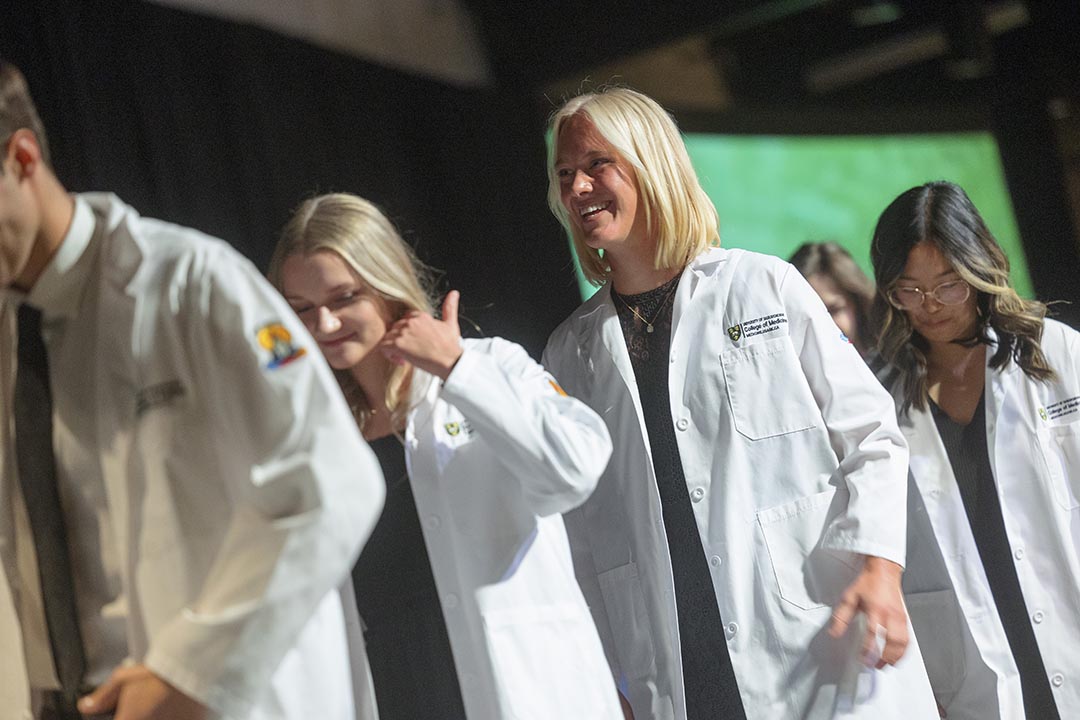
Training more doctors to strengthen Saskatchewan’s health care workforce
Saskatchewan is training more physicians to support a growing and sustainable health care workforce.
In 2026-27, the Government of Saskatchewan is investing $4.3 million to add 20 new seats in the Undergraduate Medical Education program at the University of Saskatchewan’s College of Medicine. An additional $1.75 million will also fund 10 new medical residency positions.
Physician training enhancements are part of a $31.1 million funding increase from the Ministries of Advanced Education and Health to support expansion initiatives within the College of Medicine.
“Our government recognizes the important role that post-secondary education plays in training the next generation of physicians,” Advanced Education Minister Ken Cheveldayoff said. “We are proud to invest in these additional opportunities to ensure more Saskatchewan students can study and build their practices right here in the province.”
This expansion will bring the total number of first-year undergraduate seats in the province to 128. Twelve of the new seats will be available at the College of Medicine’s Regina campus and eight will be available at the Saskatoon campus. Government will work with the college to target 95 per cent of medical school admissions for Saskatchewan students.
"For more than a century, the University of Saskatchewan has been a partner in serving the evolving needs of the province,” University of Saskatchewan President Vince Bruni-Bossio said. “We are grateful for the government’s investment that will enable us to expand the number of medical seats and help deliver on the promise to serve the people of our province. Together, we are strengthening the health-care system by improving patient access to timely, high-quality care, and delivering impact for communities across our province.”
Ten new residency positions have also been added to support new and existing program expansions in both family medicine and specialty programs, including the launch of a new plastic surgery residency program. Residency positions offer hands-on clinical training positions that follow graduation from medical school. This year, the University of Saskatchewan has filled 162 first-year residency seats across the province starting in July 2026.
“Expanding the number of medical school and residency training seats offered through the University of Saskatchewan is part of our government’s commitment to putting patients first and delivering on our ambitious Health Human Resources Action Plan,” Minister of Health Jeremy Cockrill said. “Through our continued investments in training, recruitment and retention, we are growing the number of doctors in our province to ensure patients receive the care they need in the right place, at the right time.”
Graduates of the College of Medicine can access a range of supports and incentives to help launch their careers in Saskatchewan. The Rural Physician Incentive Program offers up to $200,000 to doctors who practice in rural and remote areas of Saskatchewan, with recent expansions to offer $100,000 to physicians who choose to establish practice in regional communities. Additional recruitment incentives are available to high-demand specialty fields, offering up to $200,000 over five years to new practice specialists.
The Graduate Retention Program also offers up to $24,000 in tax credits for post-secondary students who choose to live and work in the province after graduation.

"The expansion of opportunities for medical students to train in Saskatchewan is really exciting,” medical student Haley Scheck said. “I’m originally from rural Saskatchewan and have spent the past year of my training in Swift Current. This experience has allowed me to be part of incredible learning experiences and see the wide breadth of knowledge and skill that rural training provides. The data tells us that physicians are much more likely to build a career and practice where they train, so it’s a great opportunity to improve recruitment and retention in rural Saskatchewan. My experiences in Swift Current so far have been really influential in helping me decide where I want to complete my residency and practice one day.”
In 2026-27, the Government of Saskatchewan is providing approximately $225 million to the College of Medicine to support operations, ongoing program expansions and new domestic programs.
“As the College of Medicine for Saskatchewan, we are committed to providing high-quality education that strengthens our health-care system,” College of Medicine Dean Dr. Sarah Forgie (MD) said. “With the support from the Government of Saskatchewan we will continue to support our learners by growing our training capacity, launching new programs, and expanding where our learners train to best serve the people of Saskatchewan.”
For more information on the Undergraduate Medical Education program, visit https://medicine.usask.ca/programs/undergraduate-md.php