

Celebrating the winners of USask’s 12th annual Images of Research contest
From field work in the Canadian Arctic to the 3D map of one of University of Saskatchewan’s (USask) most iconic lecture theatres, this year’s Images of Research contest once again showcases the rich research, scholarly and artistic work of USask staff, faculty, students, and alumni.
By Erin Matthews, Research Profile and ImpactIn its 12th year and organized by USask’s Research Profile and Impact team, the Images of Research contest celebrates the beauty, diversity, and impact of USask research.
With nearly 110 entries across five categories, the following eight images took home this year’s top spots. Seven of these images were selected by judges on multi-disciplinary panels while the Viewers’ Choice category was decided by more than 1,500 online votes.
With thoughtful descriptions and beautiful visuals, this year’s entries look at the hidden details of the microscopic world, the impact of community-based research and artistic pursuits, and the many ways we can capture and celebrate the important research of our campus community.
View all the winning and runner-up images here and the 2026 competition here.
Grand Prize: Capturing the Radiance of USask’s Beloved Airplane Room
Submitted by: Ian Stavness, Faculty, Computer Science, College of Arts and Science
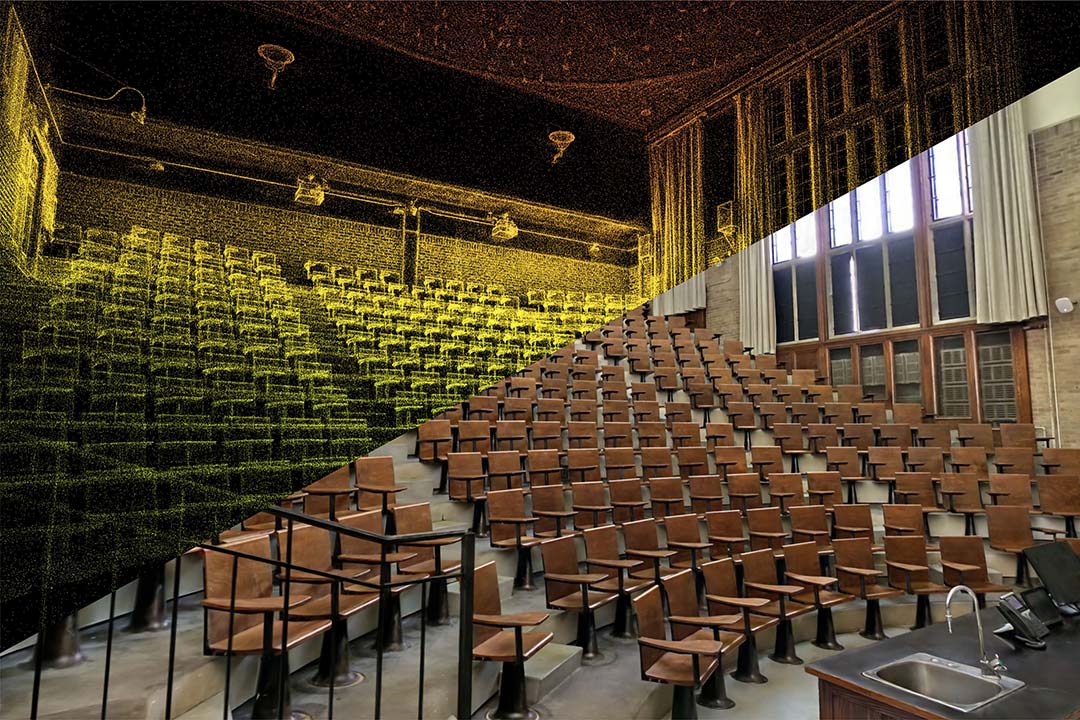
Rendering of a 3D radiance-field capture of the Henry Taube Lecture Theatre in the Thorvaldson Building at the University of Saskatchewan. This near-visually-perfect virtual replica of the theatre can be explored like a video game or viewed in immersive virtual reality, allowing off-campus community members to visit this treasured space from afar. The upper-left cutaway reveals the millions of optimized 3D points that conform to every nook and cranny of the room, outlining individual desks, the lamps and projectors on the wall, and even the paper airplanes embedded in the ceiling. Our research in 3D capture aims to comprehensively measure buildings for historical preservation, plants for detailed phenotyping, and natural spaces for artistic expression.
Arts in Focus Palm Leaves and Paper Empires: Legal Pluralism in Colonial South Asia
Submitted by: Warsha Mushtaq, Undergraduate student, Department of History, College of Arts and Science
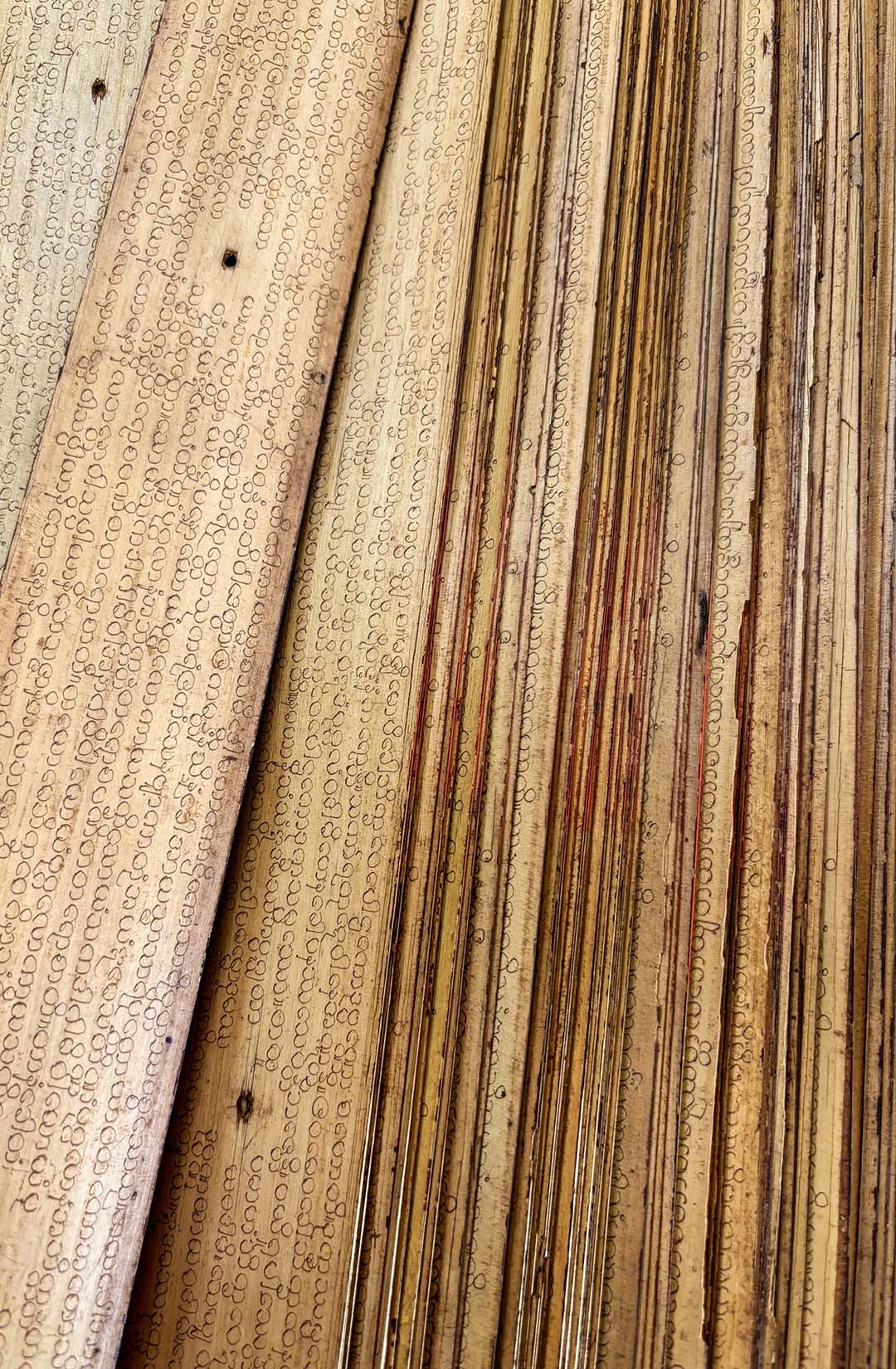
This palm-leaf manuscript, accessed through Special Collections at the University of Saskatchewan, is part of a wider manuscript tradition in South Asia. For centuries, legal records were inscribed on dried palm leaves by local scribes and recognized within communities. When European colonial powers expanded into South Asia, they sought to privilege paper over palm leaves and to make land ownership more legible to the state. Yet colonial rule did not replace local law. Palm-leaf and paper records existed side by side. Indigenous and colonial legal systems operated at the same time, creating a layered and contested legal order.
Community Impact: Ritualistic Performance
Submitted by: Atrayee Basu, Master’s student, Art and Art History, School for the Arts and the Department of Anthropology, College of Arts and Science
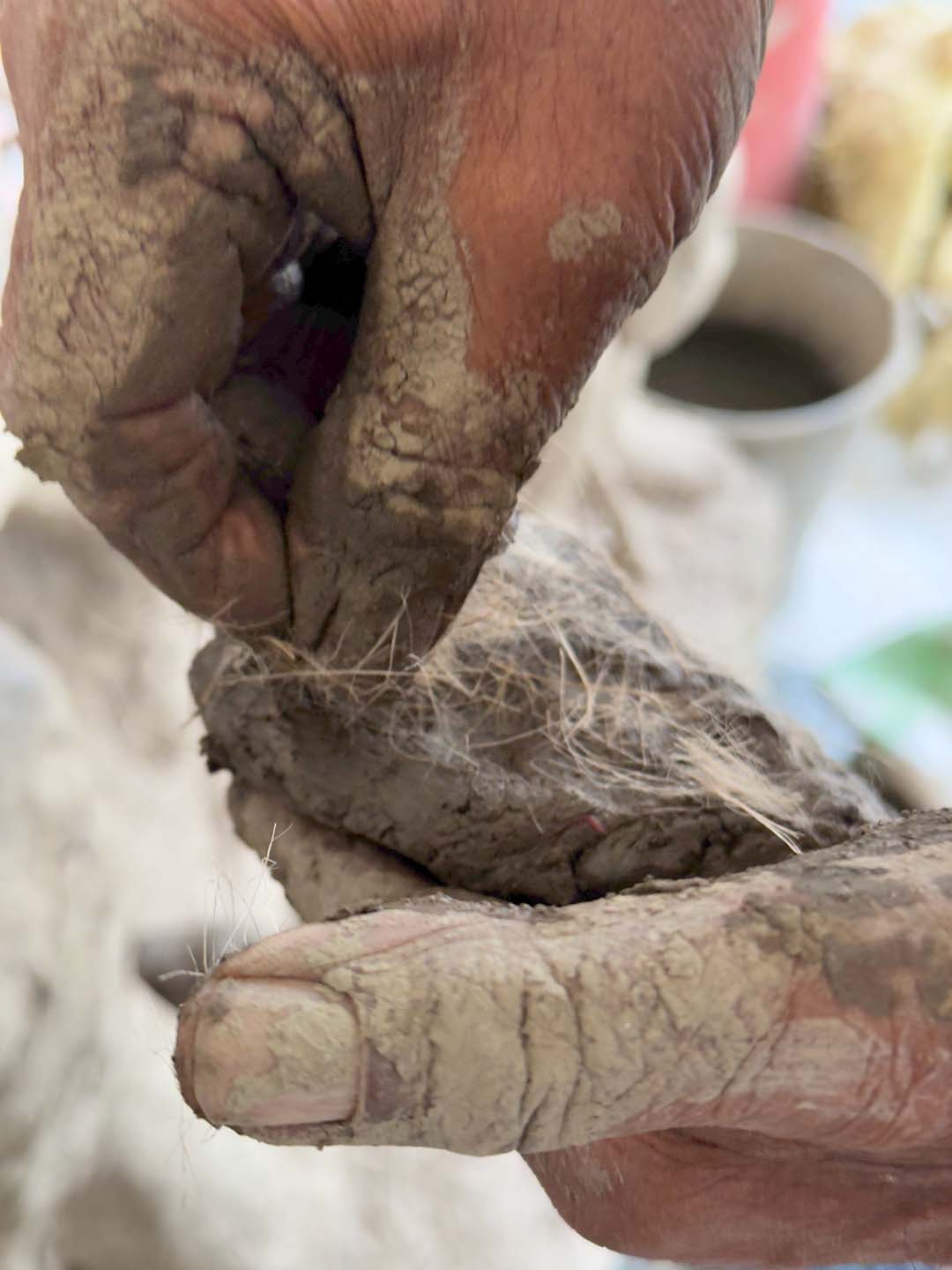
Through the material's tactility, I seek to capture moments that feel sacred — instances where touch affiliates with something beyond the physical, gesturing toward the divine. In these shared gestures, creation becomes a form of communion — an act that strengthens bonds, deepens connections, and reaffirms the collective spirit that sustains community building. This is the trust that community functions as a spiritual foundation, an unseen manner that guides the materialization of new trailblazers, mentors, and nurturers. Each act of making becomes a moment of active formation, where creation is both material and metaphysical. The fingers serve as networks of intention, carrying a quiet devotion as they shape, mould and respond to the world. Photo collected during my field research in Kolkata, India.
More than Meets the Eye: Searching for Connection
Submitted by: Marissa Jones, Master’s student, Anatomy, Physiology and Pharmacology, College of Medicine
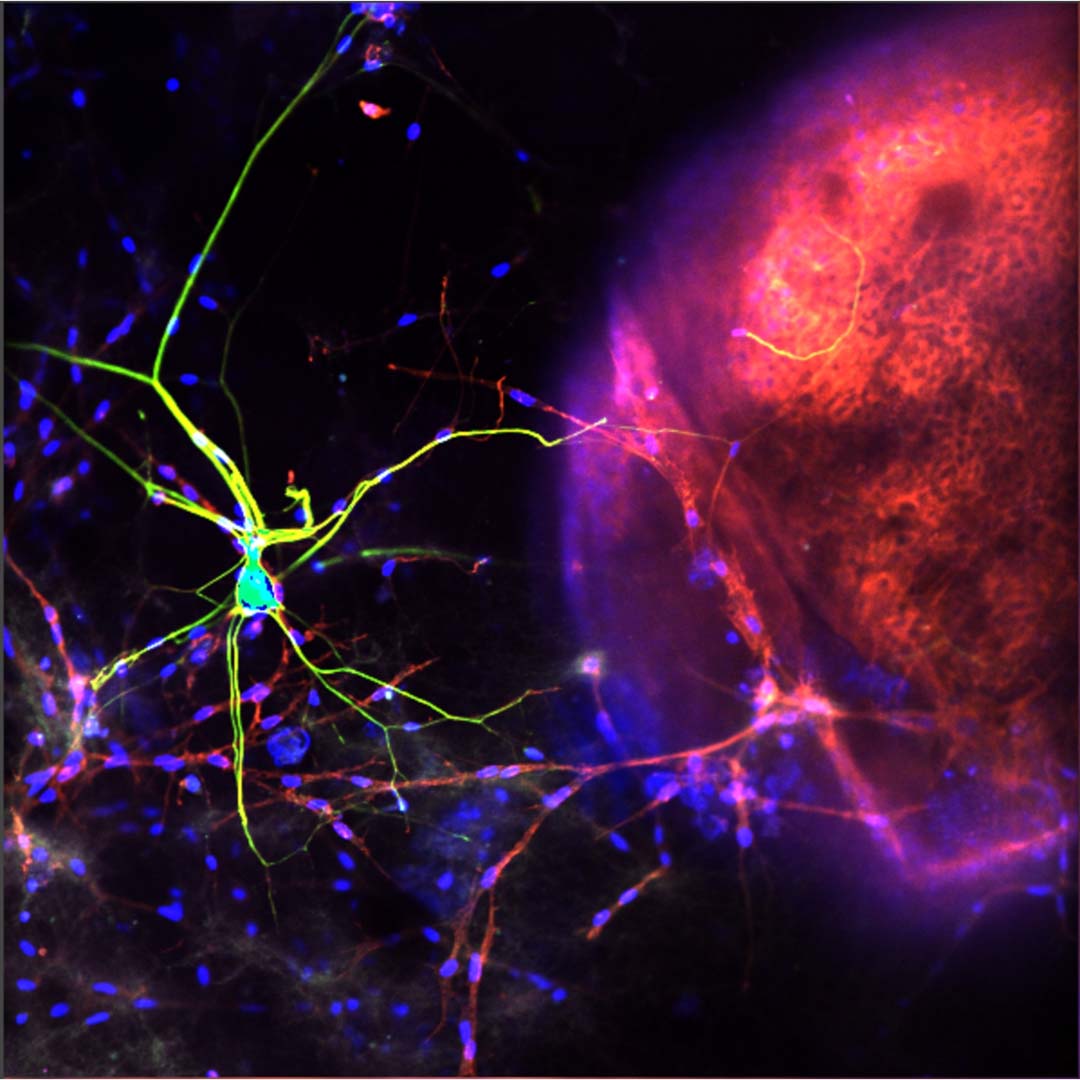
A swine airway organoid sits in the distance as a sensory neuron begins to chart its course toward it. Captured by spinning-disk confocal fluorescence microscopy, peripherin-labelled neurites glow green as they extend and gather at the organoid boundary, drawn toward this living target. Blue nuclei (DAPI) are scattered, while red actin reveals the scaffolding that shapes this miniature airway system. This co-culture model is built to explore if nerves form selective connections with specific airway epithelia cell types and whether those connections help regulate ion transport in the lung.
Research in Action: Survival Mode
Submitted by: Gabriela Sieminski-Hauck, Alumnus, Art and Art History, School for the Arts
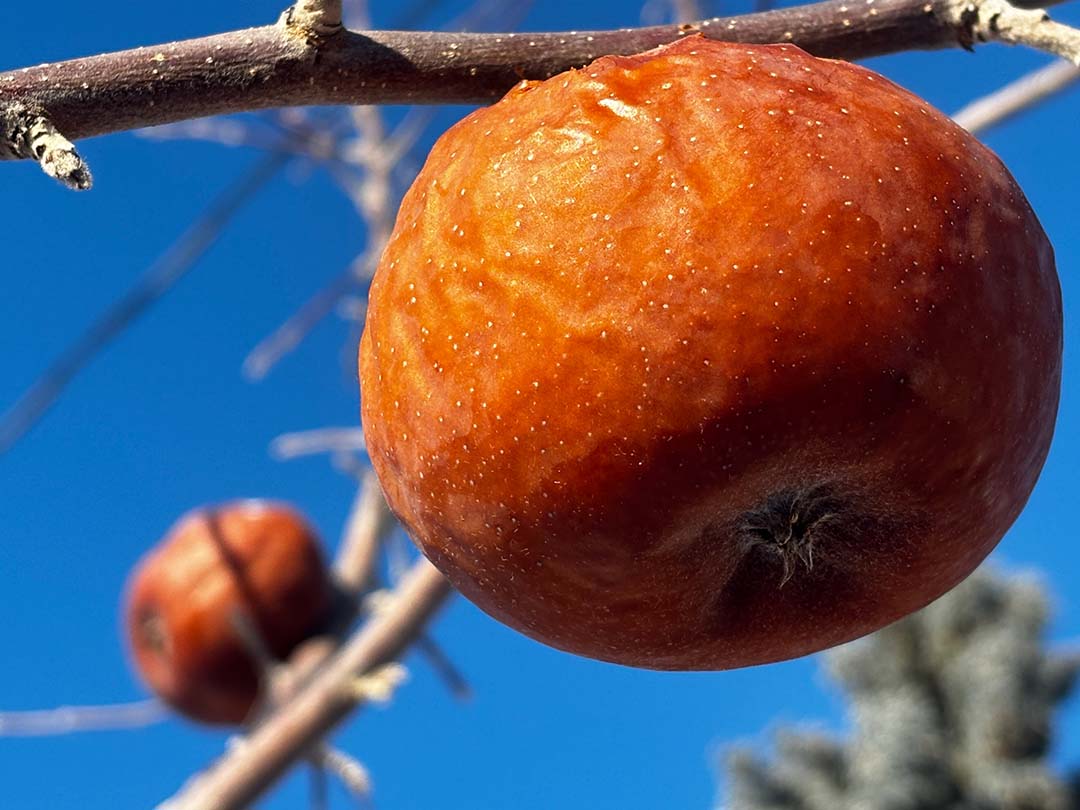
This apple remains frozen on its branch through a Saskatchewan winter; its tissues fractured by ice crystal formation during repeated freeze–thaw cycles. In temperatures below –30°C, cellular water expands, rupturing membranes, and accelerating decomposition. Meanwhile, the tree enters deep dormancy, slowing metabolism, sealing vascular pathways, and conserving energy until spring. My research studies living organisms in extreme prairie climates, observing how stress reshapes biological form. These transformations inform my art practice and therapeutic inquiry: how cycles of rupture, suspension, and renewal in nature parallel psychological endurance. By translating organic structures into sculptural and expressive forms, I explore how creative processes can model resilience. What appears frozen and lifeless is not failure; it is adaptation in progress.
From the Field: Summer is Fleeting
Submitted by: Lindsay Carlson, PhD student, Department of Biology, College of Arts and Science
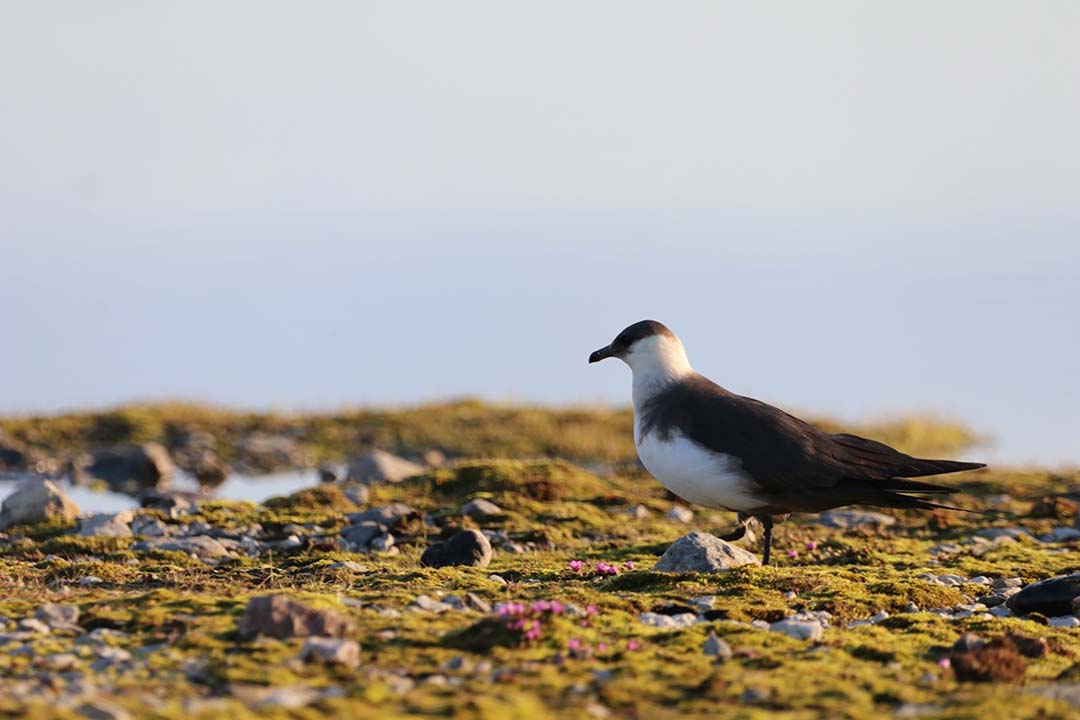
Blink, and you’ll miss summer in the Arctic. The pace of life is frenetic, even manic, to make the most of the abundant but ephemeral resources. The same is true for the scientists who work there: we make the most of every moment in our short field season. I took a break from cleaning nets after dinner to watch two parasitic jaegers (Stercorarius parasiticus) fight over the remains of an Arctic char (Salvelinus alpinus). The purple saxifrage (Saxifraga oppositifolia hadn’t even been in bloom the day before, but it was nearly time for me, and the birds, to fly south again.
Best Description: Honeybee Snack Break During a Busy Day Foraging
Submitted by: Bree Bilton, Master’s student, Veterinary Pathology, Western College of Veterinary Medicine
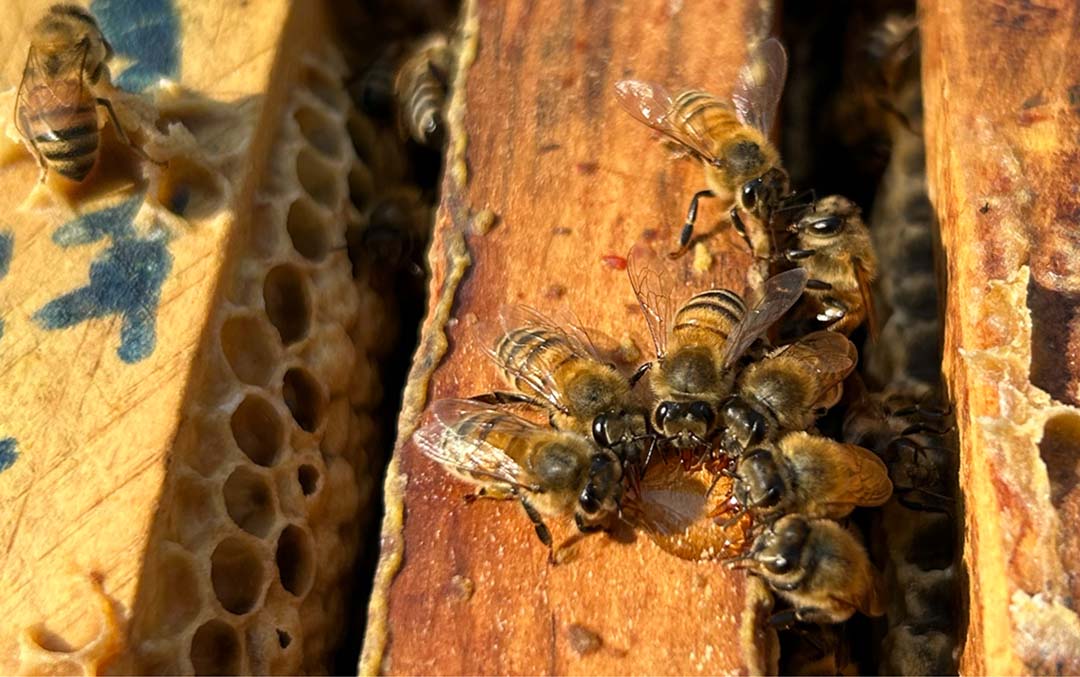
European honeybees gather around a ‘trough’ of sugar syrup, happily consuming their favourite meal on a warm summer’s day. Sunlight gently reflects off their wings as other bees are busy at work deep within the hive, storing food for the winter. Across Canada, however, honeybees face a wide range of diseases. To protect against nosema, a sporulating disease which attacks the honeybee’s digestive system, beekeepers mix antibiotics into sugar syrup to feed their hives. As we theorize that these antibiotics may also linger in honey destined for grocery stores, we partnered with the Canadian Food Inspection Agency’s Center for Veterinary Drug Residues to determine whether antibiotic residues are present in honey samples kept at different temperatures and lighting conditions.
Viewers’ Choice: Whispers of Defence
Jingpu Song, Staff, Department of Biology, College of Arts and Science
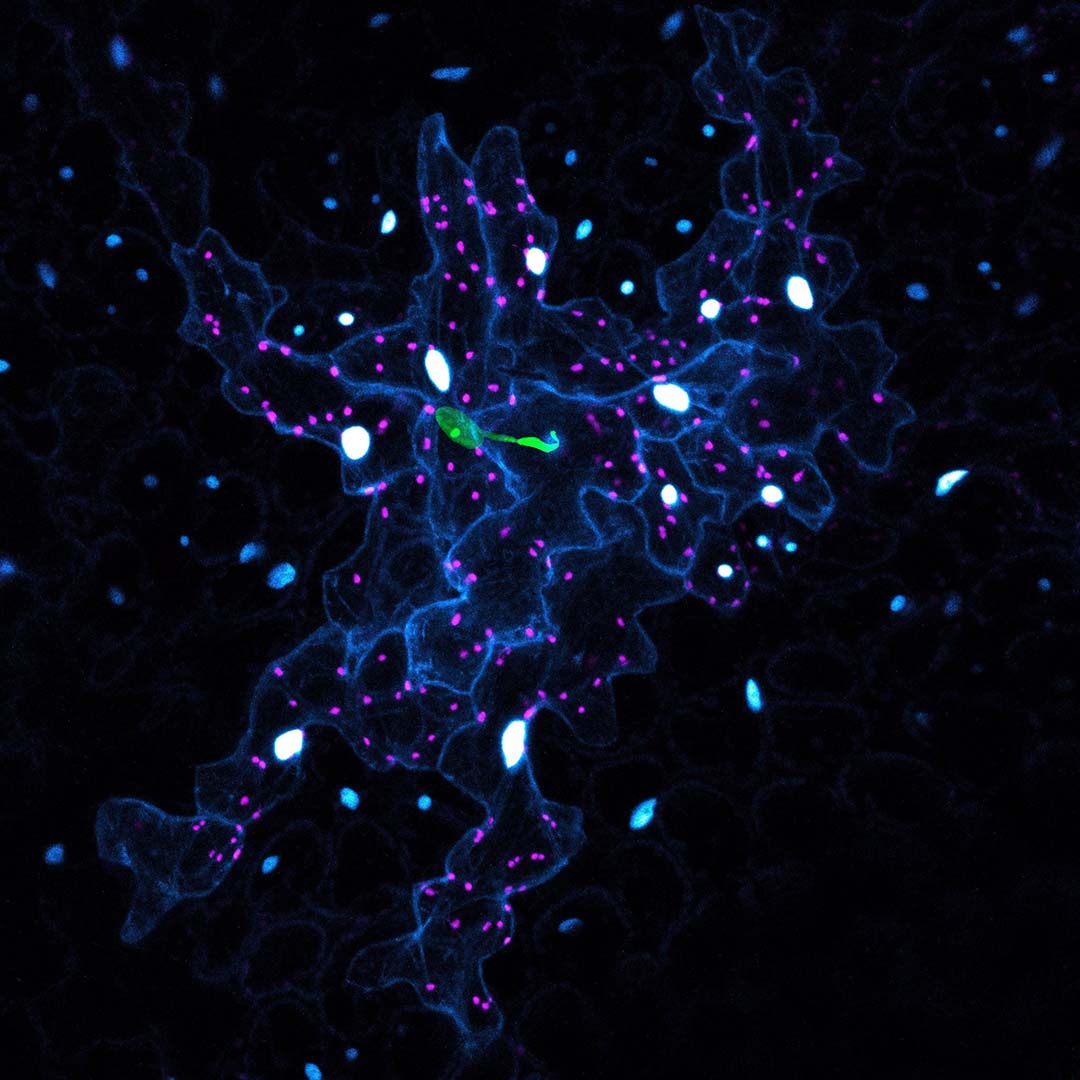
Like a constellation written in light, an Orion-shaped pattern shimmers across the surface of a living leaf. What seems celestial emerges from a hidden world, where plant epidermal cells awaken to an unseen threat. As a pathogen (green) attacks, a silent conversation begins. Cells sense danger and quietly co-ordinate a defence beneath the leaf’s calm surface. Cells that have heard the alarm and activated their immune defences are marked by bright cyan nuclei, while their chloroplast “factories” (magenta) start producing protective chemicals. This image reveals a microscopic world where life responds not with noise, but with whispers. In this unseen realm, biological patterns echo cosmic forms, reminding us that even the smallest cells join a luminous choreography of perception, adaptation and defence. The full story will soon appear in Nature Communications.