

New USask wind tunnel to be research and industry ‘game changer’
The unique-in-Canada project is planned to be designed, built, and assembled by Mechanical Engineering students and faculty.
By Matt Olson, Research Profile and ImpactA new wind tunnel set to be built at the University of Saskatchewan (USask) will simulate real-world airflow conditions, helping to bridge the gap between applied and fundamental research in aerodynamics and engineering.
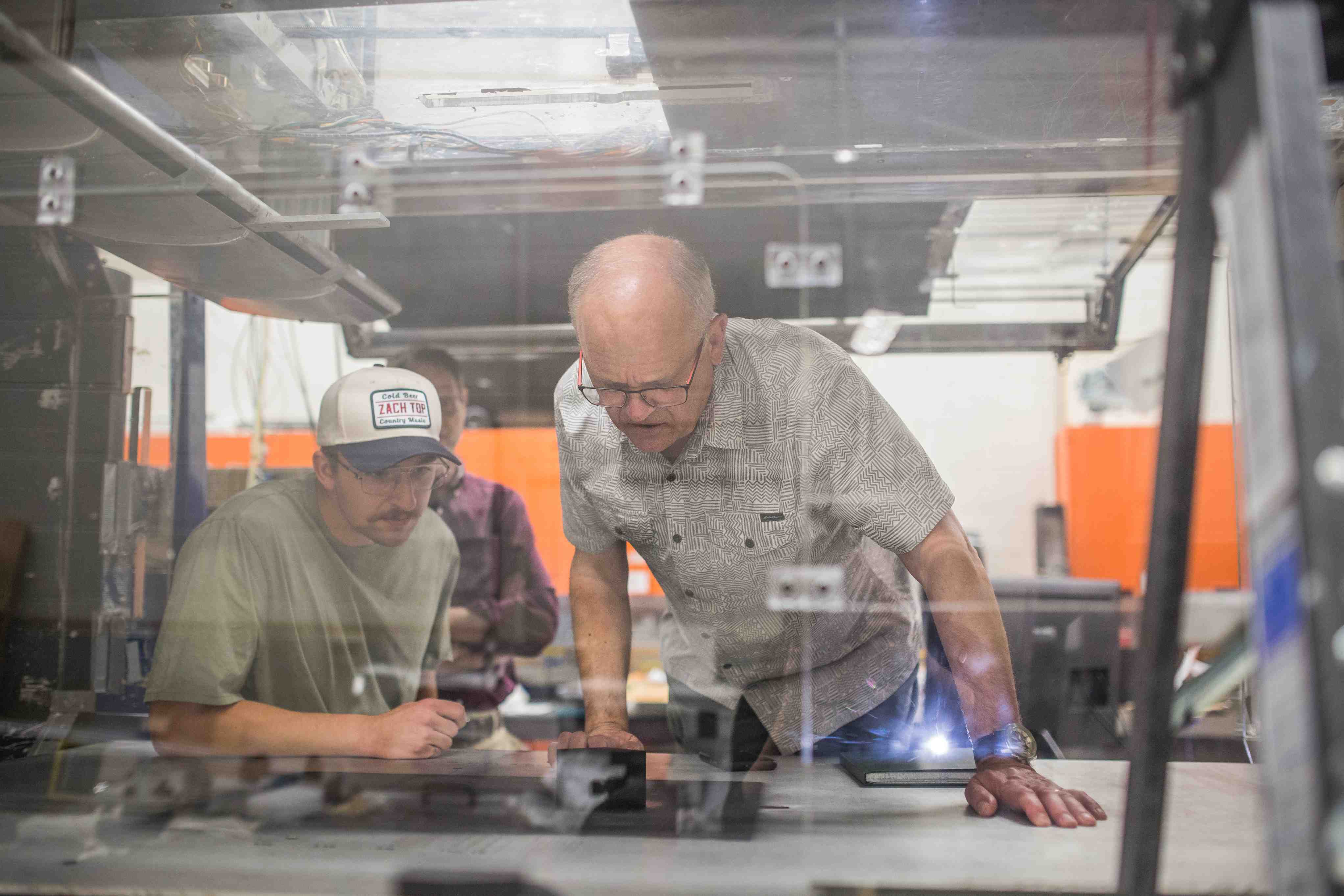
“For me, it’s a game changer,” said Dr. David Sumner (PhD), a professor in the Department of Mechanical Engineering in the College of Engineering. “It’s a brand-new, exciting tool that I can use to do all kinds of new research, answer new questions, and solve new problems. No one else has something like this.”
The wind tunnel will aid researchers in testing wind forces on rooted crops, examining drone flights and aerodynamics, studying agricultural spraying, conducting aerospace industry experiments, and much more.
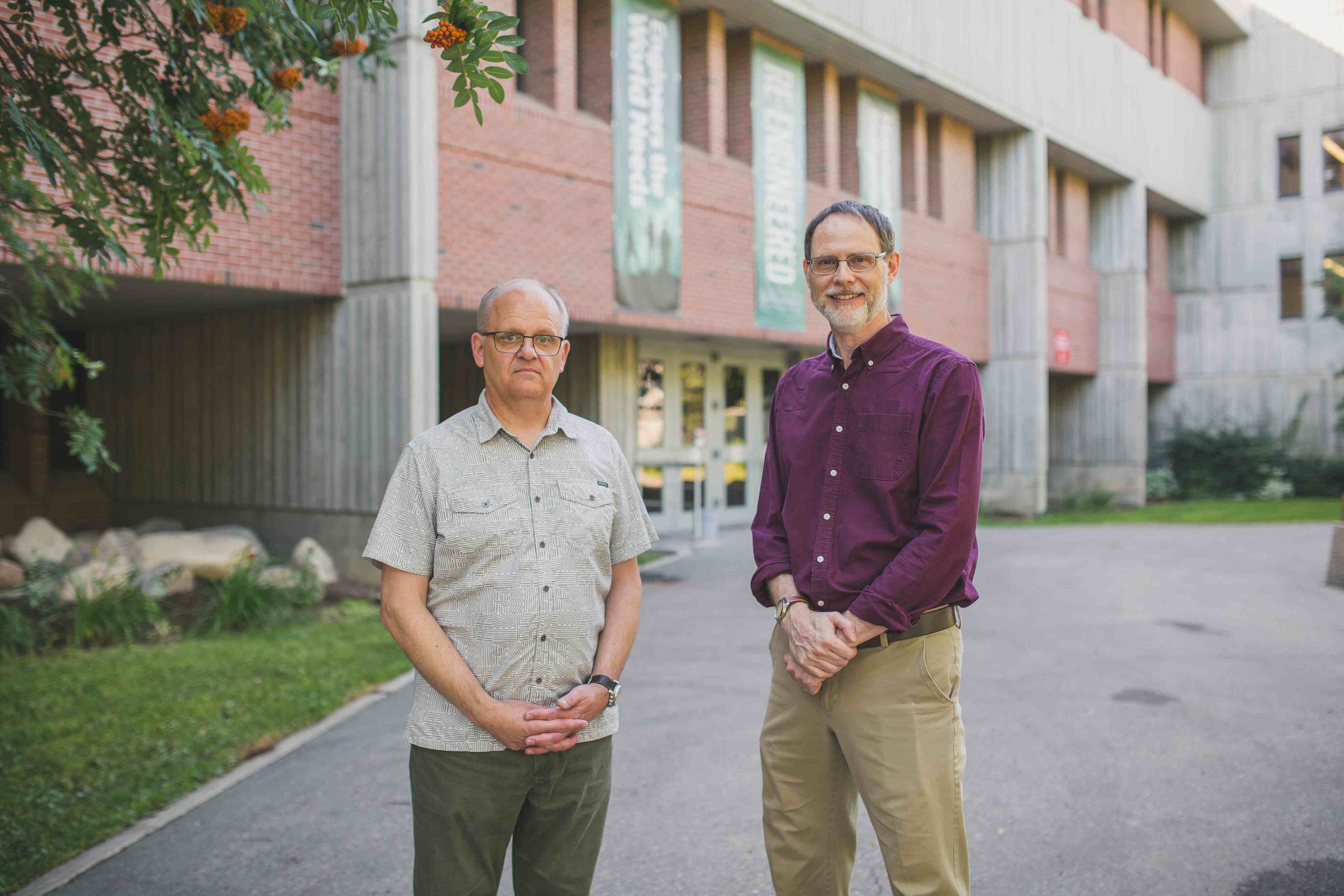
Sumner and Dr. Scott Noble (PhD), the head of the Department of Mechanical Engineering in USask’s College of Engineering, are the co-leads of the project to build the new wind tunnel, which has received support from the Canada Foundation for Innovation (CFI) John R. Evans Leaders Fund (JELF). Projects funded through the CFI-JELF stream are intended to support strategic investments to attract and retain research strength.
Wind tunnels are meant to simulate real-world airflow conditions in a research setting. A fan or a series of fans pushes air through a controlled space where researchers can place different objects – like the wing of an airplane, a scale-model building, or plants in soil – to examine how the laboratory-generated wind affects and moves around those objects and to explore aerodynamic forces.
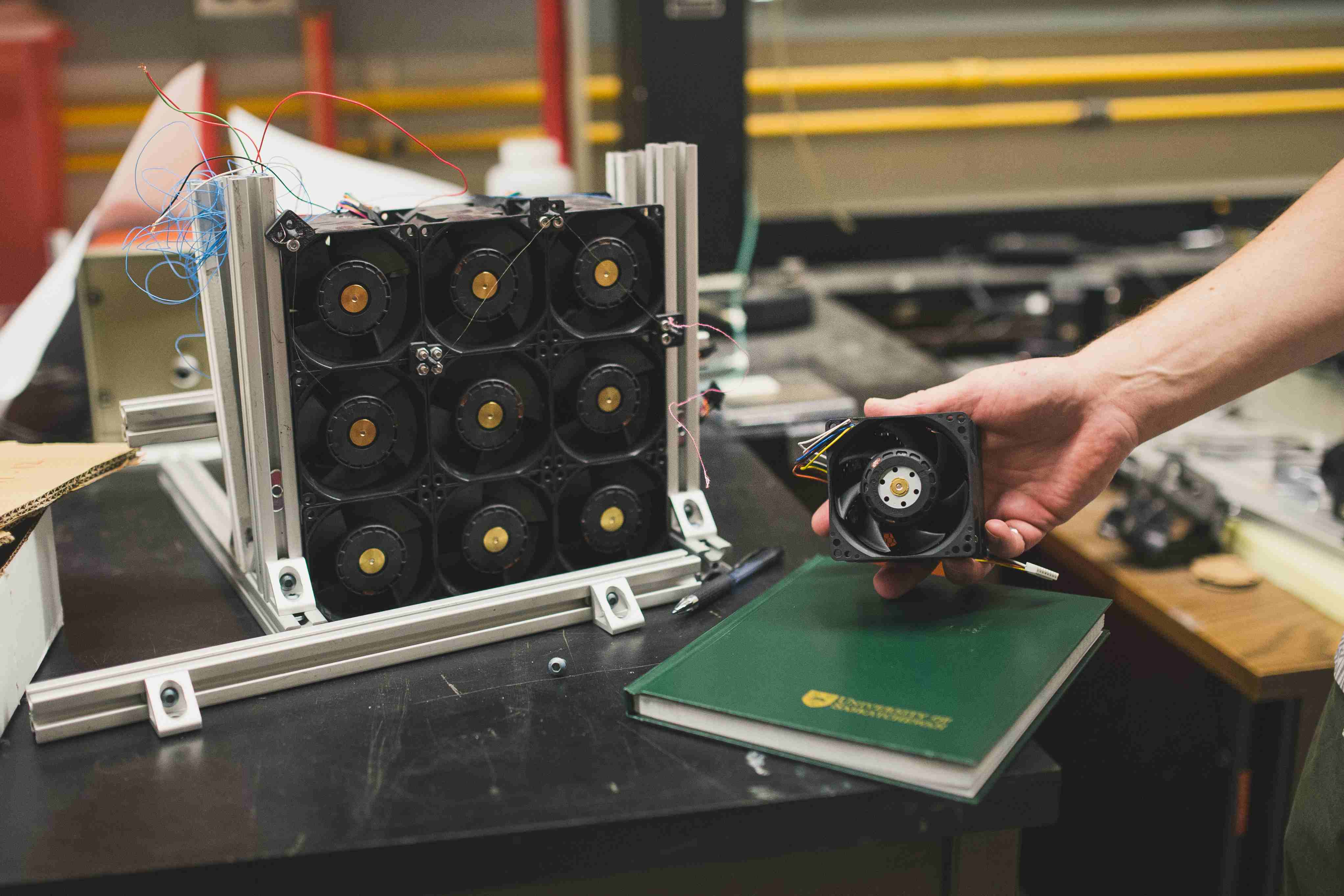
The new wind tunnel at USask will be powered by a wall of three-inch-by-three-inch fans, 900 in total, arranged like pixels on a computer monitor, with each fan about as large as a drink coaster and individually controllable to create precise wind conditions.
The level of customizable control will allow student and faculty researchers to recreate storm conditions, sharp wind shears, turbulence, and more.
Noble said there isn’t anywhere else in Saskatchewan or Canada that will be equipped to do the kinds of practical testing the new wind tunnel will allow.
“Having something unique like this opens up opportunities that are strategically exciting. The types of industry engagement it starts letting us think about is really important,” Noble said. “This is the type of infrastructure most companies would love to have access to.”
As Sumner puts it, the new wind tunnel will create opportunities, from providing a better understanding of the fundamental physics of fluid flow in his research field of bluff-body aerodynamics to practical applications such as crop spraying and drone flight testing.
Both Sumner and Noble said having this kind of advanced technology at USask opens many doors for industry partnerships and can give students a hands-on understanding of aerodynamics across numerous fields, from engineering to agriculture and more.
“I think what makes this attractive and unique is it strengthens and broadens partnerships in colleges across USask and industry, and I think it’s exciting to help bridge the gap between the applications and the fundamentals as well,” Sumner said.
USask’s existing wind tunnel in the Engineering Building was built in 1982 and is powered by one massive fan pushing air through the enclosed tunnel. The new wind tunnel will be much more precisely customizable thanks to its multi-fan design, and a modular structure means experiments can be swapped in and out for faster and more efficient use of the space.
Uniquely, the original wind tunnel was designed by USask Mechanical Engineering faculty and students – and the new wind tunnel will be as well. The project is receiving interest and support from USask alumni and donors.
“It’s all going to be designed, built, and assembled by us,” Sumner said. “There’s excitement now, among the students. You want to be involved. Things like this don’t come by very often.”
The two co-leads said the support of the CFI-JELF funding for the new wind tunnel, as well as that of USask and the College of Engineering, is a vote of confidence for USask to open up opportunities for the university and the entire province to create industry connections and bring USask research to the world.
“I think there’s an opportunity for a facility like this to help support the growth of industries across the province,” Noble said. “Something like this can anchor the beginnings of a centre of excellence and support the growth of students in those sectors, too.”
Other USask projects receiving CFI funding announced in this bundle include:
- Dr. Olamide Adebiyi (DVM, PhD), Western College of Veterinary Medicine – Touchscreen and optical tools to assess brain circuits underlying cognition in rodent models of brain disorders.
- Dr. Teagen Quilichini (PhD), College of Arts and Science – LUCID (Lightsheet Unit for Comprehensive Imaging and Dynamics): Bringing biological architecture and dynamics into focus.
- Dr. Chantel Chizen (PhD), College of Agriculture and Bioresources – Rapid soil analysis to support agri-environmental decisions.
- Dr. Angelica Lang (PhD), College of Medicine – Enhancing biomechanical capacity in the Shoulder Health and Ergonomics Research Lab.