

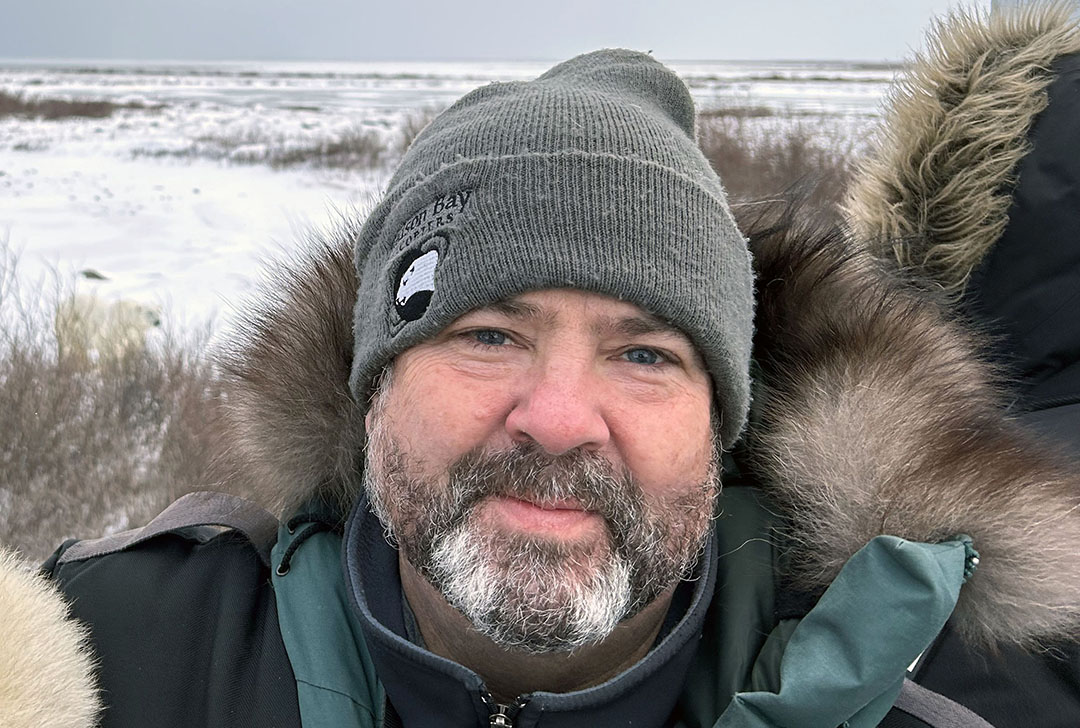
Polar bears bring USask researcher, community, and visitors together
SENS researcher Dr. Douglas Clark (PhD) goes beyond the field to connect with northern communities and tourists in an immersive learning experience.
By Amy JanzenResearch in the North requires discipline, patience, and adaptability. Teaching and learning in the North might require it even more.
For University of Saskatchewan (USask) researcher, facilitator, and professor Dr. Douglas Clark (PhD) of the School of Environment and Sustainability (SENS), more than 30 years studying polar bear behaviour along western Hudson Bay have reinforced that lesson.
Each fall since 2019 in Churchill, Man., the polar bear capital of the world, Clark’s research has taken on another dimension, focusing on a shared learning experience between visitors, researchers, and the community.
Through a northern field experience – or learning vacation – offered in partnership between the Churchill Northern Studies Centre and USask Extended Learning, Clark guides participants who’ve travelled to Churchill during the bears’ waiting season. The goal is not just to see wildlife but to understand how research, community knowledge, and lived experience converge. Participants can also earn a university digital badge through Extended Learning and SENS, extending the learning beyond the tundra.
Days begin early. After coffee, a robust breakfast, and extra layers of winter gear, the group heads out by Tundra Buggy to scan the horizon. What might look like just a wildlife tour quickly becomes field-based learning in real time.
And each day is unpredictable by design.
During the most recent offering, participants saw dozens of bears over several days. Most were resting along the shoreline, wrestling, or munching on seaweed while waiting for sea ice to form.
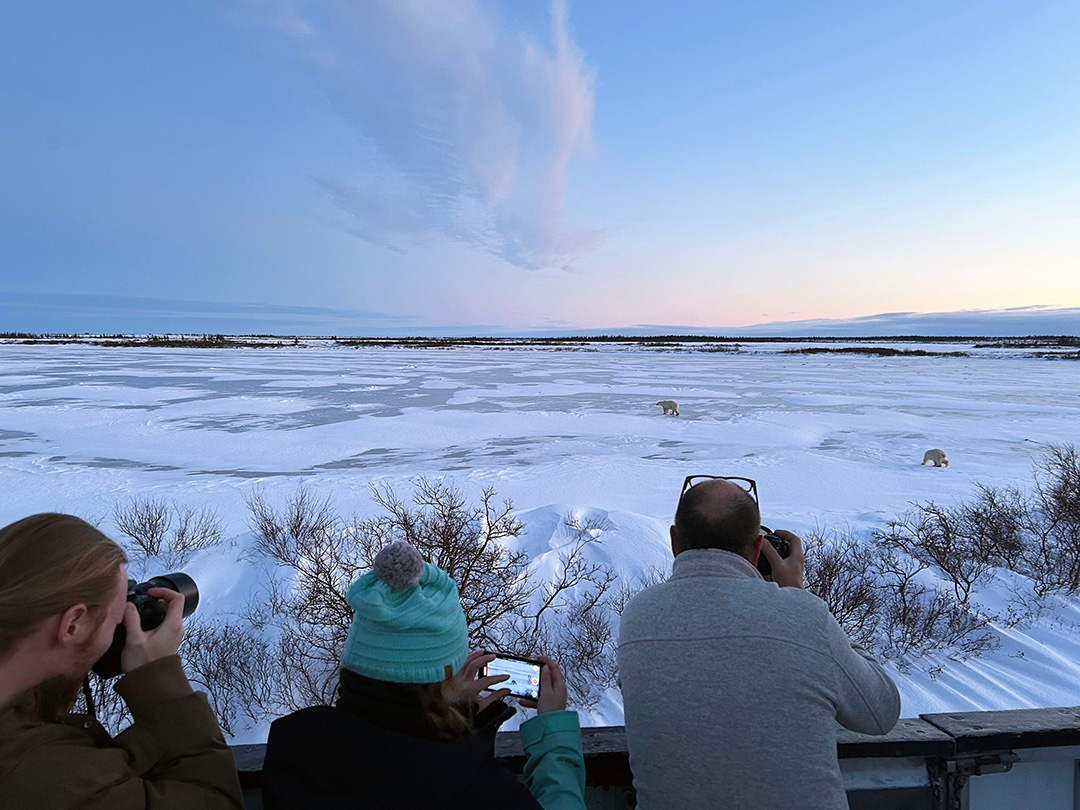
That waiting period is central to Clark’s research. Remote cameras positioned along western Hudson Bay have recorded hundreds of bear visits to sites in northern Manitoba, roughly 25 kilometres or more from Churchill. The strongest predictor of those visits is the length of the ice-free season. When freeze-up comes later, bears remain on land longer.
During that extended waiting season, some bears scavenge near town while conserving energy. Food availability and landscape features also influence where they gather, with some choosing to venture into the community or even the new landfill, which has been operating since the town’s garbage handling facility burned down in 2024.
For the community, a longer onshore period can mean heightened safety risks while balancing tourism and daily life. For visitors, it might result in more opportunities for exceptional viewing.
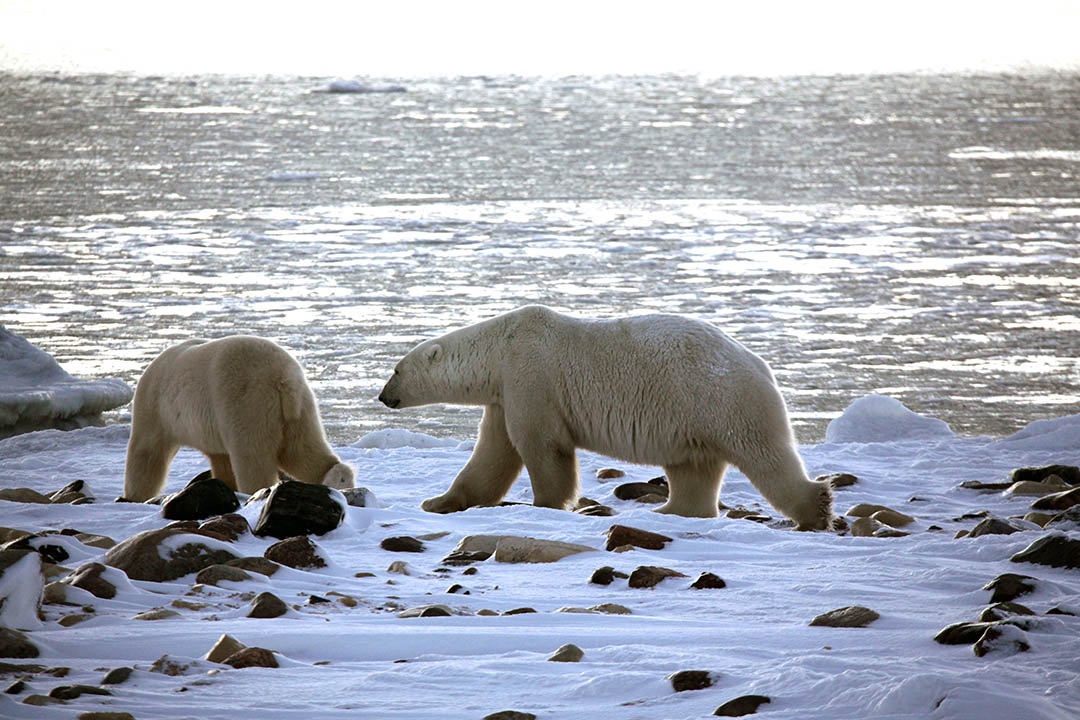
On one outing, two bears appeared on the horizon. At first glance, the group assumed it was a mother and cub. As the animals approached, it became clear they were two adult males, one dramatically larger than the other.
“The smaller one was about a 1,000-pound male, which is already considered a big bear,” said Clark. “The larger one was at least 500 pounds heavier.”
Inuit knowledge includes stories of nanurliut, or giant bears that spend most of their time in the ocean. Even after so much field research, Clark hadn’t seen one that size for over 25 years.
“When I heard another buggy’s driver say over the radio that the big one had gone for a swim I just laughed because it’s unusual behaviour for an undisturbed bear at that time of year. But the Inuit know what they’re talking about.”
The bears aren’t the only unpredictable element in the North. The landscape can change just as quickly. After several unseasonably mild days, a cold snap accelerated landfast ice formation at the shoreline. Bears that had been resting along the coast began moving with purpose. Within hours, the waiting season had ended.
Evenings bring a different kind of fieldwork. After long days outdoors, participants gather for warm meals and presentations led by Clark, research centre staff, and community members.
The formal lecture might last an hour. The discussion that follows often lasts much longer. Observations from the tundra open into conversations about sea ice dynamics, wildlife management, tourism, infrastructure, and what it means to live alongside large predators. Indigenous Knowledge Keepers from Churchill open and close each group’s learning vacations by sharing perspectives rooted in lived experience and generational relationships with the land.
Clark said he adjusts his lectures each year after listening and has even incorporated ideas from participants into his research methods.
When asked about future teaching opportunities in the North, Clark said that he hopes the trend includes more Knowledge Keepers and involvement from the community as the program continues to evolve.
After decades of monitoring, Clark’s research points to an important distinction. Sea ice timing governs when bears come ashore and how long they remain. Poor body condition does not predict whether they approach human sites. That finding shifts the conversation away from assumptions about desperate animals and toward broader environmental systems.
Those systems are interconnected. Climate influences sea ice. Sea ice shapes wildlife movement. Wildlife patterns affect community planning and safety.
The Churchill experience makes those connections visible. Participants do not just observe bears. They see how research informs local decision-making and community action, and the complexity of how global climate trends play out in a single northern town.
“You can publish papers, but sitting in a room where people are asking thoughtful questions about what they saw that day, that’s the impact,” Clark said.
The Lords of the Arctic Learning Vacation takes place annually each fall, with registration for 2026 now open. For those seeking an immersive experience that connects science, community, and the changing Arctic landscape, it offers a rare opportunity to learn where climate change is unfolding in real time.