

SENS researchers link energy security and northern community development
Dr. Greg Poelzer (PhD) and PhD student Tim Kalke are exploring how renewable energy projects can create new opportunities for northern communities
By Amy Janzen, School of Environment and SustainabilityDr. Greg Poelzer (PhD), a researcher with the University of Saskatchewan (USask) School of Environment and Sustainability (SENS) and Signature Area Lead for Energy and Critical Mineral Resources, has spent decades studying energy security, critical minerals, and northern development across the circumpolar North, and their implications for global policy.
Across the North, access to reliable energy shapes how communities heat their homes and power their lives. In Canada and Alaska, many remote communities still rely on imported fossil fuels.
As climate change, rising costs, and economic and geopolitical uncertainty drive communities to seek alternatives, renewable energy is becoming more than a source of power. It's creating opportunities for community-led economic development and greater self-determination.
Poelzer also leads the UArctic Thematic Network on Renewable Energy. Drawing on three decades of work across the Arctic, he sees an opportunity to rethink not only how northern communities get their energy, but also who benefits from the transition.
“This is a once-in-a-generation transformation that's occurring,” said Poelzer. “Russia's war with Ukraine, trade tensions between the United States and Canada, climate disaster after climate disaster, and renewed global interest in Arctic sovereignty are changing the game for all countries in the region.”
But energy transitions are not unfolding uniformly across the North.
Geography, natural resources, infrastructure, and decades of policy decisions have created profoundly different energy systems. While Nordic countries have invested extensively in interconnected grids and alternatives, including hydroelectricity, biomass, and nuclear power, many remote communities in Canada and Alaska remain dependent on imported diesel.
“Canada is very much in a catch-up mode compared to our Nordic neighbours,” said Poelzer. “The challenge, and opportunity, however, is finding solutions that make sense for individual communities.”
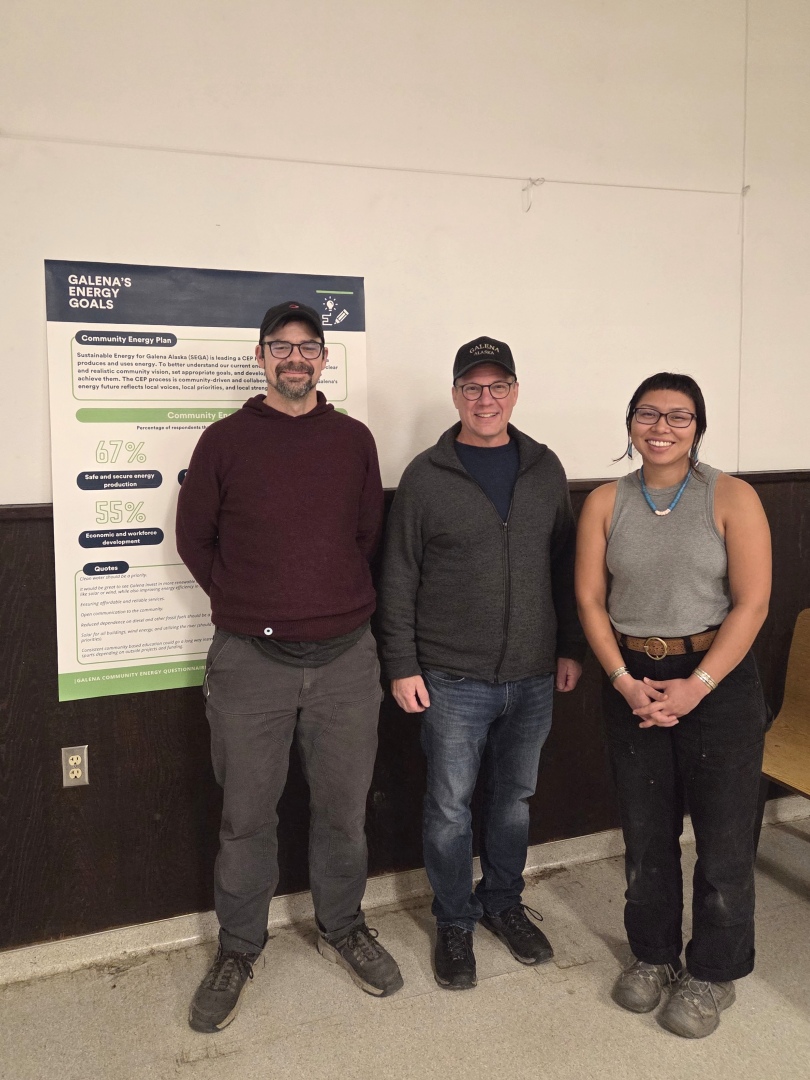
In Galena, Alaska, that has meant starting with the forest.
Located along the Yukon River, the predominantly Athabascan community is home to about 400 people. SENS PhD student Tim Kalke, who is supervised by Poelzer, moved there in 2009 as a teacher and stayed to become part of the community.
After a catastrophic flood damaged approximately 90 per cent of Galena’s structures in 2013, Kalke was among the residents who remained behind to help rebuild.
“It was there that I learned and gained appreciation for the remote community of Galena,” said Kalke. “I was so impressed how everyone pitched in during a time of crisis and worked together to solve the problem.”
That experience and sense of community was just the start for Kalke. Rising costs for imported diesel were threatening the school’s financial sustainability.
Galena’s regional boarding school relied on approximately 250,000 gallons of imported diesel annually to heat its facilities. As costs continued to rise, coordinators began exploring a more sustainable solution: a biomass project to heat the school district's 13-building campus.
The community's three main organizations, the Louden Tribe, City of Galena, and the Galena City School District, established the nonprofit Sustainable Energy for Galena, Alaska (SEGA) to secure a local wood fuel supply. Kalke eventually became its general manager.
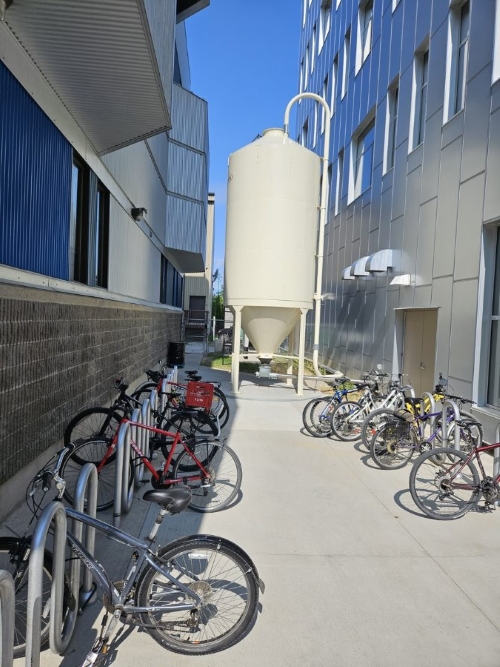
Since 2015, SEGA has harvested approximately 1,000 cords of local timber annually to produce wood chips. Alongside major improvements to the school's heating system, biomass now displaces approximately 80 to 85 per cent of the diesel that would otherwise be required for the system.
But the impact didn't stop at the fuel.
The organization created local forestry jobs and eventually expanded into construction, allowing employees who work in forestry during winter to build homes during summer. This year, the team is working on its 12th and 13th homes.
For a remote community where skilled workers may otherwise leave to find employment, Kalke said even a handful of steady jobs can have an outside impact.
“They can attend the games on Friday and Saturday nights when the kids play basketball because they’re not gone,” said Kalke. “Then they spend money in the community at the stores instead of on the road in other communities.”
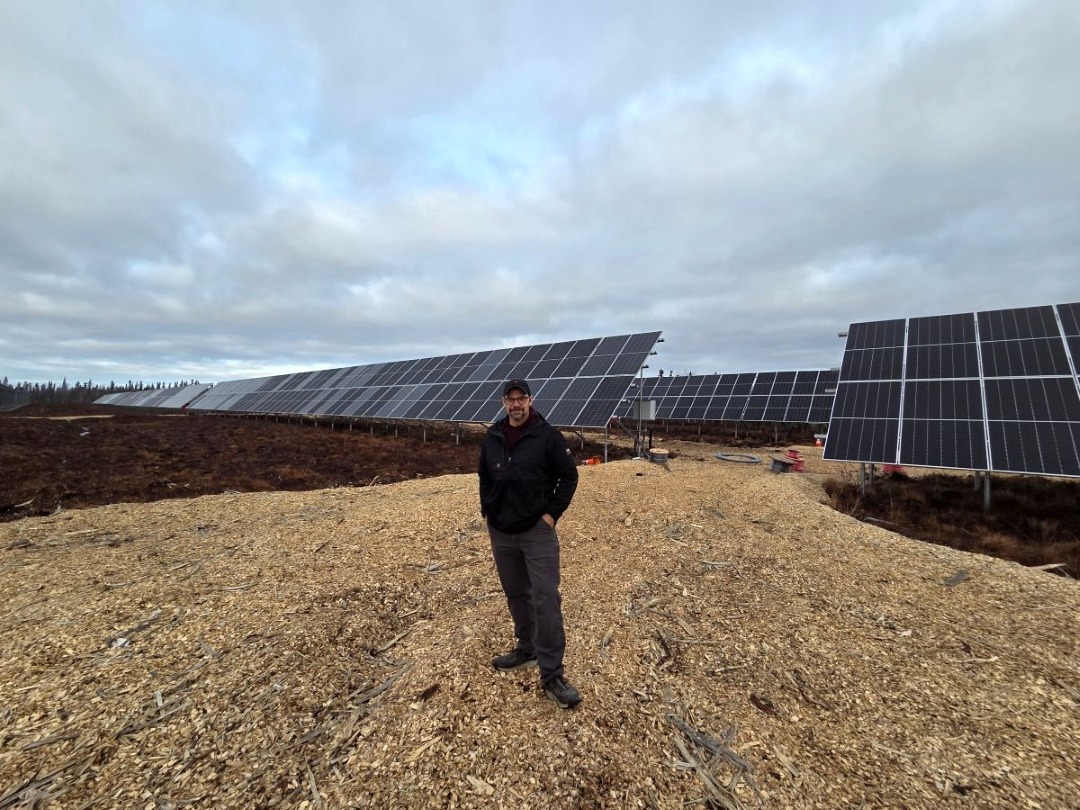
Galena is now expanding into other renewable energy sources. A 1.5-megawatt solar array with battery storage has been constructed, while the community is exploring hydrokinetic energy from the Yukon River and the feasibility of a biomass-heated greenhouse.
For Kalke, the goal is bigger than just replacing fossil fuels.
His research explores how renewable energy and energy efficiency can be used as a form of economic development to improve overall quality of life and community well-being.
Central to that work is community energy planning: moving away from reacting to immediate problems, toward building local knowledge and capacity so communities can proactively determine their own energy futures.
That shift, he said, is an example of self-determination and practicing sovereignty rather than remaining dependent on solutions determined elsewhere.
For Poelzer, that community-first approach is also at the heart of the newly published Routledge Handbook of Arctic Energy Transition, co-edited with Dr. Bram Noble (PhD), a faculty member in the Department of Geography and Planning in USask's College of Arts and Science.
Developed through the Community Appropriate Sustainable Energy Security (CASES) partnership, the handbook brings together experts who live or work across all eight Arctic states to examine energy security, governance, Indigenous priorities, and community-appropriate solutions.
In mid-October, Poelzer attended the Canada-Arctic Six: Northern Innovation Initiative, hosted by Nord University on behalf of the Arctic Six and in collaboration with the Embassy of Canada to Norway, where they celebrated the release of the handbook.
The lessons emerging from communities like Galena are particularly important as governments consider major new investments in the North.
“Communities being part of the decision-making process actually accelerates projects because it builds legitimacy and support,” said Poelzer.
Ultimately, Poelzer says, a successful Arctic energy transition should reduce reliance on imported fuels while giving northern communities greater autonomy over the systems and opportunities that power their future.