

USask, Government of Saskatchewan exploring canola oil-based road paints
The new research project will determine if agriculturally produced oils could create a sustainable and home-grown option for highway paints
By Matt Olson, Research Profile and ImpactFrom little yellow flowers in farmers’ fields to the long yellow paint lines on Prairie highways: Can canola be a part of what keeps drivers safe on Saskatchewan roads?
A new University of Saskatchewan (USask) research project will determine if agriculturally produced oils can replace petroleum products in the paint used on roadways and highways.
If canola oil can be used to create highway paints manufactured and applied in the Prairies, it could open doors for a home-grown, sustainable product that the people of Saskatchewan will benefit from every day.

Dr. Bishnu Acharya (PhD) is determining if canola oils in the road paints can have significant impacts on both sustainability and cost.
"The goal in our research group is finding alternative, new applications for a lot of agricultural-based resources in the province,” said Acharya, the Saskatchewan Ministry of Agriculture Endowed Research Chair in Bioprocess Engineering and professor of chemical and biological engineering in USask’s College of Engineering. “Our province processes a large amount of canola, so basically in this research we'll be looking at canola oil as an ingredient for making paints.”
Acharya is working with the Government of Saskatchewan's Ministry of Highways on the project, with the support of Richardson International as an industry partner. The project received funding from the Government of Saskatchewan, Richardson International, and the Natural Sciences and Engineering Research Council of Canada (NSERC) Alliance Advantage grant program.
“This project highlights the value of Saskatchewan partnerships that bring together government, industry, and research to solve real-world challenges,” said Highways Minister Kim Gartner. “By exploring innovative uses for Saskatchewan-grown products such as canola, we are supporting our agricultural sector while looking for practical, cost-effective solutions that could improve how we maintain our highways for years to come.”
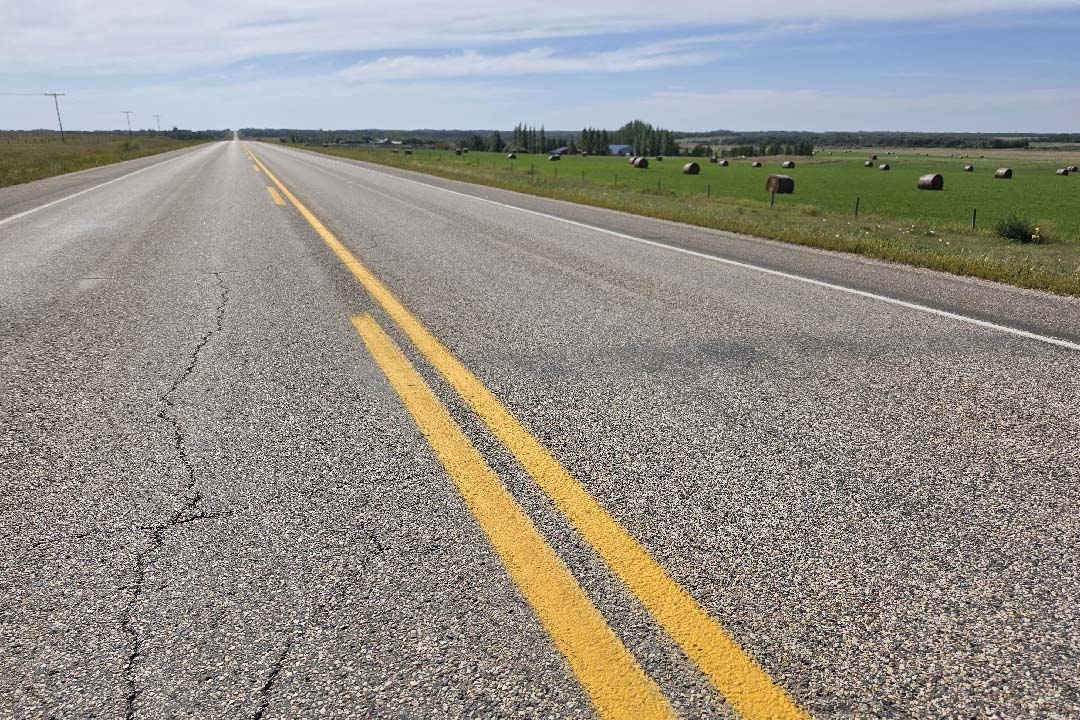
Current highway paint markings, like yellow lines that separate lanes, use a petroleum resin paint meant to resist wear and cracking. The new research project will test whether bio-based paints from canola oil will work as a replacement in the paints, creating a sustainable and literally home-grown option for highway paints.
Acharya said there has already been some research done in this area with other plant-based oils, such as soybean and linseed oil, but as the lipids in oils are all slightly different, they would have to test the properties of canola oil in paint directly.
Part of the final phase of the project will be what Acharya called a “techno-economic analysis” to determine the cost effectiveness and sustainability of the new paints they’re able to develop to compare how viable they are to create to current products and processes.
Acharya said it’s a long-term project but could result in a Saskatchewan-made bioproduct to replace petroleum in road paints.
"Those white or yellow paints cost a significant amount of money for the province, and it’s a regular expense because every year we have to re-paint due to harsh winters," he said. "I think if we meet the performance requirements at a similar cost, this project will be a success.”