

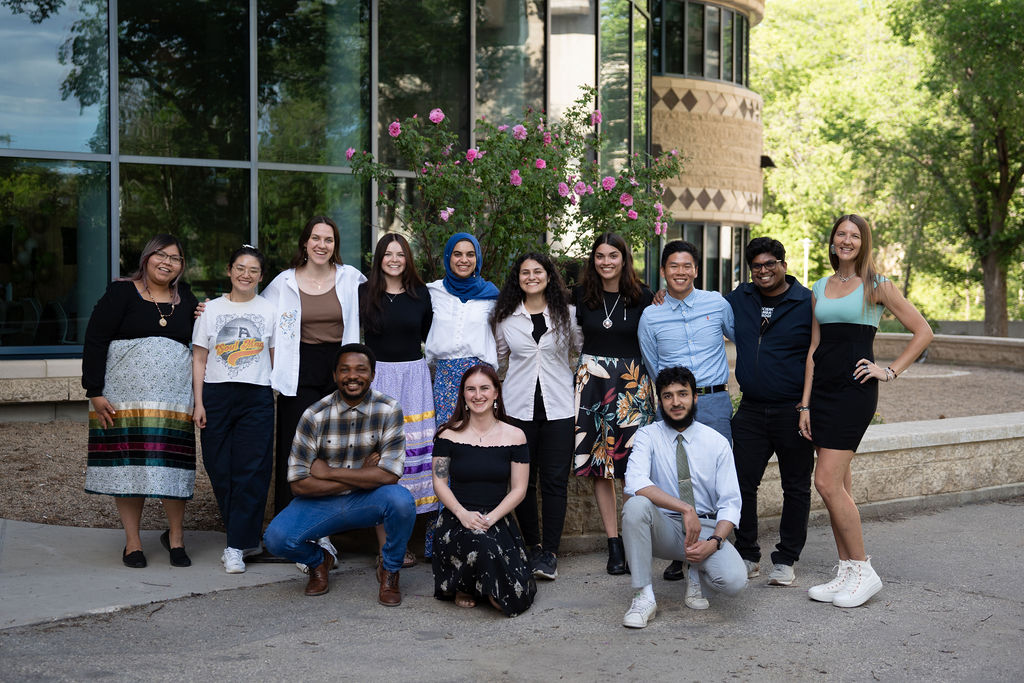
USask receives NSERC award for Science Ambassador Program
Zoe Slusar wants to inspire young people about the possibilities of science.
By Matt Olson, Research Profile and ImpactWhether that's teaching biodiversity through outdoor learning, building model cars, getting messy to understand chemistry, or exploring physics through a fun science challenge, she wants students to feel excited.
As the co-ordinator of the University of Saskatchewan (USask) Science Ambassador program — which facilitates two-way learning opportunities and brings hands-on science education activities to underserved communities in Northern Saskatchewan — Slusar has spent years connecting with the next generation of scientists throughout the province.
That passion and focus have been recognized, with the Science Ambassador Program receiving the Organizational Award in the prestigious 2026 Natural Sciences and Engineering Research Council of Canada (NSERC) Awards for Science Promotion.
“This kind of recognition is very significant because it not only fuels your ‘why’ when someone else validates the work that’s being done, but it also creates some sustainability to continue the work in a very tangible way,” she said.
The Science Ambassador Program connects undergraduate and graduate students from USask to travel to and live in participating remote communities for four-week placements each spring, providing opportunities for students to engage with creative science education experiences. Science Ambassadors create an environment where K-12 students can develop a high level of comfort and success in exploring scientific concepts.
The program builds on long-term relationships with communities and schools based on trust, reciprocity, and enthusiasm for learning. As Slusar puts it, it bridges Western scientific understanding and traditional Indigenous knowledge, honouring both perspectives.
Slusar said the buy-in from participating communities is always tremendous, as the program enters its 18th year of operation.
“When the science ambassadors arrive in schools ... there’s a buzz in the hallways,” she said. “The students are always really stoked. It’s a cool thing.”
The NSERC Award for Science Promotion is a national award that recognizes groups and individuals who work to promote science to the public.
Slusar and the Science Ambassador Program have left their mark in science promotion: since its inception the program has reached 29,000 students across almost a dozen Northern Saskatchewan communities, the majority of whom identify as Indigenous.
Nearly 1,500 local teachers and around 280 USask Science Ambassadors have been involved with the program, and evaluations of the program’s success have shown a defined increase in post-secondary aspirations for the students involved.
Slusar herself has seen the impact the program is having on communities.
“Over the years you see students increase engagement with science and confidence in exploring different topics. When Science Ambassadors arrive, students get excited,” Slusar said. “And when you finish a class, the kids are asking ‘are you back tomorrow?’”
Slusar noted the funding from the award has already helped expand the scope of the program this year, reaching more schools than ever and connecting with local businesses to create new and unique supplies for science activities.
And she hopes to see it expand further, with more opportunities to engage with Indigenous communities throughout the year and utilizing online resources to maintain connections to the program for students.
Slusar credits the strong relations built between the program, local communities and the school boards for driving its continued success.
She said that receiving the NSERC award was a vote of confidence that the Science Ambassador Program is doing its job of getting students excited about science and future learning opportunities — and hopefully inspiring future USask scientists along the way.
“There is an under-representation across a lot of scientific disciplines for First Nations and Métis individuals. This program matters because young people need to see themselves reflected and see their worldviews and their knowledge being represented in the realm of the sciences,” Slusar said.