


USask researchers discover new reproductive method that will revolutionize cattle production
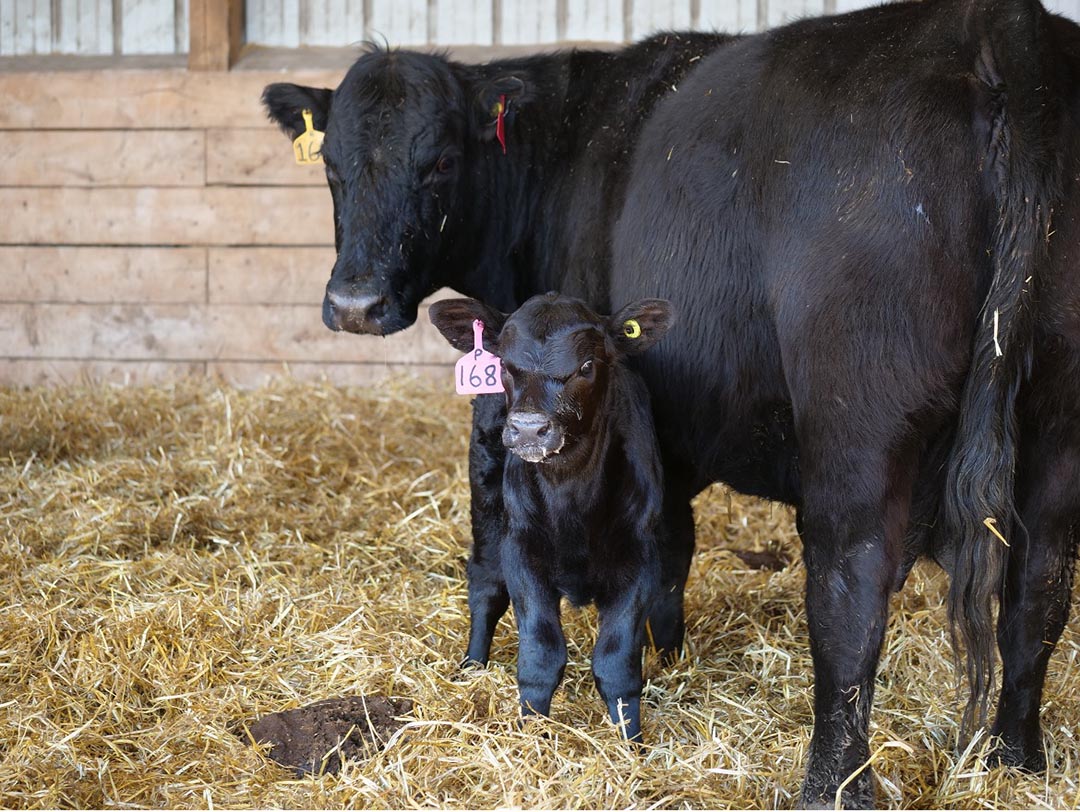
There are sure signs of spring on the Canadian Prairies — snow melting, pelicans splashing down in the South Saskatchewan River, and the sight of brand-new calves taking shaky first steps in the field.
By Erin Matthews, Research Profile and ImpactBehind those brand-new calves is an industry, deeply rooted in research, that works tirelessly to ensure cows are healthy and thriving. Cattle production is integral to Saskatchewan’s economy, and the University of Saskatchewan’s (USask) is, in many ways, leading the charge in beef cattle research in the province.
Dr. Jaswant Singh (DVM, PhD), researcher at USask’s Western College of Veterinary Medicine (WCVM), has spent his career researching the reproductive management of cattle and working on new methods to help farmers increase the number of healthy herd members.
In two recent papers published in Biology of Reproduction and Theriogenology, Singh and graduate student, Dylan Farmer, demonstrated their findings on a revolutionary method of cattle reproduction that has been in the making for over 25 years.
Singh joined USask as a PhD student in the 1990s when WCVM researchers were developing methods to control ovulation in animals called ovulation synchronization.
“Ovulation synchronization gave producers the ability to have 400 animals inseminated on a Tuesday afternoon,” said Singh. “This kind of control is very important for beef cattle production."
The original USask method used the hormone estradiol to synchronize cattle ovulation and was so effective that it was soon the preferred protocol used around the world. But, by the early 2000s, the hormonal method began to fall out of favour in Europe and the United States.
“The hormone estradiol is a form of estrogen, and there were environmental and consumer concerns at the time to use estrogens in food producing animals. That sent us back into the lab to try and develop an alternative method,” said Singh.
Over the next 25 years, Singh and his colleagues at the WCVM worked tirelessly to find an alternative protocol that was just as effective and simple to use. But after decades of work, each method came up short.
Then, in 2018, Singh and his graduate student Carlos Leonardi were conducting a separate study on another reproductive hormone that led to an unexpected discovery. The unrelated experiment revealed a possible new candidate for the long sought after ovulation synchronization method.
“When we used the drug Cetrorelix, a popular drug used in IVF treatments in humans, we saw that it worked beautifully to synchronize ovulation in animals, and we thought maybe this was the estrogen-free alternative we were looking for all along,” said Singh.
There was only one problem — Cetrorelix was still under patent, making the drug very expensive. Not giving up on this discovery, Singh and his colleagues waited years for the patent to expire, which made the drug more affordable. Over the last seven years, Singh’s team has continued to test its effectiveness in animals, designing new protocols for its use.
Singh and his colleagues have now shown in the Biology of Reproduction paper that Cetrorelix induces a new follicular wave in cattle, which is the necessary step to synchronize ovulation and allow for fixed-time artificial insemination. According to Singh, Cetrorelix performed as well as the original estradiol method without using steroid hormones like estradiol.
According to Singh, Cetrorelix has a direct action on reproductive hormone secretion, and in many ways is a more reliable treatment that works in all stages of the cow’s cycle.
USask currently has a patent on the protocol designed by Singh and his team for the innovative and new use of the drug. USask’s Innovation Mobilization and Partnerships team and Singh’s research group are now working closely with a pharmaceutical company to commercialize Cetrorelix for reproductive management in cattle, sheep, horses and other mammals.
Developing effective reproductive methods and protocols gives farmers control over the number of calves that will be introduced to their herd and allows producers to time their arrival — meaning better health outcomes for cow and calf while also bolstering productivity by introducing superior genetics through the use of artificial insemination.
According to Singh, this new method doesn’t add additional manual labour for ranchers and, in fact, reduces the observation time needed with other methods. It is also a method that dairy farmers could also easily adopt.
“This is going to have a positive impact on millions of animals around the world and promote a much better protocol for beef cattle. I believe it will revolutionize production in Canada and South America,” said Singh.
USask’s animal care and use program is aligned with Canadian Council on Animal Care (CCAC) standards, which set national requirements for animal welfare, housing, procedures, and ethical justification.
Research cannot proceed unless ethical standards are met, and compliance is monitored throughout the life of a project. This research met all standards and was approved by our animal care committee and the Veterinary Drug Directorate of Health Canada. Learn more here.