

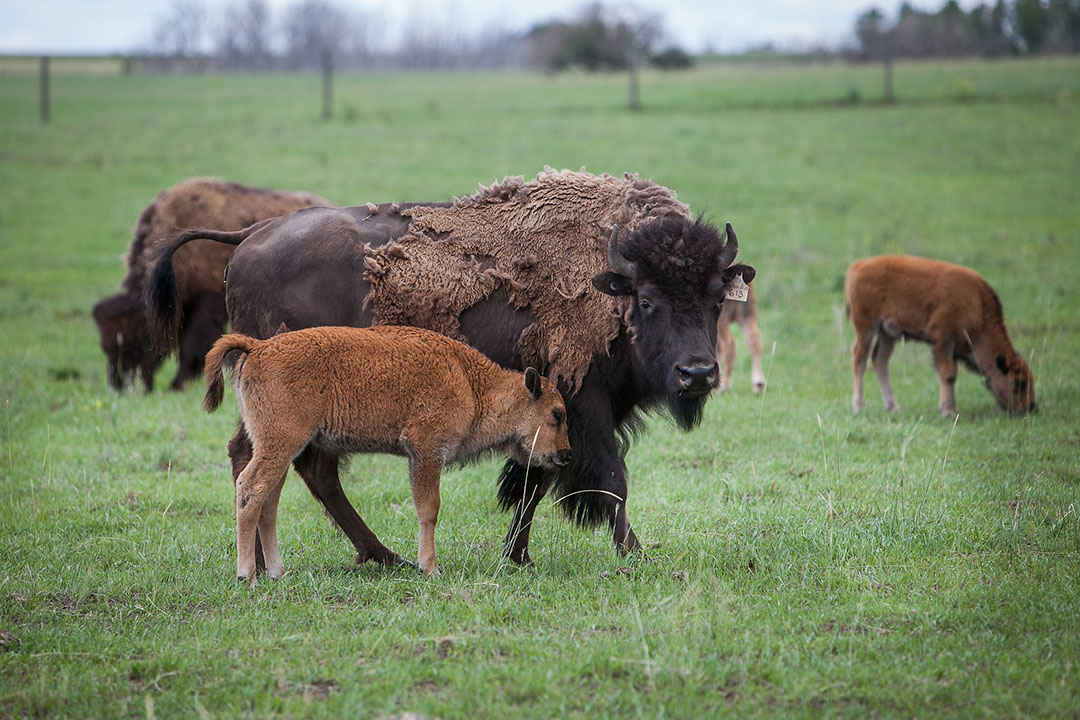
USask researching sustainable bison grazing management
A new research project led by the University of Saskatchewan (USask) is laying the groundwork for more sustainable bison husbandry through grazing management and ecosystem enhancement techniques.
By Matt Olson, Research Profile and ImpactDr. Trever Crowe (PhD), acting dean of USask’s College of Agriculture and Bioresources, is working with Livestock and Forage Centre of Excellence (LFCE) Director Dr. Scott Wright (PhD) and LFCE research scientist Dr. Eric van Cleef (PhD) on the project.
As van Cleef puts it, the goal of this research will be to “start from the beginning” to develop scientifically-grounded feeding, grazing, and care techniques tailored specifically for bison populations living in modern “intensive” systems – meaning grazing within fences instead of being completely free-roaming.
“The first step is to generate science-based information on how this grazing management affects forage and animal production, animal behaviour, the environment, and soil health,” van Cleef said. “Then we’ll have new information that could guide us to the next level, like introducing new forage species to feeding systems.”
This project received support from the Agriculture Development Fund (ADF), a joint provincial and federal government-funded program intended to support innovative agricultural and agri-food research throughout the province.
USask has built a unique and robust catalogue of bison research, due in large part to the genetic research conducted through the Integrated Omics for Sustainable Animal Agriculture and Environmental Stewardship (IntegrOmes) project led by USask Distinguished Professor Emeritus Dr. Gregg Adams (PhD) with the Western College of Veterinary Medicine.
The next step for researchers is to bring knowledge of best practices for raising and feeding bison to producers that are built directly from researching bison instead of building off beef cattle techniques. Due in large part to past efforts and connections built in the community, USask researchers have access to a bison herd they can work with to create robust research to support sustainable bison production.
As Wright puts it, bison are different than beef cattle, from their behaviour to their preferences in food.
The overall aim of the project is to build a base for sustainable bison production now and into the future. Wright included five different factors to consider when pursuing sustainability: environmental, ecological, economic, social, and cultural.
Examples of environmental and ecological impacts to consider include the kinds of plants required for the bison to be able to feed and graze, and the literal impact the hooves of bison will have on the already-existing plants and soil. In addition, Wright and van Cleef both noted that as soon as bison are brought into a paddock, their social behaviour among the herd changes, which is another consideration for safe and healthy bison production.
Economic considerations come into the overall cost-effectiveness of raising bison in paddocks. van Cleef, who has a background in economics, will also explore the impact of bison on rangeland and the direct value of having bison as part of a production strategy.
“We’re trying to understand the impacts of moving animals to a very intensive system,” van Cleef said. “Is it economically feasible or not? How can we bring Indigenous communities and groups of producers on board and show them we can do this and be sustainable? I think that’s what’s important.”
Crowe stressed the level of importance in getting the input of Indigenous communities and listening to the cultural underpinnings of their work, noting that this project would help bridge a gap between anecdotal evidence and hard scientific evidence that could help support Indigenous knowledge and methods for bison production for today’s producers.
“It is about bison, but we’re thinking about plants, plant viability, rangeland soil viability, soil health. It’s that relationship between the bison and their space,” said Crowe.
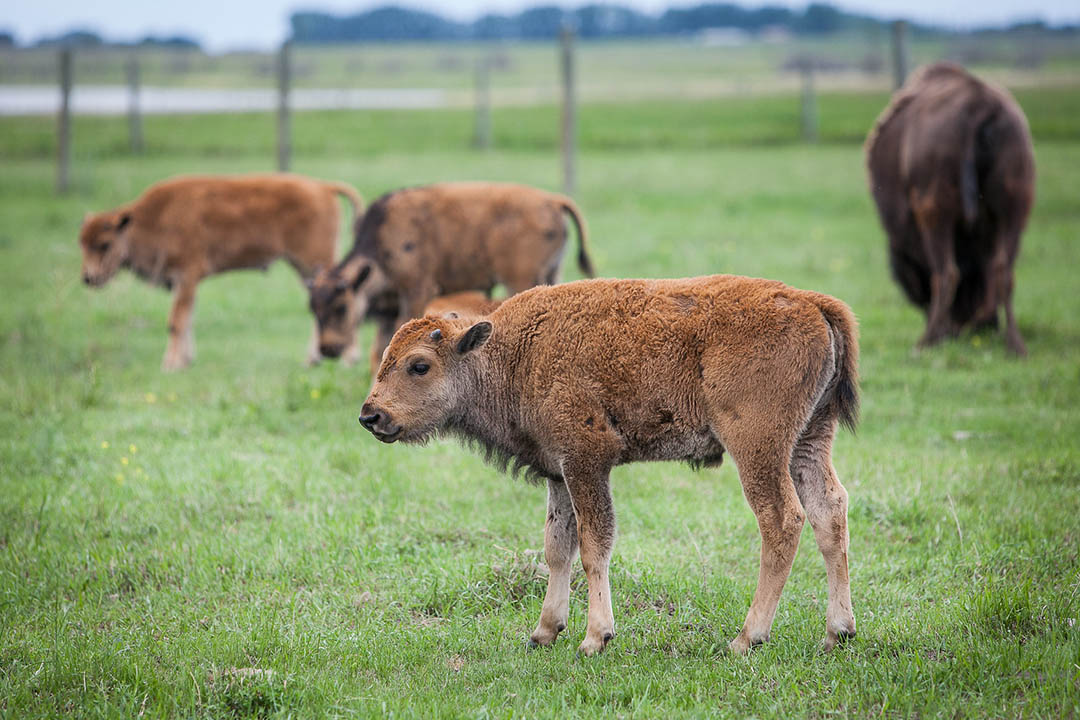
Candace Wasacase, the former USask director of Indigenous Engagement and the current CEO of Kahkewistahâw Economic Management Corporation, has worked with bison numerous times through her career and is deeply familiar with the importance of bison to Indigenous communities. A member of Kahkewistahâw First Nation, Wasacase said bison are not simply animals – they are family to First Nations in Saskatchewan. And research into bison care and production helps to create knowledge for the university and community alike.
“There’s a re-emergence and a renewal of the bison spirit back to our community, and I think projects like this will help the co-creation of a new knowledge base about bison, the land and all its people, First Nations and not,” she said.
Wasacase is currently working on a project that would bring a bison herd to Kahkewistahâw First Nation. She is working with numerous organizations to ensure the land they’ve secured for the bison is appropriate and sustainable for a herd and said this kind of project could help support this kind of initiative.
“This work is absolutely critical to the mission of both First Nations and the university,” Wasacase said. “Bison are a keystone species to the province and this land. They’ve had a relationship with First Nations for thousands of years, and it’s important we treat them as the relatives they are.”
The research team lauded the support of the ADF for this unique project, calling it a clear signal that the provincial government understands the importance of bison in Saskatchewan and believes in USask and the LFCE to lead this kind of work.
“To me, fundamentally, it gives industry options and answers. It allows the livestock industry in Saskatchewan to make choices based on science,” Wright said.
The ADF is supported through the Sustainable Canadian Agriculture Partnership (S-CAP), an investment of $3.5 billion over five years from federal, provincial and territorial governments with the goal of supporting the agri-food and agri-product sectors across Canada. The Sustainable CAP includes $1 billion in federal programs and activities and a $2.5 billion commitment for programs designed by provinces and territories that is cost-shared 60 per cent by the federal government and 40 per cent by provincial/territorial governments.