

USask’s Dr. Curtis Pozniak receives international agricultural award
One of the top agricultural researchers and wheat breeding experts at the University of Saskatchewan (USask) has been recognized with one of the most prestigious agricultural awards in the world.
By Matt Olson, Research Profile and ImpactDr. Curtis Pozniak (PhD) is this year’s recipient of the Bertebos Prize, a biennial award granted for research and innovation with “significant contributions to the interface between ecology and food production with focus on research of high scientific quality, high innovation and relevance for the value chain, and of importance for achieving improved sustainability.”
A professor in USask’s College of Agriculture and Bioresources and the director of the Crop Development Centre (CDC), Pozniak said he was both “excited” and “humbled” to receive the Bertebos Prize.
“There is nothing more rewarding as a scientist than to be recognized for your achievements. We don’t do this for awards or prizes—we do it because we believe in its impact,” he said. “To be recognized by your nominees and to be selected by your peers is truly humbling.”
Pozniak has received international acclaim for his work in crop and plant breeding. He was one of the leaders of an international research team responsible for cracking the highly complex wheat genome and led the development of a wheat “atlas” through sequencing the genomes for 15 wheat varieties to support plant breeders and producers around the world.
Pozniak is also the Ministry of Agriculture Strategic Research Program Chair in Durum and High-Yield Wheat Breeding and Genetics in Saskatchewan where he has released more than 20 wheat varieties. He was awarded a fellowship in the Canadian Society of Agronomy in 2025 and received the Queen Elizabeth II Platinum Jubilee Medal for his work in agriculture in 2022.
This achievement will mark only the second time in history that a Canadian has won the Bertebos Prize.
“Agricultural research is one of the cornerstones of USask, and Dr. Pozniak is most deserving for this award celebrating research and innovation in this field,” said USask Vice-President Research Baljit Singh. “The entire university is proud to celebrate the achievement of Dr. Pozniak and all his colleagues in receiving this highly prestigious international prize.”
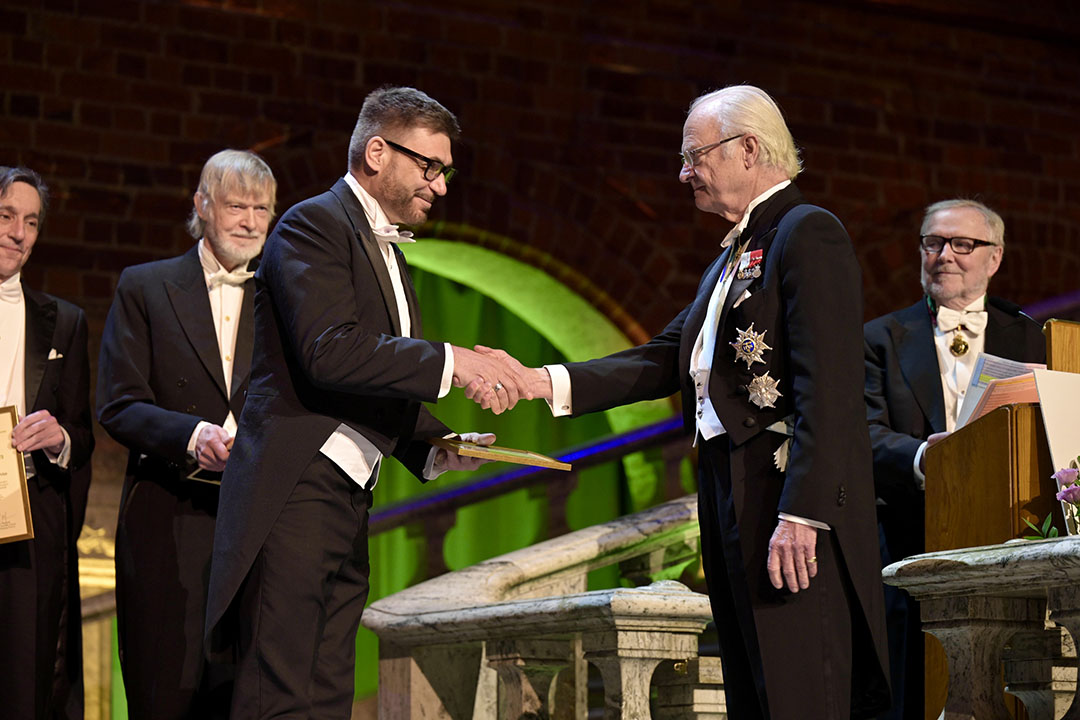
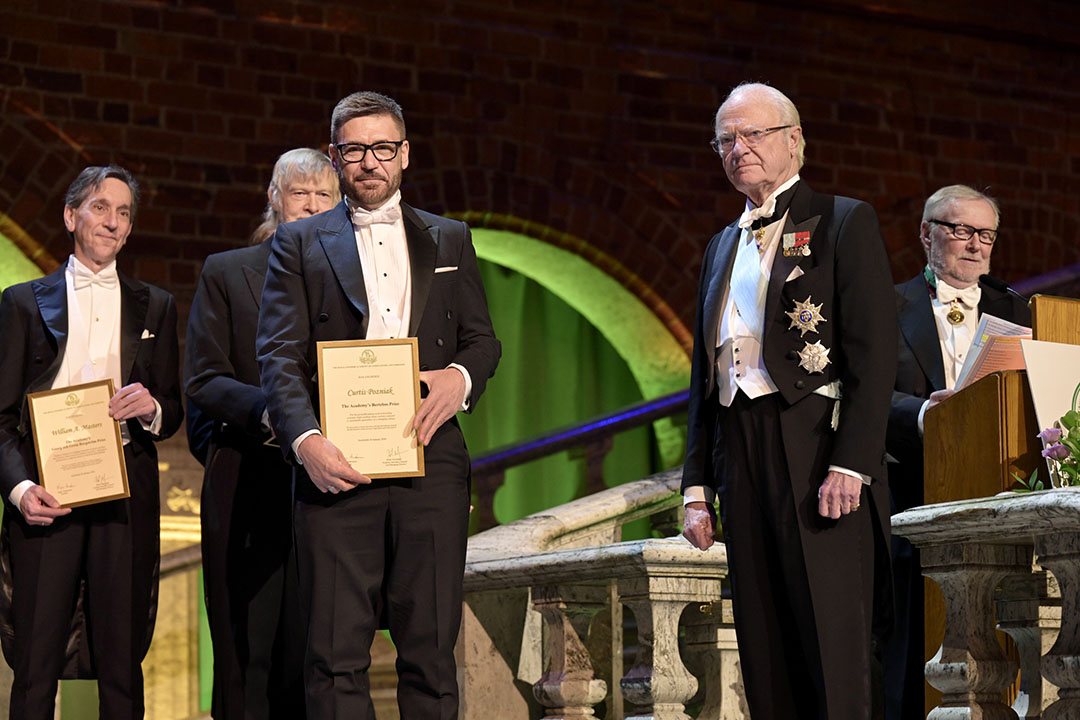
The Bertebos Prize was presented to Pozniak at a special ceremony in Stockholm, Sweden by the Swedish Royal Academy of Agriculture and Forestry at its annual commemorative meeting on Jan. 28. The prize was awarded by His Majesty King Carl XVI Gustaf of Sweden.
Pozniak said receiving the award was a signifier to him that the research he conducts at USask with the CDC and with international partners around the world is important and would continue to make a mark in agriculture going into the future.
Exploring crop genomics, deciphering the functions of genes, charting out new wheat varieties—Pozniak called it a “mammoth task,” one made possible by the collective efforts of scientists and partners around the world, a challenge he said he was proud to be a part of.
“It’s about impact. Plant breeding translates knowledge from a research lab into a new wheat variety that has an impact in a farmer’s field, and that goes all the way to the food we eat,” he said. “This requires a dedicated, collaborative team. The CDC is a driver of innovation, and our people do remarkable work. My own success would not be possible without those around me.”