

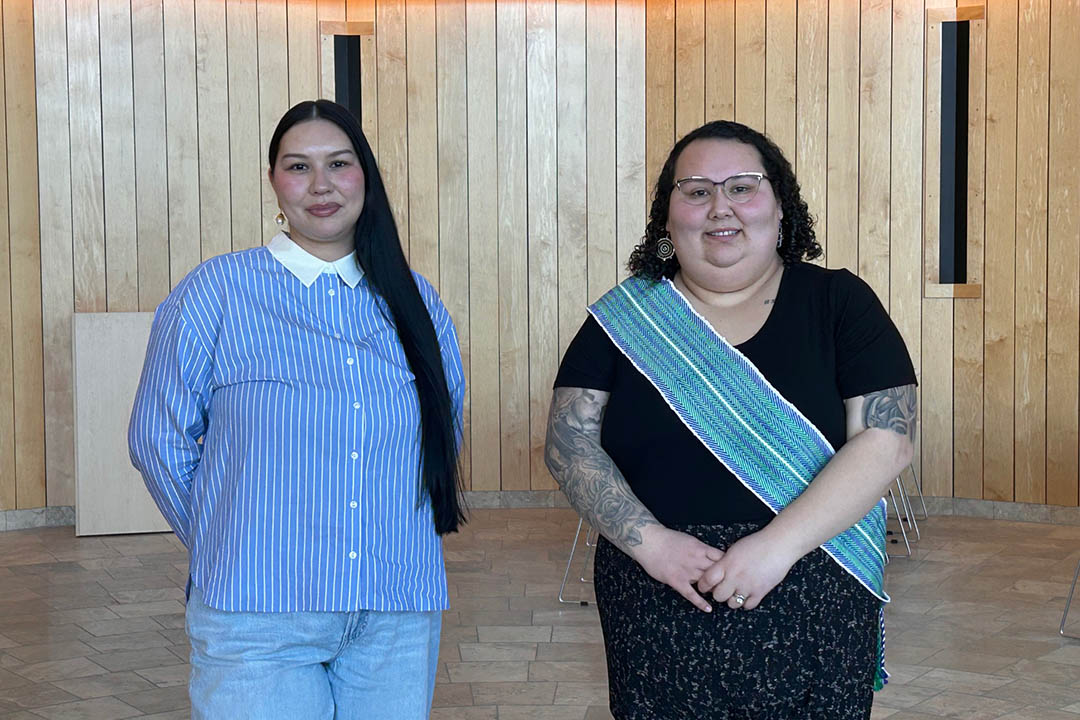
Home away from home: 10 years at USask’s Gordon Oakes Red Bear Student Centre
Over the past decade, the Gordon Oakes Red Bear Student Centre has been dedicated to being a place for Indigenous students to build community and connection. For many Indigenous students, the centre makes the difference between simply attending university, and truly feeling at home within it.
By Ashley Dopko, University CommunicationsAs the centre celebrates its 10-year anniversary at the University of Saskatchewan (USask) Saskatoon campus, students share just how impactful the space is.
For Tianna Sangwais, leaving her home community was a big step, so she did her research when she was considering USask.
“I saw what they were creating for Indigenous students, and it made me so excited to come to Gordon Oakes and USask,” said Sangwais. “It was important to know that I could show up as myself, as an Indigenous person, and have that celebrated.”
Now in her fifth year at USask, Sangwais is also the Indigenous Student Success Co-ordinator with the Office of the Vice-Provost, Indigenous Engagement, and works directly with students at the centre.
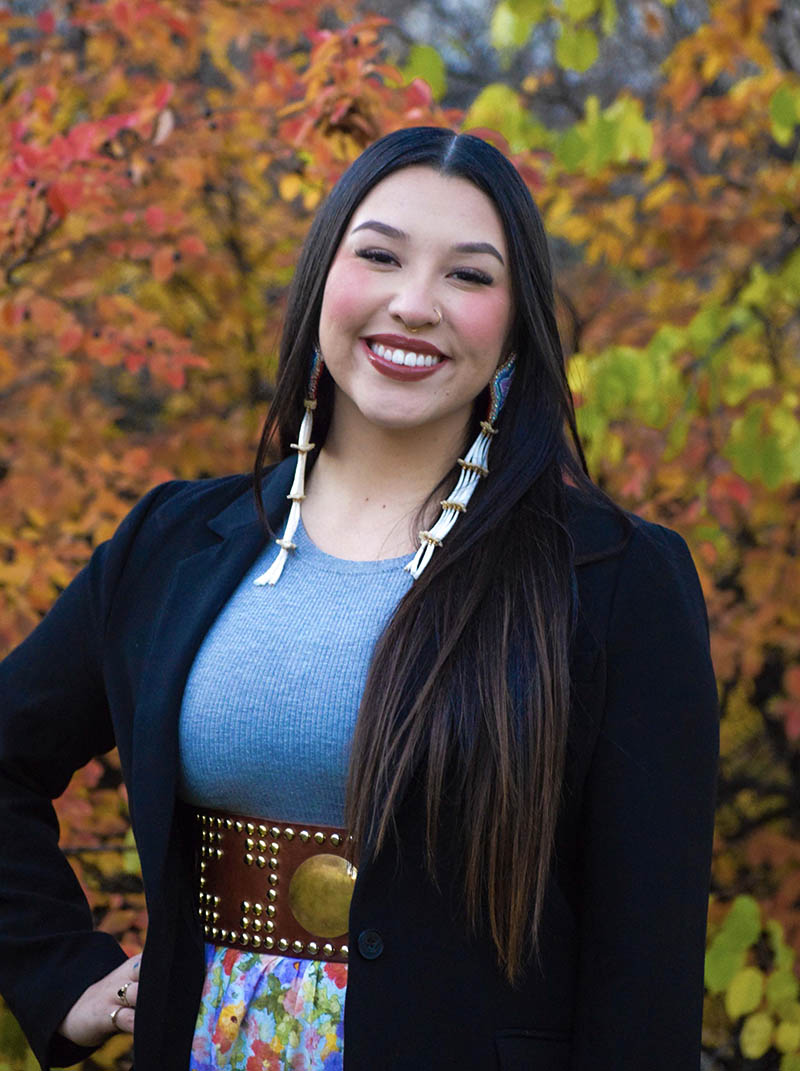
“The centre gave me so much and helped so much in my holistic success of my university journey,” said Sangwais. “Now, working in the centre, I just really want to offer our students that same sense of belonging and that same support.”
Like Sangwais, other students found the centre during moments of transition.
Chelsea Ochoa, president of Métis Students of USask, had a very different experience. She felt isolated having started university during the COVID-19 pandemic, but when she came to Gordon Oakes Red Bear Student Centre, that changed.
“I was very in my shell at first and was kind of hesitant to reach out and socialize with new people,” said Ochoa.
Now, in her leadership position, Ochoa meets many students struggling with their identity.
“The biggest thing we hear is, ‘I came to university, I got my Métis card, but now I don’t really know what it means to be Métis.’ Some people kind of feel like an impostor, but they want to learn.”
The Gordon Oakes Red Bear Student Centre was designed to meet the needs of Indigenous students, offering a variety of cultural programming such as Introduction to Powwow, Matriarchs in the Making, CreativiTEA. The centre also facilitates access to good medicines like smudging, and connection to Elders and Knowledge Keepers.
For a lot of students, these events can be the first time they are experiencing a certain aspect of their culture.
“The first time I smudged was in this building,” said Ochoa. “I had never smudged or seen someone smudge before I came to Gordon Oakes.”
Because of community and culture, the centre plays a key role in academic success.
This is a point that Sangwais has seen reflected in her own work.
“It’s so amazing to host these programs, these workshops, and for our students to just really benefit from them,” said Sangwais. “When they’re being honoured, in a spiritual way and in a holistic way, it really reflects in their academics. It feels like they want to be at USask and that makes them show up as a better student.”
For Teagan Pooyak, student assistant at Gordon Oakes Red Bear Student Centre and co-director of women’s events for the Indigenous Students’ Union, the centre is her home away from home.
“I see the Elders as grandparents, that’s how they feel,” said Pooyak. “I see the staff as like an uncle and aunties, and my peers and the other student assistants, they feel like cousins in a sense.”
“What keeps me coming back here is that it feels like home away from home, and being here, I still feel like I’m with family.”
In 2026, the centre is a thriving space for community and culture, supporting Métis, First Nations and Inuit students at USask.
“The Gordon Oakes Red Bear Student Centre is more than just a gathering place, it’s where Indigenous student success lives,” said Dr. Angela Jaime, vice-provost, Indigenous engagement at USask.
Celebrating this milestone isn’t just a time to reflect; it’s a push to envision an even brighter future.
“The next 10 years will also be an exciting time for Indigenous student success,” said Jaime. “We have incredible staff and students who are working together with a shared vision, making sure programming, and cultural and academic supports include all Métis, First Nations, and Inuit students.”