


SENS secures $500,000 to support graduate research in Indo-Pacific
The University of Saskatchewan’s (USask) School of Environment and Sustainability (SENS) has received more than $500,000 from the Government of Canada through Global Affairs Canada to support graduate student research focused on sustainability and climate resilience in coastal regions in the Indo-Pacific.
By Amy Janzen, SENS CommunicationsBeginning in spring 2026, the funding will establish six annual scholarships for USask graduate students to travel to three partnering communities in Sri Lanka, the Philippines, and New Zealand. Successful students will travel to their awarded location to conduct research related to climate-related issues affecting at-risk coastal communities.
A second cohort of six students will participate in Year 2 of the program, expanding the initiatives reach and impact.
Students will work alongside researchers at the Department of Coastal and Marine Resource Management at Ocean University in Sri Lanka, the Department of Geodetic Engineering at the University of the Philippines Diliman, and the Faculty of Engineering and Design at the University of Auckland.
Dr. Varuni Jayasooriya (PhD), assistant professor at SENS and project lead, said the initiative is designed to provide students with meaningful, hands-on experience while contributing to urgent global sustainability challenges.
“This funding creates a rare opportunity for USask graduate students to embed themselves in coastal communities that are on the front lines of climate change,” said Jayasooriya. “Rather than simply observing challenges or learning about solutions in a classroom, students will work directly with international researchers and communities to design practical, sustainable, science-based solutions.”
Coastal communities are among the most vulnerable to accelerating climate impacts. Across the Indo-Pacific region, which is home to more than 70 per cent of the world’s coastal population, climate-related challenges are intensifying. Sea level rise, stronger and more frequent storms, coastal erosion, coral reef bleaching, and habitat loss are threatening food security, livelihoods, infrastructure, and biodiversity.
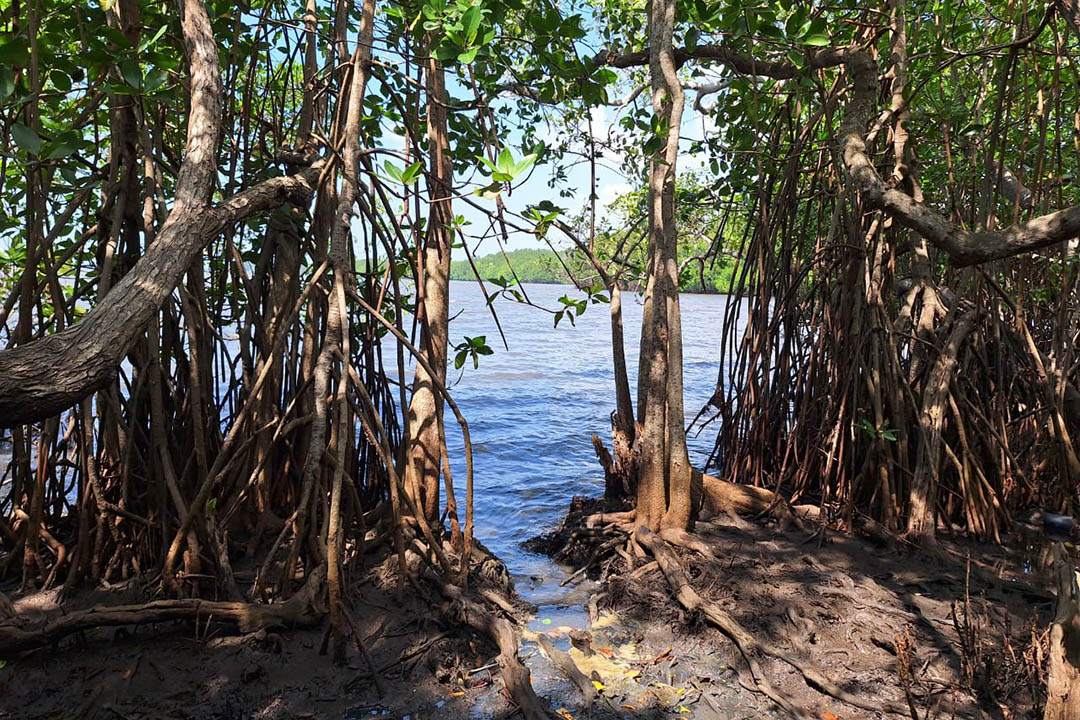
Sri Lanka and the Philippines are especially vulnerable to coastal flooding and ecosystem degradation that affect both communities and wildlife. At the same time, New Zealand provides globally respected models in Indigenous-led ecosystem restoration and regenerative land management.
“I think it’s this unique shared-learning opportunity that will really benefit everyone who is participating,” said Jayasooriya. “The ability to take what works in, say, Sri Lanka, and apply it to a similar issue in the Philippines will give both participants and the local communities an invaluable perspective.”
The program’s shared focus on nature-based solutions recognizes the critical role ecosystems such as mangroves, wetlands, seagrasses, and coral reefs play in buffering storm surge, storing carbon, and protecting shorelines. Nature-based solutions that include restoring these systems are increasingly recognized as a sustainable and cost-effective alternative to hard-scaping or incorporating grey infrastructure, like concrete seawalls, to coastal areas.
“Nature-based solutions are not abstract concepts,” said Jayasooriya. “Working with our natural environment isn’t just about preservation. It’s about incorporating natural solutions to solve some of the most desperate sustainability challenges. By studying mangroves, seagrasses, and wetlands across different countries and contexts, our students will gain interdisciplinary training that connects science, policy, and community knowledge.”
The research themes reflect the unique strengths and priorities of each partner country.
In Sri Lanka, students will study mangrove fragmentation using satellite imagery and assess blue carbon valuations in lagoons. In the Philippines, they will conduct spatial analysis of mangrove-seagrass conflicts and monitor coastal greenbelts designed to reduce storm surge impacts. In New Zealand, students will focus on urban wetland blue carbon mapping and Indigenous co-design of nature-based solutions with Māori communities.
Each region will play a central role in co-designing the program, working collaboratively with partner institutions to advance shared sustainability goals.
Candidates must be current USask master’s students in environmental studies, engineering, agriculture and bioresources, arts and science, urban and regional planning, economics, public policy, community-based and participatory research, or a related sustainability-focused discipline.
Through Global Affairs Canada, the federal government is investing in partnerships that strengthen Canada’s engagement in the Indo-Pacific while building scientific capacity and applied research networks. In the second year of the initiative, two Canadian faculty fellows will visit each partner country to deepen research ties, initiate memoranda of understanding, co-develop graduate-level curriculum on climate mitigation and adaptation, and deliver regional workshops on nature-based solution design, policy application, and economic evaluation.
“The goal is to create more than a short-term exchange,” said Jayasooriya. “We are building a sustained research knowledge-sharing network between Canada and the Indo-Pacific institutions, supported by federal investment. This signals long-term collaboration, shared curriculum development, and joint innovation in coastal resilience.”
The full cohort of students and faculty will function as an ongoing research and knowledge exchange network, establishing lasting academic links between Canada and partner universities. The initiative is expected to generate significant returns through capacity and workforce development, creating highly skilled graduates with international research experience and strengthening Saskatchewan’s sustainability workforce.
Interested students can visit the program’s web page to learn more about the program. Applications will be accepted until March 28, 2026.