

SENS undergraduate award winners leading sustainability solutions at USask
University of Saskatchewan (USask) undergraduate students are applying sustainability knowledge beyond the classroom through the School of Environment and Sustainability (SENS) Undergraduate Certificate in Sustainability, delivering innovative, community-focused projects that address environmental challenges in Saskatoon and on campus.
By Amy JanzenEach year, SENS recognizes students who demonstrate exceptional leadership, creativity, and collaboration through ENVS 401: Sustainability in Action, a senior undergraduate capstone course in which students work in teams to develop and present applied solutions to real-world sustainability challenges in partnership with community organizations.
“This has likely been one of the more competitive years we’ve seen when deciding on the award recipients,” said SENS Associate Professor Dr. Colin Whitfield (PhD). “The amount of creativity, research, and diversity we saw in this year’s ENVS 401 capstone projects was very impressive.”
Outstanding Sustainability in Action Project Award
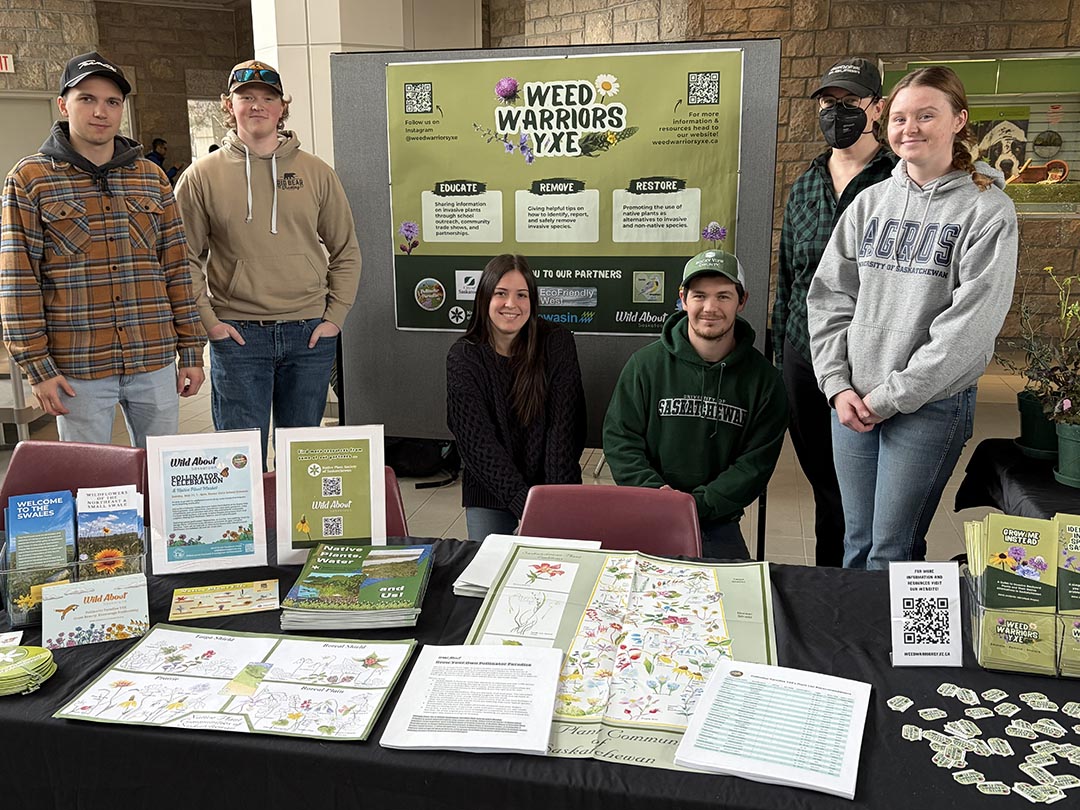
This year’s Outstanding Sustainability in Action Project Award was presented to Weed Warriors YXE: Cole Barry, Meghan Mickleson, Brenn Currie, Shayla Woychyshyn, Bowen Webb, and Riley Romashenko.
The group focused on raising awareness about invasive plant species in Saskatoon and helping the community identify native plant alternatives for their yards. But rather than viewing this project as a simple information sharing task, the group wanted to encourage real community engagement and inspire people to think differently about the plants growing in their own backyards.
Recognizing that public outreach requires more than facts and statistics, the team created interactive and accessible ways to connect with people both on campus and throughout the city.
At Gardenscape, the group hosted an educational booth featuring plant samples, identification posters, pamphlets, and an interactive quiz on invasive species. They also distributed a “Grow Me Instead” guide, offering native plant alternatives that would still appeal to gardeners looking to maintain a certain aesthetic in their yards.
The group approached the topic with a positive, solutions-focused perspective, aiming to make sustainable choices feel approachable and achievable. They later brought the same engagement activities to the Sustainability in Action Trade Show held April 2 in the Agriculture Building Atrium, where they connected with USask students, faculty, staff, and elementary students visiting campus.
“We worked closely with local environmental and native plant groups to ensure our information was accurate, relevant, and community-based, while still presenting it in a clear and accessible way,” said Weed Warriors YXE group member, Meghan Mickleson. “Finding ways to distill all the research we gathered while still making it fun for our audience was a unique challenge that we all enjoyed.”
Collaboration played a major role in the project’s success. Team members leaned on one another’s strengths to solve challenges, refine ideas, and strengthen their public outreach efforts.
“We supported each other by sharing ideas and giving feedback throughout the project,” said Weed Warriors YXE group member, Bowen Webb. “Whether it was improving pamphlet design or refining social media posts, we collaborated to strengthen each part of our work along the way.”
For many of the students, one of the most valuable parts of the experience was building relationships with local native plant and environmental organizations. Those partnerships helped the group connect scientific research with community-based knowledge and existing sustainability efforts already underway in Saskatoon.
Certificate in Sustainability Excellence Award
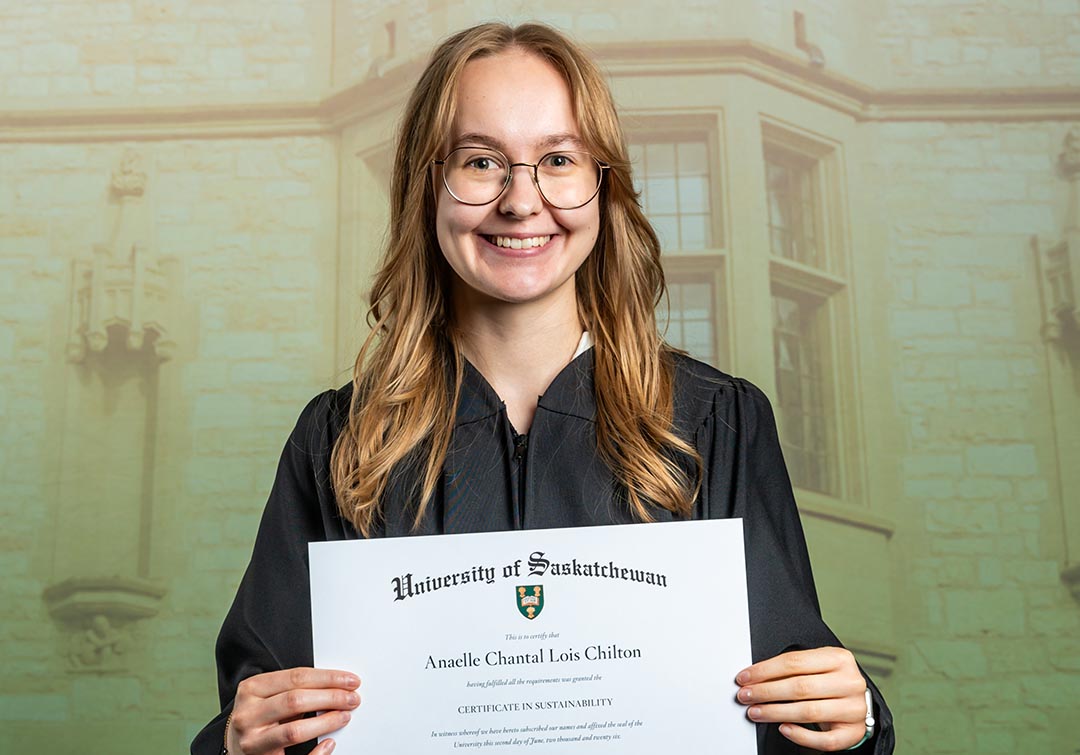
In addition to team-based recognition, SENS also highlights individual achievement through the Certificate in Sustainability Excellence Award. The award recognizes an undergraduate student enrolled in the SENS Certificate in Sustainability who demonstrates outstanding leadership, creativity, and a strong understanding of sustainability perspectives and practices.
This year’s recipient is Anaelle Chilton, a third-year student in USask’s College of Arts and Science Department of Geography and Planning and Undergraduate Certificate in Sustainability student through SENS.
“As an arts and science student, my understanding of sustainability is built on an interdisciplinary foundation that rejects siloed thinking,” said Chilton. “My path through the Certificate in Sustainability has not been merely a pursuit of credits, but an intentional effort to understand the complex systems that shape socio-ecological challenges and how we can respond to them.”
Throughout her undergraduate studies, Chilton explored sustainability from multiple perspectives, including climate action, flood mitigation, adaptive cities, urban environmental stress, and global economic systems.
Beyond the classroom, she also applied her knowledge through research and community involvement. It was through this summer research assistant position with a SENS faculty member that Chilton autonomously produced a literature review manuscript that has been submitted for peer-reviewed publication. This piece has also received collaboration from faculty members from other Canadian universities. She also actively sought opportunities to connect with researchers, faculty, and peers at conferences and events, including Saskatchewan Professional Planners Institute and PAW 2025.
Her leadership became especially evident during ENVS 401, the program’s capstone course, in which she led her group to develop a proposal exploring the viability of an evidence-based living green wall on campus to improve indoor air quality and promote positive health outcomes.
As a leader on the project, Chilton co-ordinated communication among team members, connected with external stakeholders for technical guidance, and pursued sponsorship opportunities to support the initiative. She also adapted messaging for different audiences, emphasizing student well-being and mental health benefits when speaking with administrators while focusing on visibility and corporate social responsibility when engaging sponsors.
Whether co-ordinating student teams, collaborating with community partners, or negotiating support from businesses, Chilton focused on creating projects and partnerships with long-term impact. Her goal, she said, was to help build sustainable systems and relationships that continue to benefit communities long after a project is complete.