

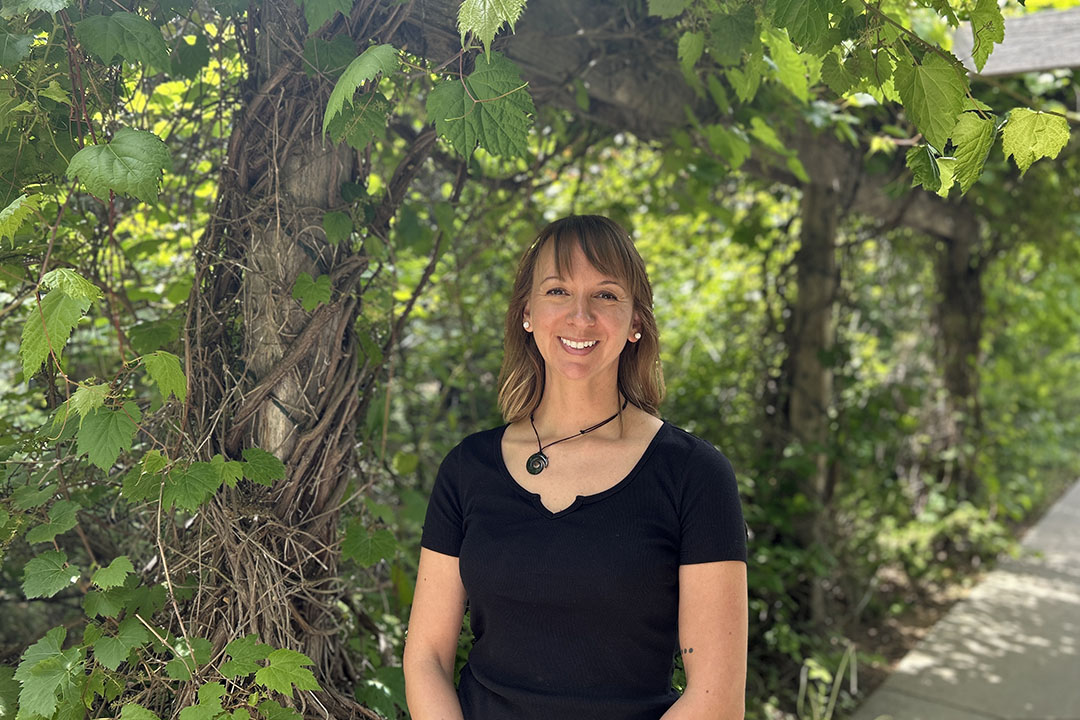
Supporting Indigenous USask student success starts before Day 1
A student’s first day on campus is a pivotal one. It can come with excitement and anticipation, but it can also conjure anxiety, fear, and feelings of isolation.
By Ashley Dopko, University CommunicationsThe Office of the Vice-Provost, Indigenous Engagement (OVPIE) is working to ensure new Indigenous students experience and see the promise and possibility that comes with starting post-secondary and overcome fears through connection to culture and community.
“I cried during my first week at USask because everything was big and scary,” said Dr. Amaranta Sokol (EdD), interim vice-provost, Indigenous engagement, sharing what it was like for her during her time as a new student. “I didn’t know anybody.”
Even years later, despite additional supports and programming in place, this experience and sense of isolation is not uncommon for new Indigenous students. Though many things have changed such as additional supports and programming, this experience and sense of isolation can still occur.
“Getting through the transition from high school to university, or from a rural home to life in the city, can still be challenging for students,” said Sokol.
Significant changes have been made in OVPIE over the past academic year to enhance programming for new and prospective students; the team has taken a leadership role in the Indigenous Student Experience Day and Gordon Oakes Red Bear Student Centre is now within the OVPIE portfolio. These changes have been carried out thoughtfully and were done in pursuit of better alignment with Indigenous-centered programming across campus.
The Indigenous Summer Institute (ISI) is in its third year and will be welcoming Indigenous high school students from across Saskatchewan again in August. It’s an opportunity for students to visit campus, explore different educational streams, and experience city life.
“Through ISI, students become familiar with campus and know the faces and names of team members,” said Sokol. “They are also meeting their peers and building important relationships.”
The opportunity to engage with USask staff also puts many prospective students at ease, creating a familiar face and establishing a contact person they can reach out to once they are on campus.
“Even if they only know one person from the team, that team member is going to absolutely support them through the process,” said Sokol.
It’s through this type of pathway that OVPIE has already started to see students who have attended ISI, or other programs like the Building Intercultural Resilience through Mentorship (BIRM) program, become USask students.
For Sokol, who began her career at USask working with and supporting students at what was then the Aboriginal Student Centre, she has never forgotten her experience as an overwhelmed student, and she uses it to guide her in her current role.
“As I’ve shifted positions, I’m often looking at the same challenges and opportunities, but now it’s through a different lens,” she said.
“The work that we do is always evolving because we keep learning.”
These efforts to always improve the student experience, are not unlike the work USask does to engage in, learn from, and contribute to ohpahotân | oohpaahotaan, the Indigenous Strategy. Now in Phase 4, OVPIE is working with leaders across campus to compile and share their reports outlining the work they have undertaken. These reports are scheduled to be released on August 20, 2026, the five-year anniversary of the gift.
“Indigenous History Month and National Indigenous Peoples’ Day are good opportunities to highlight the strength, the success, the challenges, and where we have to work harder,” said Sokol.
This work goes beyond the OVPIE team.
“There are so many people across campus doing this work in so many different ways,” said Sokol.
“It’s a good opportunity and reminder for people to connect with colleagues, ask questions, support students, and engage.”
Looking to go beyond just marking the month or the day, Sokol and her team seek to ensure that engagement is sustained throughout the rest of the year, highlighting continued learning as the key to meaningful solutions.
“Even for myself, or anyone on the team, we’re never done learning,” said Sokol.
Continuing to engage with ohpahotân | oohpaahotaan is important for ongoing learning and the success of the plan, and ultimately, the success of USask students.
“It’s important to review and relearn because our roles change along with our perspectives,” said Sokol. “As our perspectives shift and evolve, we can look at things through a different lens.”
Anyone looking to engage with ohpahotân | oohpaahotaan can view it here or on indigenous.usask.ca.