

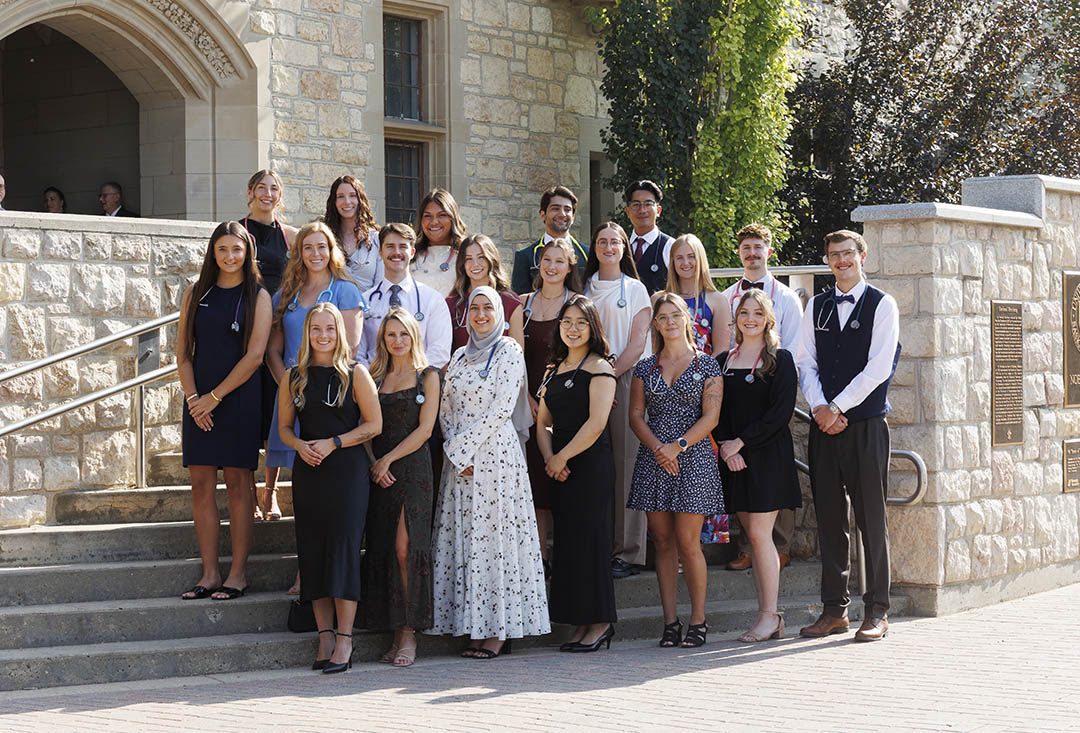
Take 5: How physician assistants will support health care in Saskatchewan
Less than a year after launching at the University of Saskatchewan (USask), the province’s first physician assistant training program is reaching a new milestone.
By College of Medicine CommunicationsAs students prepare to begin clinical placements in communities across Saskatchewan, here are five things to know about this new-to-Saskatchewan health-care role.
1. What is a physician assistant?
Physician Assistants, or PAs, are highly trained health-care professionals that complete two years of advanced medical education and clinical training. PAs work under the supervision of one or more licensed physicians and can practice in any clinical setting. In Canada, PAs have a broad scope of practice that can include taking patient histories, completing physical exams, ordering and interpreting diagnostic tests, performing procedures, supporting the continuity of care, and more.
2. How is a PA different from other health-care providers?
Physician assistants are trained under the medical model, meaning their training is closely aligned with physician education. This training includes a strong focus on clinical reasoning, patient safety, and evidence-based care.
PAs act as physician extenders and always work as part of a physician-led health-care team. Unlike nurse practitioners, physician assistants do not have their own patient roster, and their scope of practice is determined by their supervising physician(s) as outlined in their Practice Description (i.e., the duties and services a PA will provide) and Contract of Supervision. PAs do not replace physicians but work collaboratively to help expand a physician’s capacity.
3. Why is Saskatchewan introducing physician assistants now?
PAs are a newer and growing profession that is increasingly being added to provincial health-care systems. Research has shown that having PAs as part of a clinical team can improve access to care, reduce wait times, and support patient flow across hospitals, clinics, and rural communities (source: Conference Board of Canada). In 2023, the Government of Saskatchewan introduced legislation to allow the profession to be licensed to practice in the province. Currently there are six practicing PAs in Saskatchewan and recruitment continues with postings available at HealthCareersInSask.ca.
4. How is USask training Saskatchewan’s first physician assistants?
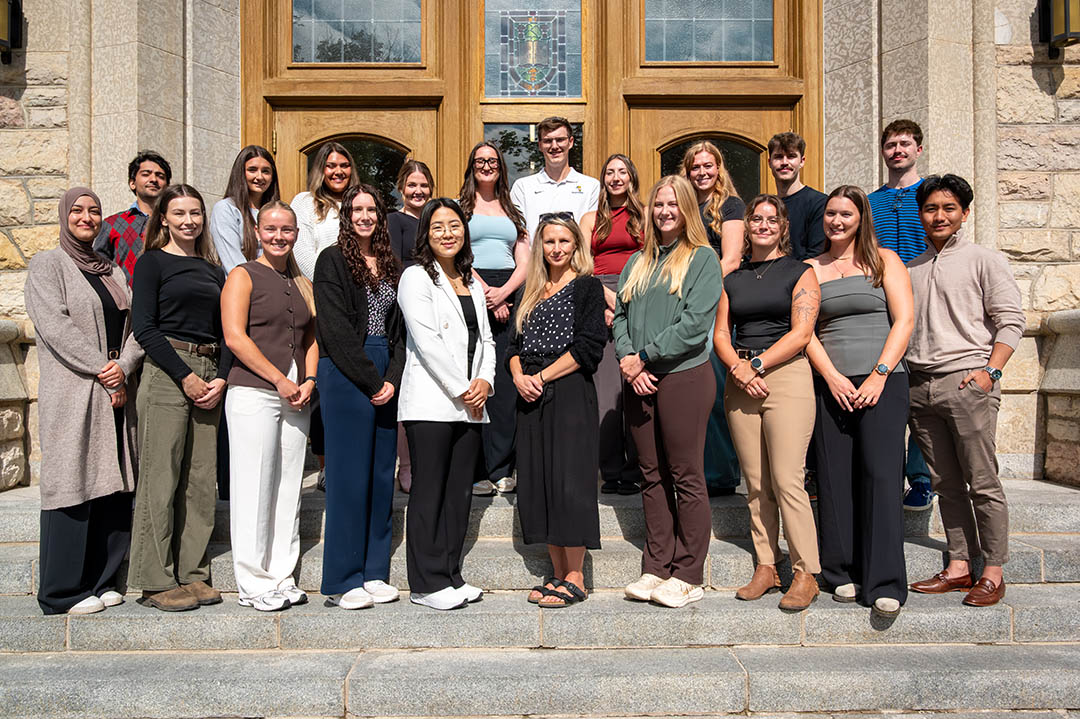
USask is one of only six Canadian universities to offer a PA training program. Admissions are competitive, with only 20 students accepted to the USask Master of Physician Assistant Studies (MPAS) program each year. MPAS is an intense two-year program that includes one year of classroom-based learning to build medical knowledge and skills, and one year of clinical placements to put these learnings into practice. During the program, students also complete a research capstone project to develop applied health research skills.
Physician assistants are one of the most in demand careers in health care. Having a program at USask provides a new health-care career pathway for Saskatchewan students and supports the growth of the profession in the province.
5. What happens next?
USask’s MPAS program launched in September 2025, with the inaugural class expected to graduate in 2027. In September, students will begin clinical placements to gain hands-on experience while supporting patient care throughout the province. Placements are in clinics and hospitals in Humboldt, La Ronge, Meadow Lake, Melville, Prince Albert, Regina, Saskatoon, and Swift Current.
Over the next year MPAS students will learn in a variety of clinical areas including internal medicine and surgery, family medicine, emergency medicine, pediatrics, women’s health, and mental health and addictions. Following the successful completion of their second year they will be required to take and pass the Canadian Physician Assistant Certification Examination to obtain a national license and become a practicing PA.