

USask graduate explores subarctic mine site revegetation
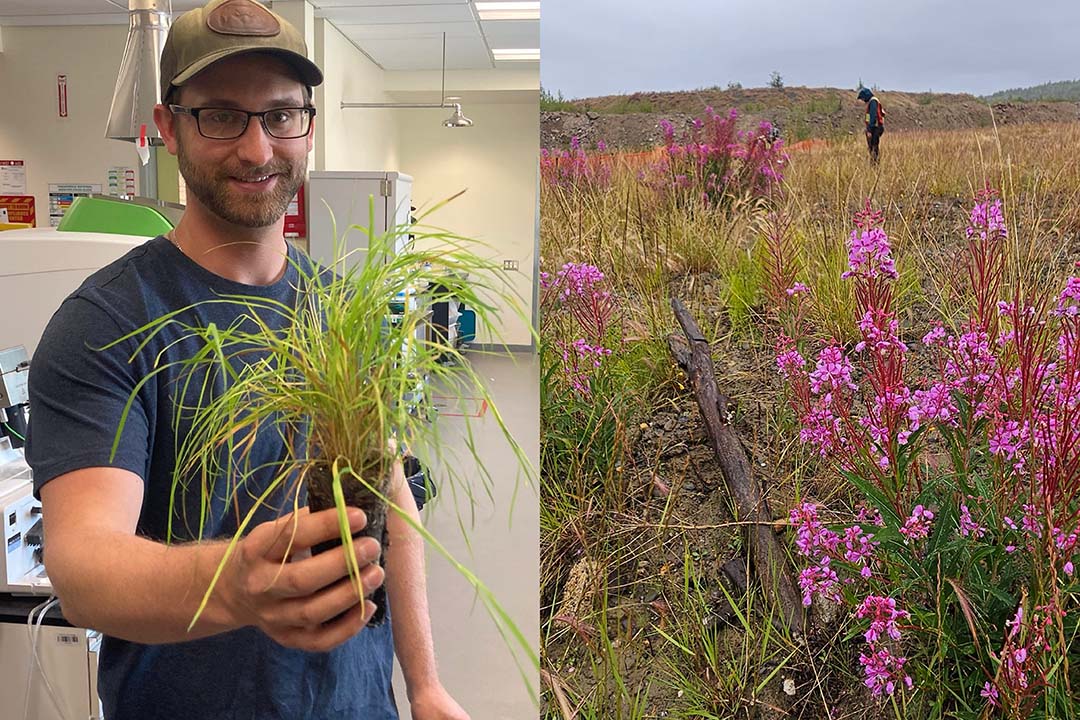
Ben Budzey conducted his thesis research in the Yukon.
By Brett Makulowich“The University of Saskatchewan’s strong reputation in soil science gave me confidence that the education I received would be both rigorous and highly valuable,” said Ben Budzey.
Budzey is set to celebrate his grad student experience when he officially receives his MSc in Soil Science at the University of Saskatchewan’s (USask) Spring Convocation on June 3.
In December 2025, he successfully defended his thesis, Investigating Abiotic and Biotic Vertical Structures as a Potential Revegetation Strategy for Semi-Arid Subarctic Mine Sites, in Central Yukon Territory, Canada. Budzey was supervised by Dr. Katherine Stewart (PhD), associate professor in the Department of Soil Science at the College of Agriculture and Bioresources (AgBio).
“This research study represents one of a limited number of published mine site revegetation studies conducted north of the 60th parallel in Canada (the latitude line that divides the territories from the western provinces),” said Budzey. “The duration and scale of the project was also unique as it was a multi-year field revegetation that was 1.5 hectares in size.”
Mine site revegetation is the establishment of native plant species on mined land with the goal to restore self-sustaining plant communities. Mining can cause soil degradation from heavy machinery that compacts soil. Soil chemistry can also be affected by mine overburden (a byproduct primarily composed of mineral soil and waste rock remaining after excavation to access mineral ore), which is often low in nutrients and water-holding capacity.
“Several mining companies in the Yukon voiced support for this research, reflecting a growing interest in local revegetation research and the development of restoration strategies that are relevant to the climate and ecosystem,” said Budzey.
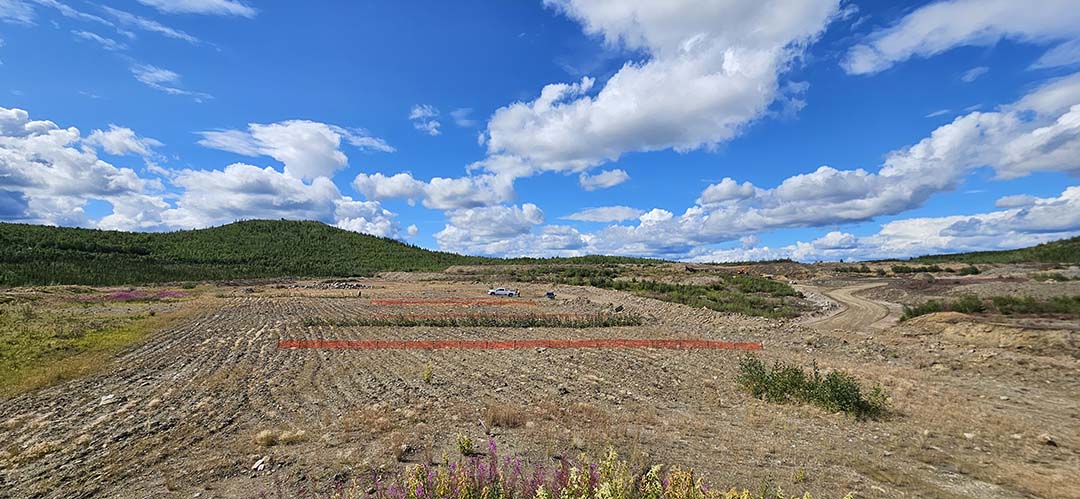
For his research, Budzey evaluated the ability of artificial snow fences (to manage blowing and drifting snow) and native shrub hedgerows (dense indigenous bushes) to modify the soil microclimate and help improve growing conditions for plants at mine sites in the harsh northern climate of the Yukon.
“A weather station, along with multiple soil moisture and temperature loggers, were installed at the field site in the Yukon to collect hourly measurements, which were downloaded annually,” said Budzey. “Soil and vegetation samples collected during fieldwork were analyzed in the lab.”
The results of his research found that snow fences increased soil moisture while hedgerows decreased moisture. The research also showed that natural plant regeneration showed trends with distance from these structures in cover, diversity, richness, and evenness three years post-reclamation.
“This research advances the foundation of subarctic mine site revegetation and reclamation by demonstrating the utility of vertical structures (the artificial snow fences and native shrub hedgerows) in modifying the soil microclimate,” said Budzey.
Budzey received funding from both Mitacs and the Doreene & Herb Wahl Scholarship Fund – Yukon Foundation for his research. His research has been published in the journals Geoderma and Ecological Engineering, and he has presented it at four conferences.
Originally from Strathmore, Alta., Budzey learned about USask, as he had several friends attend it after high school. After completing two bachelor’s degrees in Alberta, he was drawn to USask for its strong reputation in soil science.
“Being a graduate student was certainly challenging,” said Budzey. “However, I have no regrets. The experience has opened many doors, provided opportunities to build meaningful connections, broadened my perspective, and allowed me to develop a strong and transferable skill set.”
Budzey is now working as a project manager of assessment and abandoned mines for the Government of Yukon.
“I was drawn to mine restoration by the limited research in the field, the complex challenges of revegetation in northern environments, and the opportunity to make a meaningful difference in a discipline that needs more expertise,” said Budzey. “I intend to apply my local knowledge and skills in ecological restoration by actively overseeing and participating in remediation efforts at mine sites across the Yukon.”