

Walking together: USask marks 10th ohpahotân | oohpaahotaan symposium
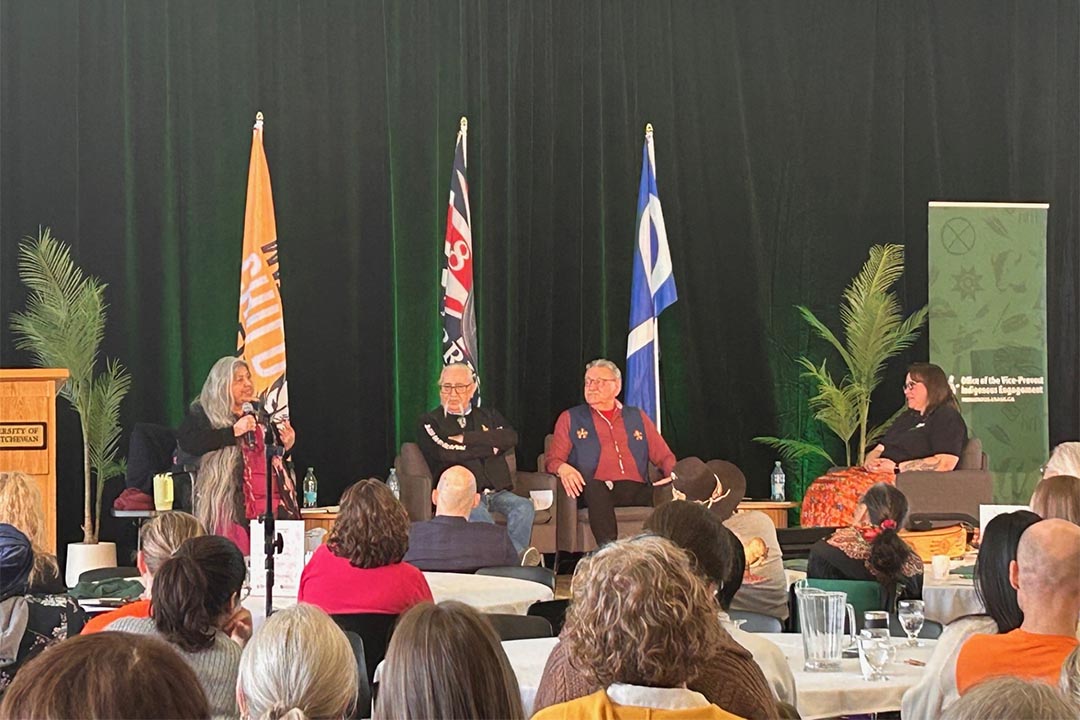
On April 17, 2026, the Office of the Vice-Provost, Indigenous Engagement (OVPIE) welcomed the campus community to the University of Saskatchewan’s (USask) 10th ohpahotân | oohpaahotaan symposium.
By Ashley Dopko, University CommunicationsOver the past five years these bi-annual symposiums have centered on understanding, uplifting, and implementing ohpahotân | oohpaahotaan, the Indigenous Strategy which was gifted to USask in 2021.
“We started the symposiums in an effort to help the broader scope of campus understand the meaning of the gift and our responsibility in lifting it,” said Dr. Angela Jaime (PhD) vice-provost Indigenous engagement.
These consistently popular, sold-out gatherings continue to educate people and bring them together in a networking environment.
“It’s an opportunity to come together and learn all the things that have been done, are being done, and how to implement critical systems change,” said Jaime.
While many are at different stages of engagement with ohpahotân | oohpaahotaan, the focus of this symposium was the Phase 4 reporting that many are undertaking this spring.
Colleges and units are encouraged to reflect not only on the wins but also on challenges and missteps, owning their mistakes and demonstrating how they were addressed. The work moves beyond reflection and asks for accountability.
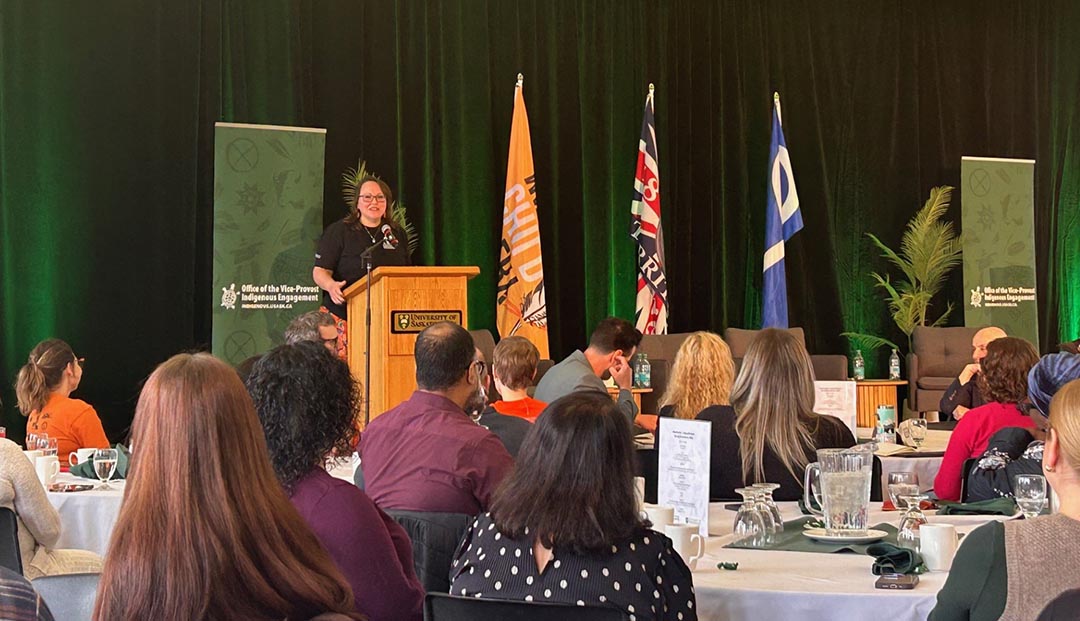
“We must speak the Truth before we can reconcile,” said Carson Magnuson, senior strategic officer, OVPIE. “We are focused on the accountability to the commitments to remove barriers and reconcile the past.”
The reporting framework asks the college, school, and senior administrative portfolios to share stories from the past, present, and future, grounded in the seven commitments.
“Reporting is not simply a technical exercise,” said Vince Bruni-Bossio, USask’s president and vice-chancellor. “It is an act of relationship. It is an act of transparency, and it is an act of respect for the Indigenous communities who entrusted us with this strategy.”
Elders Linda Young, Roland Duquette and Norman Fleury each offered reflections on the gift and how they have or haven’t seen it in action over the past five years. Though some changes have been gradual, progress continues to advance the university community.
“You have to learn how to walk before you can learn how to fly,” said Fleury, referring to the meaning of ohpahotân | oohpaahotaan, which is “Let’s fly up together.”
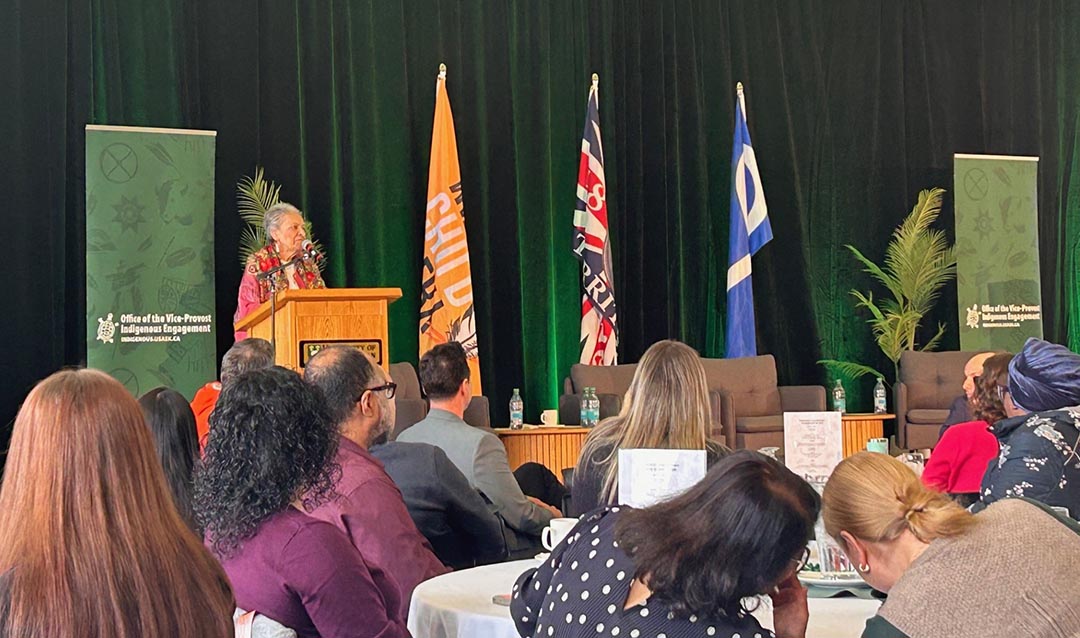
The USask community also marked the day with a blanket ceremony and a heartfelt send-off for Jaime, who is leaving her post at USask for the University of Victoria where she will be vice-president, Indigenous.
But neither her move, nor the process of Phase 4 reporting, signals the end of ohpahotân | oohpaahotaan symposiums and work related to the gift.
“This reporting is merely a checkpoint,” said Jaime. “It is not the end of the road.”
“We look at what is working and move forward with that and revamp what’s not working, and that has to be continuous. There will be other phases to the strategy. This is not done.”
The Phase 4 reports currently being assembled will be finalized and made available on the OVPIE website in August.
The strategy is a living, evergreen document that will continue to shape the university as it moves through new phases. Any college, school, or unit that has not had the chance to engage with ohpahotân | oohpaahotaan is encouraged to do so by reaching out to the team at OVPIE.