

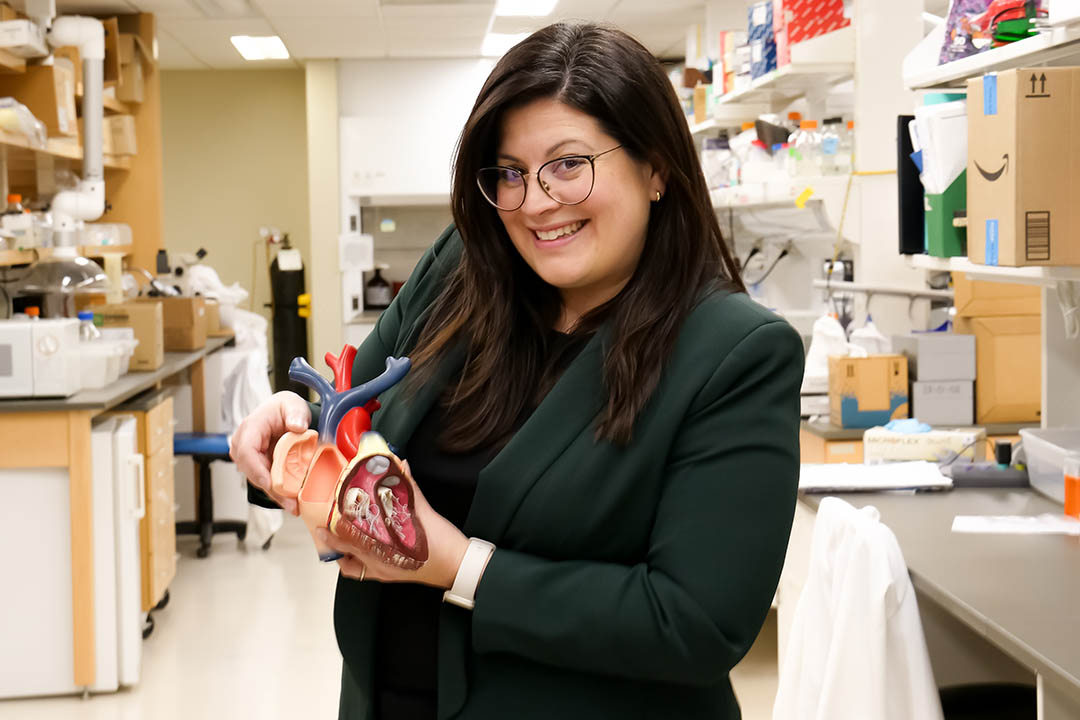
USask researcher getting to the heart of atrial fibrillation
It’s easy to take our hearts for granted. The strong muscle is powered by unseen electrical impulses that anchor our lives in a steady, reliable beat. But what happens when these electrical impulses misfire, and our hearts fall out of rhythm?
By Erin Matthews, Research Profile and Impact“The heart is such a cool organ. It starts forming really early in development and it needs to function right away. Its role is absolutely critical,” said Dr. Michelle Collins (PhD), professor of anatomy, physiology and pharmacology in the College of Medicine at the University of Saskatchewan (USask).
Collins’ research focuses on the genetic links of atrial fibrillation (Afib), a condition that causes the heart to beat irregularly, leading to an increased risk in heart failure and stroke. It’s estimated that nearly 500,000 Canadians are living with atrial fibrillation, but the real impact in unknown due to the often “silent” or asymptomatic nature of the disease.
“I’m really interested in a gene called PITX2 because it has a really fascinating role in how it regulates heart development,” said Collins. “We became interested in understanding its role in atrial fibrillation, or Afib, by looking at zebrafish that lack PITX2.”
According to Collins, when these fish reach adulthood, they have conditions that resemble Afib in humans such as electrical conduction defects, irregular heartbeat and structural and electrical remodelling inside the heart, making them a great model to study the ins and outs of the disease.
With the help of a recent grant of more than $900,000 from the Canadian Institutes of Health Research (CIHR), Collins aims to create different genetic tools that will help her and her team understand PITX2’s impact on the heart.
“These genetic tools can over-express PITX2 or knock it out completely so we can really understand what the gene’s influence is on heart development. We also have established primary cell culture models to ensure that our results are translatable to mammals,” said Collins.
Using zebrafish in this study offers Collins a unique longitudinal perspective, allowing her to measure what happens during the aging process to see how Afib progresses throughout the lifespan.
“We think that PITX2 helps to protect heart health by protecting it from oxidative stress that occurs during aging,” said Collins. “We are trying to test how those changes are shaped by the presence or absence of the gene.”
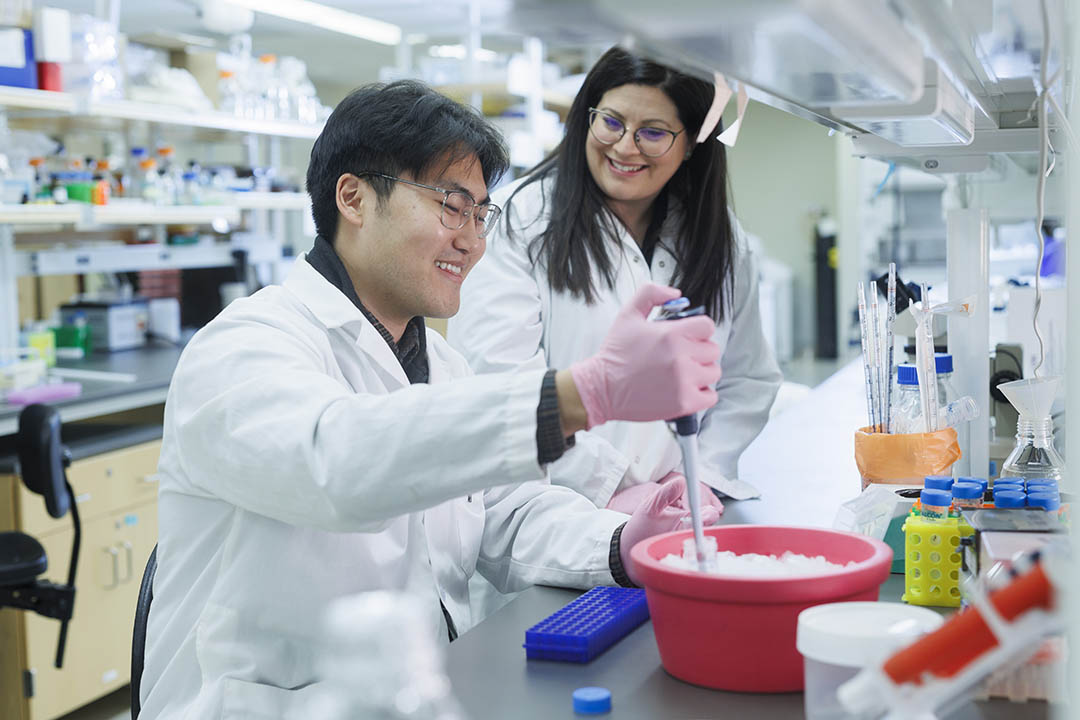
This is a full-circle project for Collins, who became interested in PITX2 in graduate school at McGill University and began studying the gene during her post-doctoral fellowship in Germany at the Max Plank Institute for Heart and Lung Research. Collins also credits the hard work of the 20 research associates, graduate and undergraduate students who have come through her lab over the last five years. Together, they are working to see the full picture of atrial fibrillation.
“I think that the more you understand something the easier it is to try and design therapies against it, and that’s really our hope here,” said Collins.
The full list of USask CIHR Project Grant recipients include:
- Dr. Michelle Collins (Anatomy, Physiology and Pharmacology) – $952,425 for a five-year project – PITX2-dependent mechanisms of atrial fibrillation pathogenesis
- Dr. Rachel Engler-Stringer (Community Health and Epidemiology) – $ 799,424 for a four-year project – Implementing Change: Program Participation and Shifts in School Food Environments in the Early Years of Canada’s National School Food Program and Policy.
- Dr. Juan Pablo Ianowski (Anatomy, Physiology and Pharmacology) – $1,292,850 for a five-year project – Function of pulmonary ionocytes and club cells in human airway and their contribution to cystic fibrosis lung disease
- Dr. Juan-Nicolas Pena-Sanchez (Community Health and Epidemiology) – $481,952 for a four-year project – Innovating gastroenterology and hepatology care with First Nations and Métis community members in Saskatchewan through patient navigation
- Dr. Bryce Warner (VIDO) – $100,000 for a one-year priority announcement funding – Studies into improved broadly reactive and protective vaccination strategies for high consequence Bunyaviruses
- Dr. Joyce Wilson (Biochemistry, Microbiology and Immunology) – $ 1,143,675 for a five-year project – Mechanisms driving convergent evolution of SARS CoV-2 during a pandemic
- Dr. Yan Zhou (VIDO) – $1,254,600 for a five-year project – Deciphering Mammary Gland Susceptibility to Influenza A Virus Subtype and Immune Pathways Driving to HPAI H5N1 Pathogenesis