

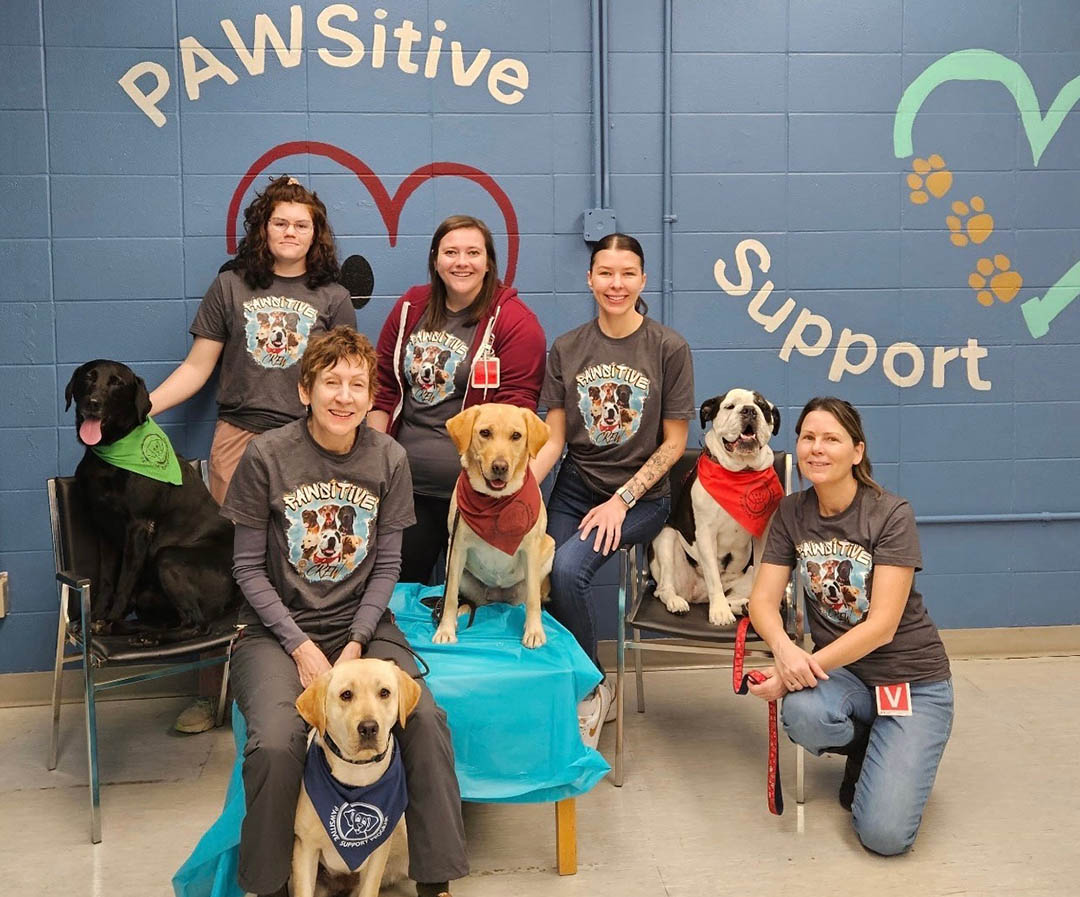
USask’s one-of-a-kind dog therapy program celebrates a decade of healing
A wagging tail and a soft nuzzle from a wet nose can be a lifeline for individuals in need of connection and community.
By Erin Matthews, Research Profile and ImpactThese moments reveal how powerful the animal-human bond can be. It is also what inspired an innovative joint University of Saskatchewan (USask) and University of Regina (U of R) program exploring the meaningful relationships we can have with our pets.
For ten years, the University of Saskatchewan’s (USask) PAWsitive Support Program has been dedicated to understanding the connections between animals and people.
One of the program’s flagship initiatives has supported prisoners at the Drumheller Institution in Drumheller, Alberta. Here, researchers have helped dozens of program participants find meaningful connection through immersive visits with therapy dogs and their handlers.
“The program started in 2016 and came out of a very unique situation where Drumheller Institution had experienced a significant number of opioid overdoses within their walls,” said Maryellen Gibson, a PhD student in the Department of Sociology in the College of Arts and Science and student facilitator in the program. “The warden at the time was really looking for innovative approaches to better support the prison population.”
To create a more supportive and safer environment for their prisoners, Drumheller Institution reached out to USask researcher Dr. Colleen Dell (PhD), who was the provincial research chair in addictions at the time. In addition to sharing substance use resources, she told him about the therapy dog visits she and Dr. Darlene Chalmers (PhD) from the U of R were doing at another federal institution. As the co-directors of the PAWsitive Connections Lab, the pair developed a unique support program that fostered trust, connection and healing among the incarcerated population.
“To have had this opportunity to design the program with Darlene and watch it grow and the impacts it has had, all through an empirical lens and listening to the participants’ feedback, is a community-based researcher’s dream,” Dell said. “To have it meaningfully integrated into the institutions we work with, and involve our students, is truly next level.”
Broadly, the program aims to address participants’ substance use concerns while also setting up goals and fostering skills that help individuals reintegrate back into their communities positively.
Over its lifetime, the program has seen a number of dogs, students and participants work together to develop trusting relationships and learn from one another. Each therapy dog within the program has distinct and unique personalities that participants can connect with.
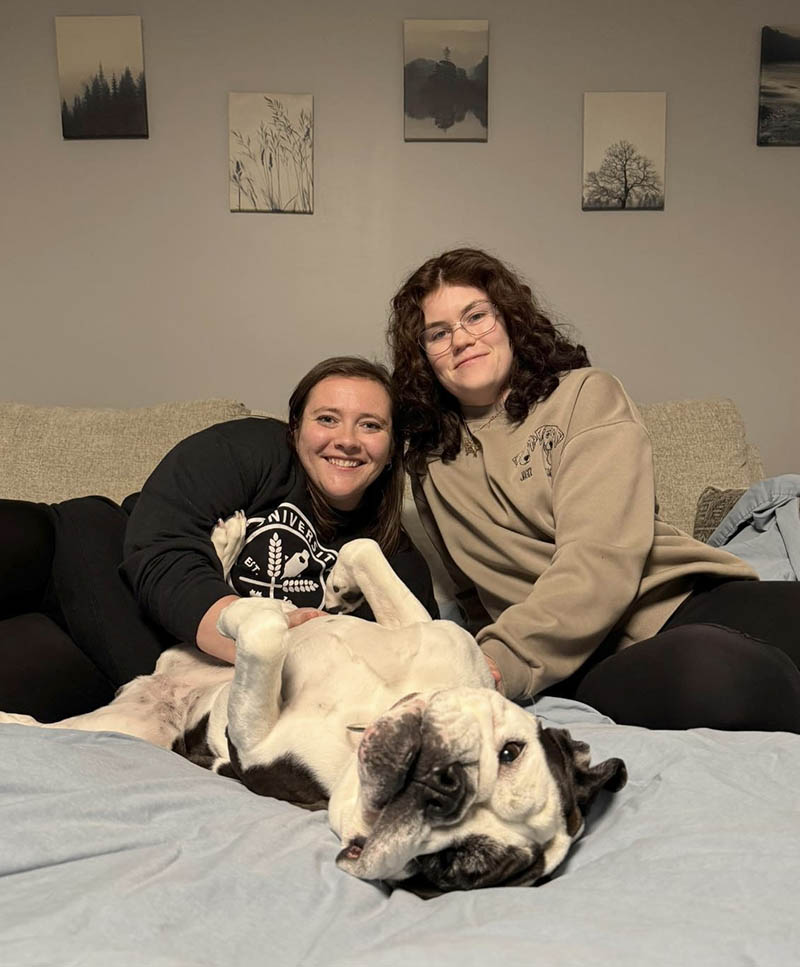
“In the original cohort, we had a dog by the name of Anna-Belle and there were a lot of participants who really liked her bulldog stubbornness,” said Grace Rath, project coordinator in the PAWsitive Connections lab and USask alumna. “The participants tend to connect with dogs differently based on their personalities and it’s interesting to see how people can identify with the dogs.”
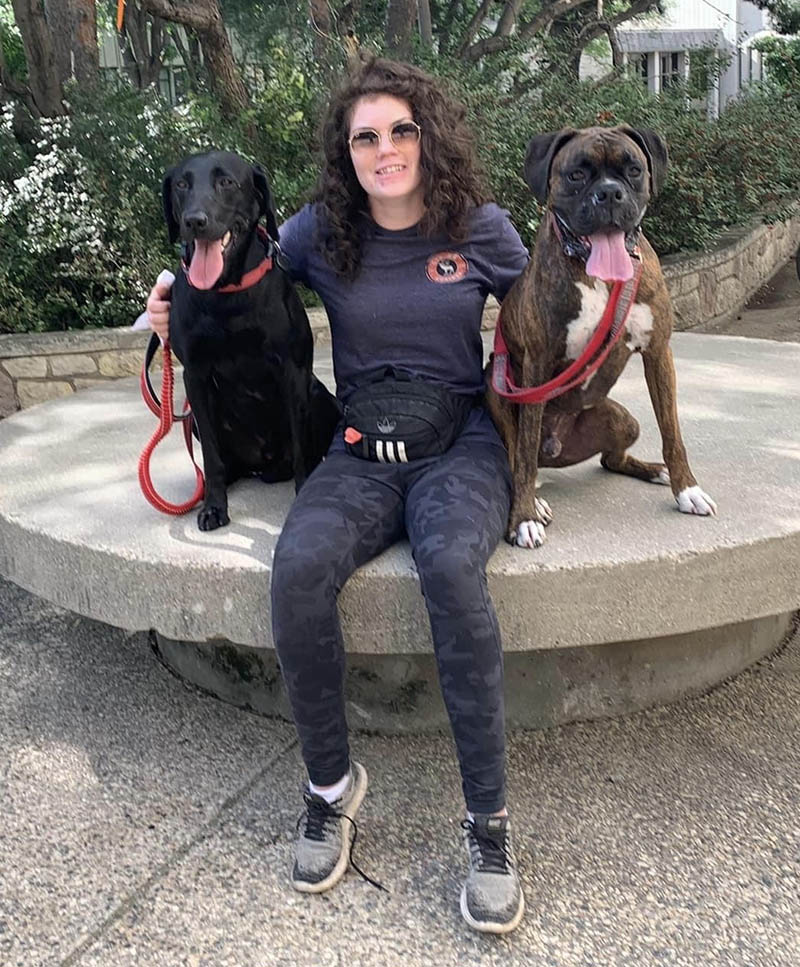
Along with Anna-Belle, the original cohort was comprised of two other dogs, a boxer named Subie and another named Kisbey. They were joined the following year by Ruby, a labrador, as well Drumheller staff members’ dogs.
Rath’s black lab Reacher is currently one of the five therapy dogs involved in the program, along with labradors Reina and Delta, a bulldog Molly and a boxer named E-Jay. Rath says that being a handler gives her unique insight into the program’s impact.
“Me handing my dog over to somebody I don’t know and letting participants know that I do trust them to work with my dog can be really impactful, and they’ve said a lot of times that it feels good for them to feel trusted to work with our dogs,” said Rath.
Gibson says that participants from past cohorts often take on mentorship roles for new cohorts, continuing to build on skills like trust, respect, and leadership and reinforce relationships already established with the dogs and the PAWsitive support team. This is reflected too in the care of the participating dogs, ensuring it is a meaningful and enjoyable experience for the dogs as well.
“The dogs are an amazing way to open people up to meaningful relationships. We can see relationships build between the dogs and participants, the participants and us as handlers and even the participants with each other,” said Gibson.