

Looking forward together
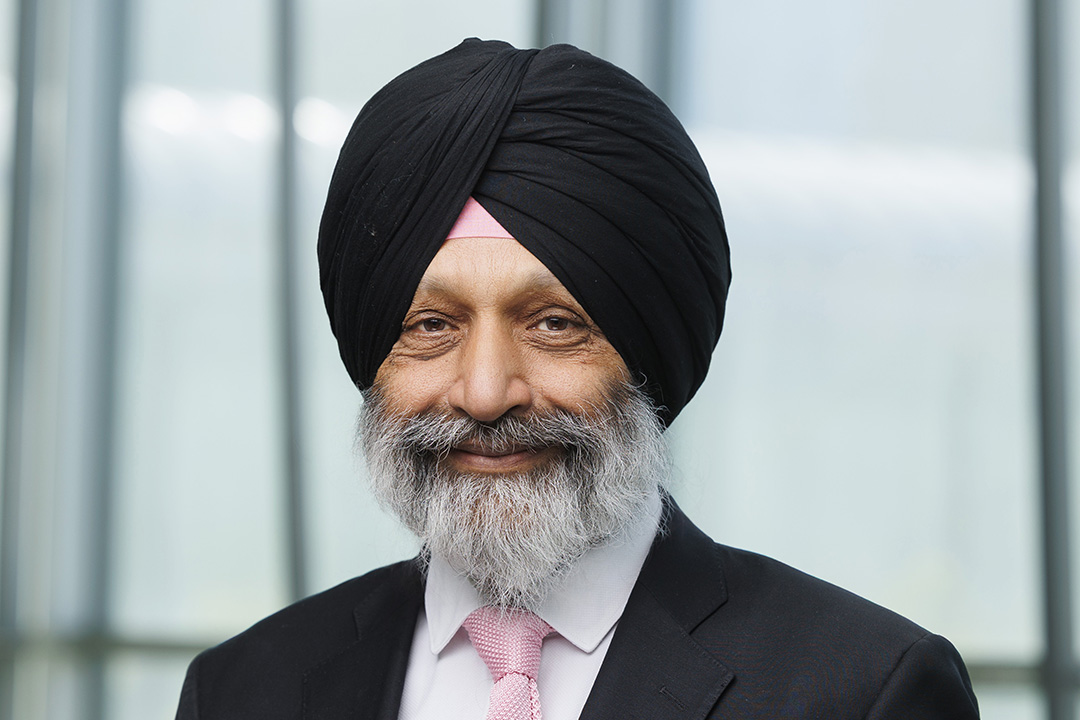
University of Saskatchewan (USask) Vice-President Research, Baljit Singh, reflects on 2025 and discusses what’s next for USask’s research, scholarly and artistic work in 2026.
By Research Profile and ImpactQUESTION: What were the biggest highlights for USask’s research, scholarly and artistic work (RSAW) in 2025?
In 2025, we wanted to continue our momentum from our record-breaking 2024. I’m happy to report that we didn’t slow down. Research, scholarly and artistic work (RSAW) continues to be an ongoing strength and pillar at this university.
When I look back, some major highlights of the year that are noteworthy include VIDO’s 50th anniversary, our four researchers joining the Royal Society of Canada, and USask achieving several top research rankings nationally and globally.
By hosting events like the People Around the World (PAW) Congress and TEDxUniversityofSaskatchewan, we were able to welcome our community in and give them a better understanding of USask’s real-world impact.
More so, our graduate and post-doctoral programs continued to thrive. Three USask students were recognized nationally with Vanier scholarships in acknowledgment of their excellent research potential.
Our entrepreneurial ambitions flourished through our startup incubator Opus, which supported many innovators last year.
And internationally we secured $97M in funding and deepened alliances with partners in Germany, India, and Brazil. This is an all-time record for international research funding for the university and speaks to the amazing growth and work we’ve put into our International Blueprint. This funding has propelled USask to 10th place among Canadian universities.
We also celebrated a highly successful 10-year tenure of Dr. Peter Stoicheff as president of USask.
So overall, it was another banner year for RSAW at USask – but we still have much to accomplish in 2026!
QUESTION: How is USask positioned to lead global research conversations in 2026?
In today’s often unpredictable socioeconomic and geopolitical climate, we are constantly looking at long-term international developments. We ask ourselves, “How can we help solve global challenges? What can we do to make meaningful change? How do we leverage USask strengths to make real-world impacts?”
One way to do this, I believe, is through local and global partnerships and collaboration.
International work is demanding for so many reasons, but it is necessary in order to grow USask’s RSAW and impact. The partnerships USask has forged with our international research communities are now being talked about by other universities. We are being noticed as a leader in this field.
We have been busy. Last year, USask leaders, including myself, strategically travelled to many areas of the world to grow our research partnerships. Trips to Germany, Brazil and India were planned to create opportunities for research collaboration, student recruitment, and funding opportunities.
These international relationships can be extremely fruitful. A great example of this is the training program we recently launched in partnership with Goethe University in Germany that focuses on environmental toxicology.
I’m proud of the work our researchers and our leaders have done in this area. Our international collaborations have provided meaningful global research opportunities. 2026 holds many more opportunities for us in this area.
Q: How is USask supporting innovation and commercialization of research in 2026?
Moving new knowledge and innovation into the hands of the community is critical for the type of impact USask intends to have. People deserve to know what USask researchers are up to, what they are working on, and how their contributions benefit society. We need our researchers to share their ideas and move their innovations from the lab to market.
We’ve gotten better at this. Just this past year, through our Opus incubator, we were able to do just that. Once again, Opus supported the entrepreneurs on our campus by providing mentorship and industry connections for research-based ventures.
From tracking insects in farmers’ fields to building AI-powered interview preparation tools, our researchers have phenomenal ideas that we’re able to grow and foster through our Opus program.
Our partnership with the City of Saskatoon continues to deepen through our Research Junction program, which develops joint research projects for the benefit of Saskatoon residents. Additionally, our relationships with a growing number of research centres and scholars working with our partners at Station 20 West are significantly advancing our work in community‑based research.
Q: What are you doing to keep RSAW momentum on track?
The Office of the Vice-President Research (OVPR) is very deliberate every year when it comes to developing strategies that help support our RSAW community. Every September, I hold my annual Campus Address that lays out the academic year ahead. In this way, everyone knows what we’re up to and can see themselves in the larger RSAW vision at USask.
This year, the OVPR is continuing to invest in our state-of-the-art research facilities, people, and resources. We’ve been working hard to streamline our ethics and administrative processes for a more efficient research experience. We’re still working hard at this, and this year we are taking a deeper dive into upgrading our online services.
We continue to make efforts to develop more collaborative research infrastructure. Our goal is to expand interdisciplinary work while reducing the cost of research infrastructure.
We are determined to build on the recent momentum and funding growth in health sciences. To sustain and accelerate this growth, we have developed a Joint Governance Council for Health Sciences which includes deans/executive director of health sciences and is co-led by the Provost and the VPR.
One thing I always try to foster is an open culture with strong community engagement and networking. We host several events throughout the year for our campus community, including our campus conversations, where we encourage members of USask’s RSAW community to come together to discuss what’s on their mind, good or bad.
We have a lot to look forward to. We will continue to build off our long and storied history of collaborative scientific discovery and find solutions that benefit the people of Saskatchewan, and beyond.
Q: What does success look like for USask RSAW in 2026?
We have made an ambitious goal to grow our awarded health research funding to at least the national mean among Canadian medical‑doctoral universities, and it’s a goal I’m confident we can hit.
We will also be growing and diversifying our already strong funding portfolio, for example through technology commercialization.
Our undergraduate RSAW program will keep building early talent through its creative programing, which includes its dynamic storytelling competition.
And I am also greatly looking forward to our planned events, which include TEDxUniversityofSaskatchewan2027 and our annual PAW conference which will be centered on sustainable energy.
Q: What message would you share with the Saskatchewan community about USask’s research impact?
It feels like yesterday, but it was five years ago that Dr. Karen Chad handed me the baton with a big hug to further build USask’s thriving RSAW enterprise. I am humbled by the support I have received from across campus and from the group of senior leaders including deans, centre directors, associate deans, and President’s Executive Committee.
I am inspired every day through discussions with my colleagues, people in the community, and walks across campus to see our RSAW in action.
I have seen first-hand that we are building a better future for Saskatchewan and the world through USask-driven research, impact, and collaboration.
USask is a place of great strengths. We are stellar in our teaching and in our research. We have some of the most brilliant minds working on some of the world’s most complex challenges. Our artists continue to push boundaries in their endeavours. USask is contributing to so many areas of importance: in sustainability, water and food security, energy resources, quantum, One Health, communities and policy … just to name a few. We really are the university the world needs.
I have visited nearly every academic department over the last two years. These discussions have been extremely helpful as we start planning for USask’s next RSAW plan. I am looking forward to a bright future with our new president, Vince Bruni-Bossio, and I am excited for what the next USask plan holds. I warmly welcome him to his role and know that under his leadership we will continue to prosper in our RSAW excellence.