

Black History Month: Inspiring stories from USask history
As Black History Month 2026 begins, the University of Saskatchewan (USask) community aims to spotlight the voices, leaders, scholars, and trailblazers who shape campus life and beyond.
By BROOKE KLEIBOERTo kick off this year’s theme, “Celebrating Black Brilliance: Rooted in Legacy, Leading the Future,” the excerpts below highlight stories and events that reflect the resilience, creativity, scholarship, and leadership across generations that have left a deep legacy at USask and beyond. These stories are just a small glimpse into the contributions of the Black community to the university throughout history.
1954
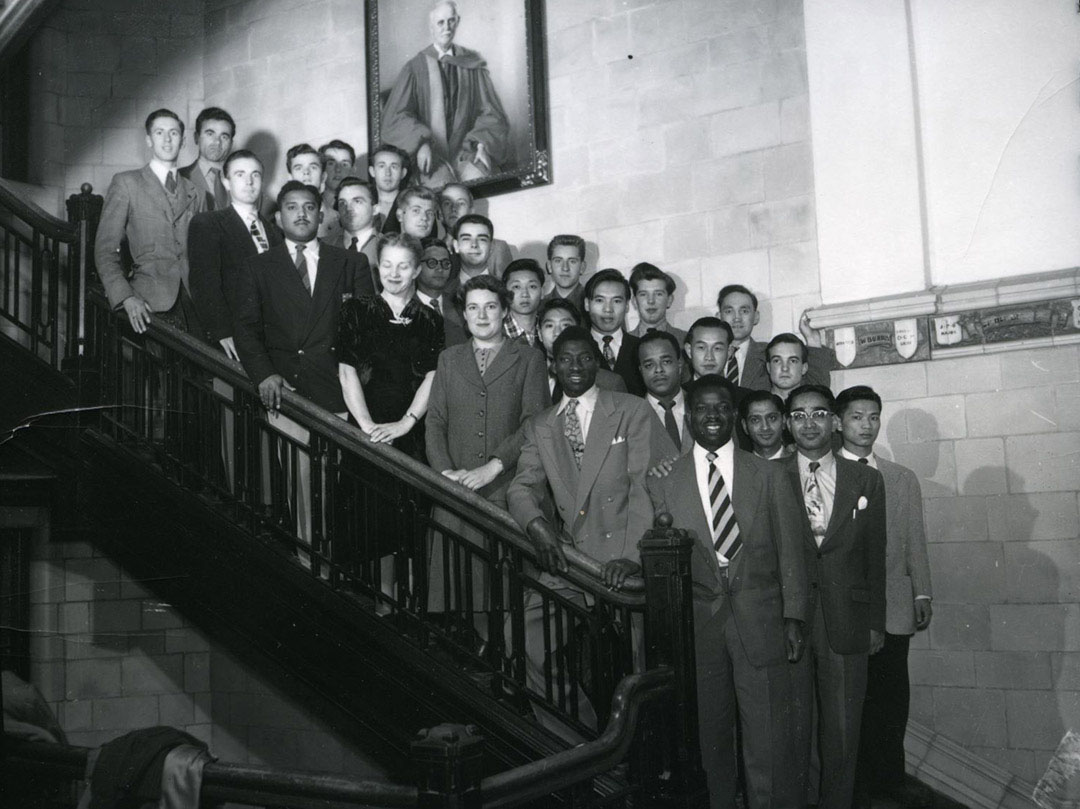
Dr. Ted N. C. Agulefo: One of USask’s first Black medical students
Born in Ogidi, Nigeria, Dr. Agulefo joined USask’s medicine class of 1954 as one of the school’s first Black students. His extraordinary life encompassed medical service across continents, public health leadership, military service, and survival through political upheaval. His USask story represents perseverance in the face of global adversity.
His story began in 1948 when he was only 18 years old, as Agulefo and his cousin headed overseas to attend college in the U.S. on scholarship. Agulefo later headed north to Canada to complete his education, with the assistance of the Nigerian liaison office. He first earned a Bachelor of Arts at Queen’s University before heading west to earn a science degree and medical certificate in 1954 at USask, where he had fond memories for the school and for its most famous alumnus, Prime Minister John Diefenbaker. Agulefo also made history when he became one of the very first Black students at USask, breaking new ground as the only member of the Black, Indigenous and People of Colour (BIPOC) community in USask’s medicine class of 1954.
He would go on to have a celebrated career as a doctor spanning five decades of service on two continents. He served as a physician and senior public health official in both Canada and Nigeria, served in an elite unit in the Canadian military making dangerous experimental parachute jumps, survived the Nigerian civil war, death threats and two coup d’états, and went on to raise a family of four children in Canada with his wife of 53 years.
1960
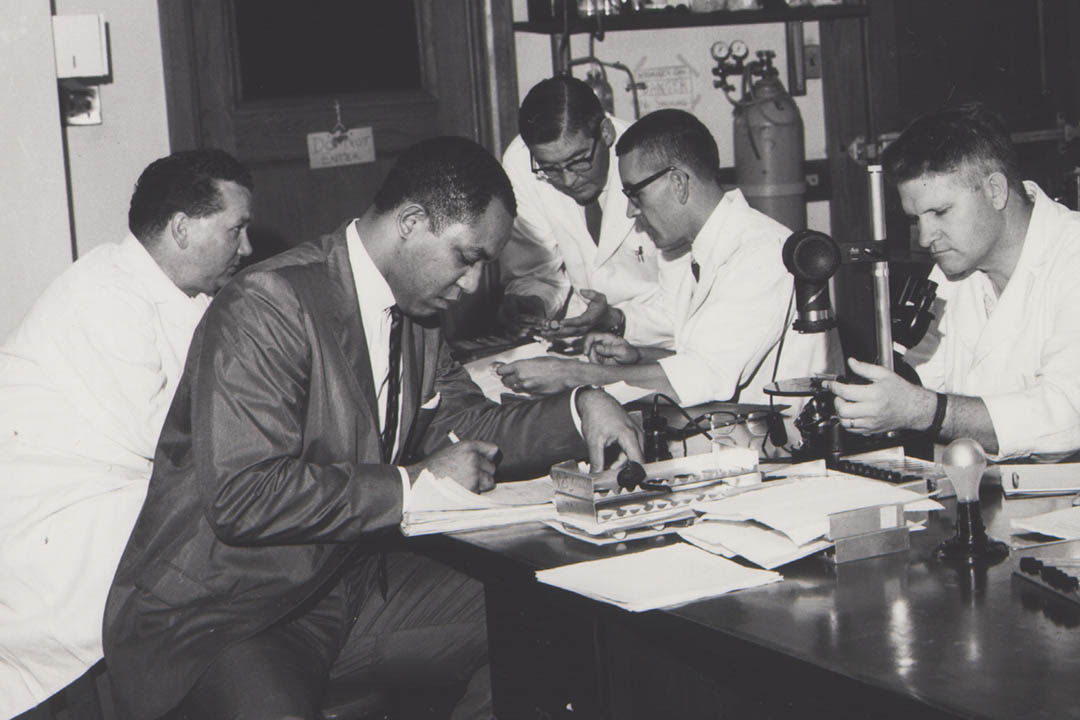
Dr. Norman McDuffie: Pioneering Black faculty member and physiology scholar
Sixty-six years ago, McDuffie arrived in Saskatoon in 1960 to finish his Master of Science in 1962 and PhD in physiology in 1965 at USask, while working full-time as an instructor and laboratory technician in the Department of Physiology. He is believed to have been the first Black faculty member at USask, beginning a remarkable 40-year career at the university as a popular professor and active member of the community.
Born in Detroit in 1938, Norman was a superb student growing up, and in Grade 10 earned early entrance to Fisk University at the age of 16 as a Ford Foundation Scholar. There he met his wife of 50 years, Dr. Helen McDuffie (PhD), who would later earn her doctorate in medical genetics at USask while raising four children.
Norman was a professor for 40 years and the head of the Department of Physiology in the College of Medicine from 1982-84 and 1984-89 and served as president of the USask Alumni Association from 1972-73. Helen also had an active career as a faculty member in the College of Medicine for 18 years. She earned the Distinguished Service Award in 1996 from USask’s Centre for Agricultural Medicine and later had the Dr. Helen Harris McDuffie Fellowship on Interdisciplinary Research in Agricultural Health set up in her honour.
After retiring, the McDuffies donated a gift of $500,000 to the university to sponsor the Norman M. and Helen H. McDuffie Scholarship, which supported two third-year USask health-science students each year for close to a decade.
The new millennium brought many changes to the university, including increased activity in advocacy from students, faculty and staff and new historic program milestones that increased diversity and inclusion across USask.
2021
USask signs Scarborough Charter
In the fall of 2020, Canadian universities and colleges from across Canada engaged in a national conversation co-creating significant and tangible actions that would address equity and inclusion in Canadian post-secondary education. These national discussions focused heavily on anti-Black racism and strategies aimed at increasing Black inclusion in Canadian higher education. The outcome of these many conversations led to the launch of the Scarborough Charter on Anti-Black Racism and Black Inclusion in Canadian Higher Education.
In 2021, the University of Saskatchewan became one of 40 signatories of the Scarborough Charter, signaling the university’s commitment to the goals outlined in the charter. The Provost’s Advisory Committee on the Scarborough Charter was later formed to create a pathway for implementing actionable steps to meet the goals outlined in the charter.
Many staff and student leaders have contributed to uplifting the Black community at USask, in academics, research, student life and beyond. These are just a few examples of the remarkable individuals and teams who have come together to lead and pave the way for future generations.
2022
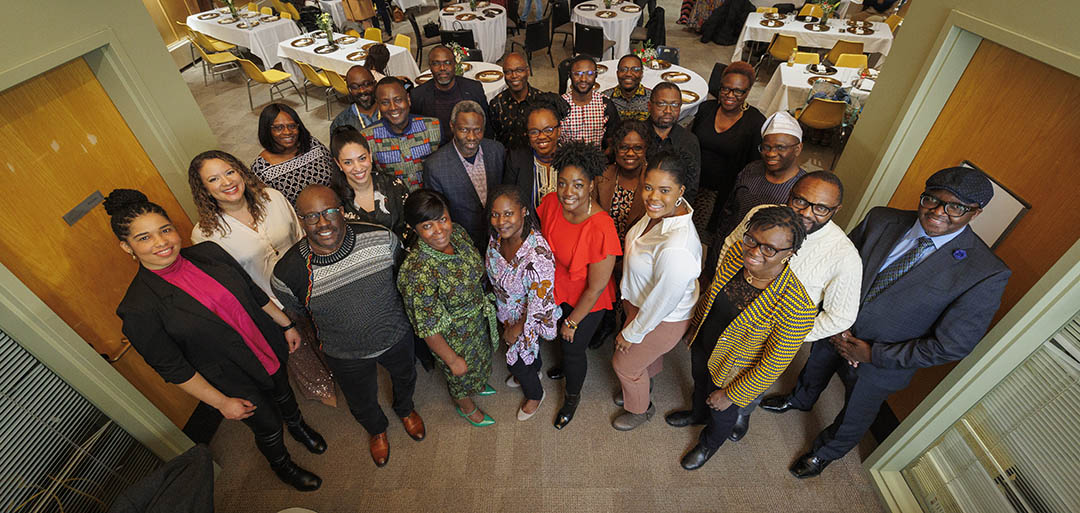
Black Faulty and Staff Caucus: Formation and ongoing advocacy
The Black Faculty and Staff Caucus (BFSC) was founded in Saskatoon on March 9, 2021, by Dr. Kiven Erique Lukong (PhD), a professor in Biochemistry, Microbiology and Immunology in the College of Medicine, and was formally launched on March 25, 2022. The group serves as the voice of all faculty and staff at USask and was created to provide support and guidance to members, increase their visibility and engagement on campus, and build on common interests to promote a transparent and inclusive learning and working environment.
2022
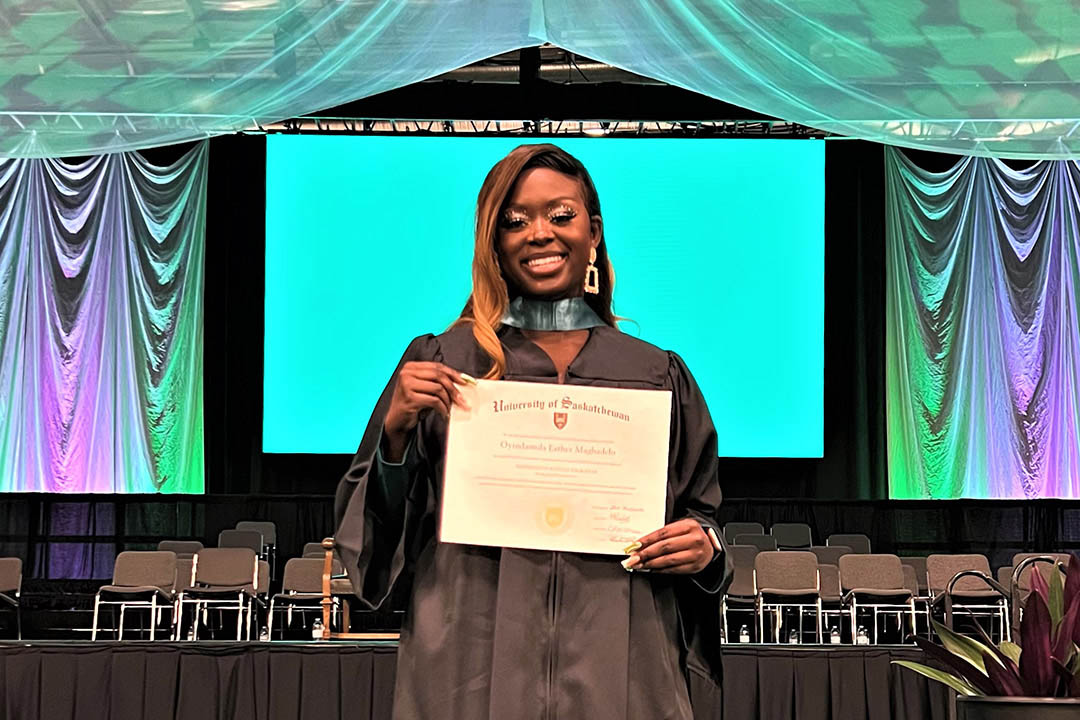
Oyin Magbadelo: Breaking barriers in biomedical science
When Oyin Magbadelo graduated from USask’s Biomedical Neuroscience program, she made history as one of the program’s first Black students — and one of its earliest Black women graduates. Her accomplishment symbolizes the rising presence and impact of Black women in STEM, and serves as an inspiration to future scholars to pursue scientific pathways with confidence. When realizing she was also one of the first Black women to graduate from the program, Magbadelo reflected on the moment.
“It’s encouraging and motivating to be an example to other women of colour to just take a chance,” Magbadelo said. “You’d be surprised how many opportunities there are for you, but you can overthink or undermine your value.”
Magbadelo offered advice for other Black women and people of colour considering applying to biomedical sciences and/or other STEM fields.
“The No. 1 thing is don’t undervalue yourself,” she said. “You’re more talented than you realize. High expectations for yourself can push you (to excel) but at the same time, it can also have you second-guessing yourself. So, be your best critic but also your greatest supporter.”
2024
Mesfin Gossa: A 30-year legacy of service and leadership at USask
For more than three decades, Mesfin Gossa has been a pillar of the USask campus community. Originally from Ethiopia, Gossa built a life and career in Saskatchewan, rising from newcomer to manager of Residence Services. His story is one of perseverance, courage, a deep commitment to creating a welcoming student environment and a remarkable story of resilience. Gossa started at USask in March of 1994 and has worked his way up through three decades on campus to the role of manager of Residence Services.
From decades of civil war and years of famine that killed more than a million people, to being ruled by a Soviet-backed military junta, life in Ethiopia was difficult and dangerous in the 1980s. Gossa chose to leave his country after teaching in rural and remote areas of Ethiopia, in order to secure a visitor’s visa to leave the country, and in his case, to never return. He later took a chance to fly from Ethiopia to Greece, and immediately applied for refugee status with the United Nations. For three years, Gossa and his wife, Azeb, lived in Athens, with Mesfin working odd jobs as a handyman and carpenter, without knowing what the future had in store for them. After three long years of refugee processing, they finally secured immigration status to come to North America.
USask quickly became a home away from home for Gossa. In 2025, he celebrated a milestone of three decades as a USask employee. With a simple philosophy of always working hard and being thankful for every day, Gossa’s career has advanced from beginning as a caretaker to serving in a management role, constantly upgrading his education and training to prepare for more senior responsibilities. He has also been a Huskies fan for many years and has dedicated additional time to serving as a volunteer at Huskies events.
2025
Black Faculty and Staff Caucus: Student award launch
In February 2025, the Black Faculty and Staff Caucus established a new scholarship award created to recognize and support the academic achievement, excellence in leadership, and community engagement of undergraduate and graduate students who self-identify as Black and are enrolled in a USask degree program.
Throughout the month of February, the USask community is invited to read stories of the lived experiences of Black Canadians, take part in events, and celebrate the unique contributions of the Black community in many different areas and disciplines across Saskatchewan and beyond.
Find a full list of Black History Month events, initiatives, learning resources and supports available to the USask community at spotlight.usask.ca.